
East Melanesia (964 – 1107 CE): …
Years: 964 - 1107
East Melanesia (964 – 1107 CE):
Fortified Hill Settlements, Expanding Canoe Trade, and Intensified Grade Rituals
Geographic and Environmental Context
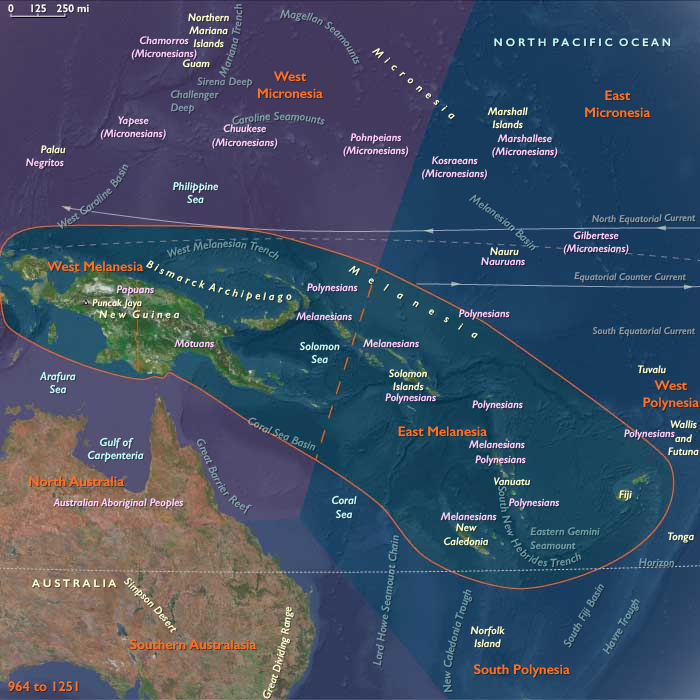
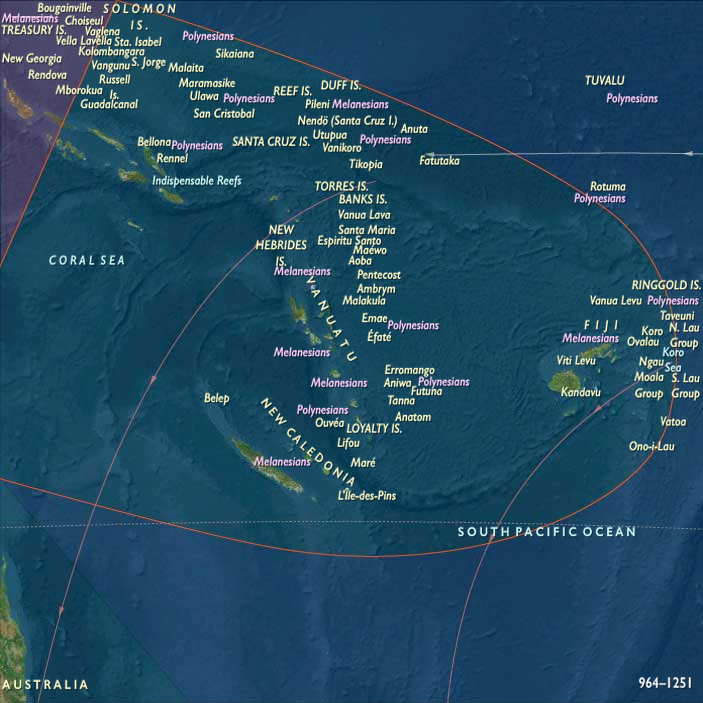
East Melanesia includes Vanuatu, Fiji, New Caledonia, and the Solomon Islands (excluding Bougainville).
High volcanic islands—Viti Levu, Vanua Levu, Espiritu Santo, Guadalcanal—offered fertile valleys and defensible ridges suited to irrigated horticulture and fortified sites. Atolls and raised limestone islands relied on arboriculture, reef harvesting, and exchange with high islands. Lagoon–reef systems and sailing corridors were the arteries of political and economic life.
Climate and Environmental Shifts
The Medieval Warm Period brought generally warm, reliable rainfall that supported population growth on high islands. Cyclones and occasional droughts continued to stress atolls, reinforcing their dependence on inter-island trade. Seasonal winds improved the reliability and reach of canoe voyages.
Societies and Political Developments
-
Fiji: Fortified hill settlements proliferated on Viti Levu and Vanua Levu, signaling heightened warfare and competition for irrigated taro lands. Powerful lineages coordinated coastal–inland alliances with ritual legitimacy.
-
Vanuatu: Grade-taking societies (nimangki, sukwe) elaborated rank through pig tusks and shell valuables. Chiefs consolidated authority via ceremonial feasts and inter-island partnerships.
-
Solomon Islands (excl. Bougainville): Clan chiefdoms intensified; larger ritual houses and shrines anchored power. Malaita and Guadalcanal lineages balanced rivalry with dense alliance and marriage ties.
-
New Caledonia: Agricultural intensification—ridge gardens, stone alignments, mulching—supported growth. Senior lineages coordinated labor; ceremonial structures underscored prestige.
Economy and Trade
Staples included taro pondfields, yam gardens, bananas, breadfruit, coconuts; pigs remained key ceremonial wealth, with chickens supplementing diets.
Canoe networks moved shell ornaments, pig tusks, red-feather regalia, fine mats, adze stone, sennit cordage, and dried fish.
Cross-regional ties: eastern Fiji ⇄ Tonga–Samoa exchanged canoes, mats, ornaments; northern Vanuatu/Solomons ⇄ Micronesia passed shell valuables and sailing knowledge. Ritual feasts redistributed surplus and fused exchange with politics.
Subsistence and Technology
Stone-faced terraces, irrigation ditches, and mulched yam gardens expanded. Reef/lagoon netting, trolling, and line fishing produced surpluses; smoking and drying extended storage. Outrigger and double-hulled canoes with crab-claw sails grew larger and more seaworthy. Obsidian tools, basalt adzes, decorated shells, and drum-slabs signified rank and craft excellence.
Movement and Interaction Corridors
Ceremonial voyaging stitched together Vanuatu, Fiji, and Solomon polities. The Lau–Tonga–Samoa triangle drew Fijian canoes and goods into a widening West Polynesian sphere. Northern Solomons–Micronesia corridors moved shell valuables and forest goods; marriage voyages cemented alliances as surely as trade.
Belief and Symbolism
Mana and tabu infused land, sea, pigs, and shell valuables. Vanuatu grade rituals transformed surplus into rank; slit-gongs and conch trumpets amplified ceremony. Solomon ritual houses embodied lineage authority and housed ancestral regalia. In New Caledonia, first-fruit yam rituals sanctified fertility and cosmic balance. Red feathers, tusks, and shells were spiritual as well as political power.
Adaptation and Resilience
Multi-resource subsistence (gardens + arboriculture + reef fisheries) buffered shocks. Fortified hill settlements offered security in conflict. Feasting and grade ceremonies redistributed staples after cyclone or drought. Canoe voyaging let atolls draw on high-island surpluses, sustaining cultural resilience.
Long-Term Significance
By 1107 CE, East Melanesia formed a mature interaction sphere of fortified chiefdoms, elaborate grade rituals, and robust canoe networks:
Fiji crystallized as a center of fortified polities tied to Polynesian expansion; Vanuatu perfected grade systems that converted surplus into enduring authority; the Solomons intensified ritual-house cults within alliance webs; New Caledonia’s ridge gardens and yam rituals anchored Kanak cultural foundations—setting the stage for deeper Polynesian and Micronesian entanglements.
Groups
Topics
Commodoties
Subjects
Regions
Subregions
Years: 964 - 1107
Groups
Topics
Commodoties
Subjects
Regions
Subregions