
East Europe (964 – 1107 CE): Kievan …
Years: 964 - 1107
East Europe (964 – 1107 CE): Kievan Rus’ Ascendancy, Khazar Eclipse, and Christianization of the Dnieper
Geographic and Environmental Context
East Europe includes Belarus, Ukraine, the European portion of Russia, and the sixteen Russian republics west of the Urals.
-
Vast forest, forest-steppe, and steppe zones were organized by the great rivers: the Dnieper, Volga, Dvina, Don, and Oka.
-
Northern Novgorod–Ladoga controlled access to Baltic and Volga routes; southern Kiev commanded the Dnieper trade to the Black Sea and Byzantium.
-
Steppe frontiers were dominated by Pechenegs and later Cumans/Polovtsians, shaping politics and warfare.
Climate and Environmental Shifts
-
The Medieval Warm Period (c. 950–1250 CE) improved growing seasons in the forest-steppe, allowing agricultural expansion into river valleys and uplands.
-
Longer ice-free navigation windows extended the transport season on the Dnieper and Volga.
-
Yet steppe droughts could provoke nomadic incursions, intensifying frontier vulnerability.
Societies and Political Developments
-
Khazar Collapse:
-
Prince Sviatoslav of Kiev (r. 945–972) launched campaigns (964–969) that destroyed Khazaria’s capital Itil, ending its centuries-long dominance of the Volga–Caspian gateway.
-
This shifted hegemony over the Volga trade to Volga Bulgars and emerging Rus’ markets.
-
-
Kievan Rus’:
-
Oleg had earlier forged Kiev as a Varangian–Slavic hub; after 964, Sviatoslav expanded east (Volga Bulgars), south (Khazars), and west (Balkans).
-
His successors consolidated Kiev as the metropolis of a riverine commonwealth.
-
Vladimir I (r. 980–1015) secured Dnieper routes, fought Poles and steppe tribes, and in 988 converted to Christianity, baptizing Kiev and aligning Rus’ with Byzantine Orthodoxy.
-
Yaroslav the Wise (r. 1019–1054) codified law (Russkaya Pravda), patronized cathedrals (St. Sophia in Kiev), and arranged dynastic marriages with Europe.
-
After 1054, Rus’ fragmented into princely appanages, though Kiev remained primate; Novgorod, Chernigov, Pereyaslavl, and Smolensk rose as regional centers.
-
-
Volga Bulgars: Islamized in 922, they prospered after Khazar decline, controlling Volga–Kama trade and mediating furs/slaves to Islamic markets.
-
Steppe Nomads:
-
Pechenegs dominated the Pontic steppe through the 10th–11th c., repeatedly besieging Kiev (notably 968, 1017, 1036).
-
By mid-11th c., the Cumans (Polovtsians) displaced them, pressuring Rus’ frontiers and raiding Dnieper settlements.
-
Economy and Trade
-
Exports: furs, wax, honey, and slaves from Slavic and Finnic forests; falcons and horses from the steppe.
-
Imports: Byzantine silks, wine, and liturgical objects via the Dnieper; Islamic silver, glassware, and textiles via the Volga.
-
Monetization: Samanid dirham flows declined after c. 970; hack-silver economies persisted, supplemented by Byzantine coins and local bullion.
-
Urban markets: Kiev became a transshipment emporium, Novgorod a northern hub linked to Baltic traders, and Smolensk a portage node.
-
Agricultural surpluses grew with expansion into fertile steppe borderlands.
Subsistence and Technology
-
Agriculture: plow farming spread in fertile chernozem belts; rye, wheat, barley, and millet expanded.
-
Stock raising: horses, cattle, and sheep herds flourished in forest-steppe zones.
-
Crafts: smithies produced axes, swords, and armor; workshops turned out jewelry, glass beads, and church art.
-
Architecture: from timber fortresses to stone cathedrals (Byzantine models) in Kiev, Novgorod, and Chernigov.
-
Transport: Dnieper monoxyla and larger plank boats; winter sledges remained essential for bulk goods.
Movement and Interaction Corridors
-
Dnieper route: Kiev monopolized tolls and tribute along the “road to the Greeks,” funneling merchants to Black Sea markets.
-
Volga route: Volga Bulgars mediated trade north to the Kama and south to the Caspian.
-
Forest portages: Novgorod secured crossings linking Baltic and Dnieper–Volga basins.
-
Steppe corridors: nomadic pressure forced princes to build alliances or pay tribute to Pechenegs and Cumans to safeguard caravans and rafts.
Belief and Symbolism
-
Slavic paganism: persisted until Vladimir’s baptism (988), with Perun (thunder god) as Kiev’s patron.
-
Christianization: post-988, Byzantine Orthodoxy spread rapidly; churches, monasteries, and literacy (Cyrillic) transformed elite culture.
-
Volga Bulgars: Islamic law and mosques anchored their trading state.
-
Cumans and Pechenegs: maintained sky-god (Tengri) cults and steppe shamanism, influencing Rus’ through diplomacy, warfare, and intermarriage.
Adaptation and Resilience
-
Political duality: dynastic marriages and church alliances tied Kiev to Europe and Byzantium, while tribute diplomacy managed steppe threats.
-
Economic redundancy: dual reliance on Dnieper–Byzantine and Volga–Islamic routes hedged against political instability.
-
Urban resilience: Kiev, Novgorod, and Smolensk diversified crafts and garrisons, absorbing shocks from raids and succession crises.
-
Cultural adaptation: integration of Byzantine law and ritual stabilized rule while retaining Slavic customary law (Russkaya Pravda).
Long-Term Significance
By 1107 CE, East Europe had become a Christian, urbanizing riverine commonwealth:
-
Kiev stood as a metropolitan capital, though its power was shared with rising regional principalities.
-
Orthodoxy redefined Rus’ identity, aligning it with Byzantium rather than Latin Europe or the Islamic world.
-
Steppe powers shifted from Pechenegs to Cumans, intensifying frontier challenges.
-
Volga Bulgars thrived as Islamic intermediaries in fur and silver trades.
This age laid the foundations for the “Rus’ principalities” system, whose fragmentation and frontier exposure would shape its fate in the age of Mongol conquest two centuries later.
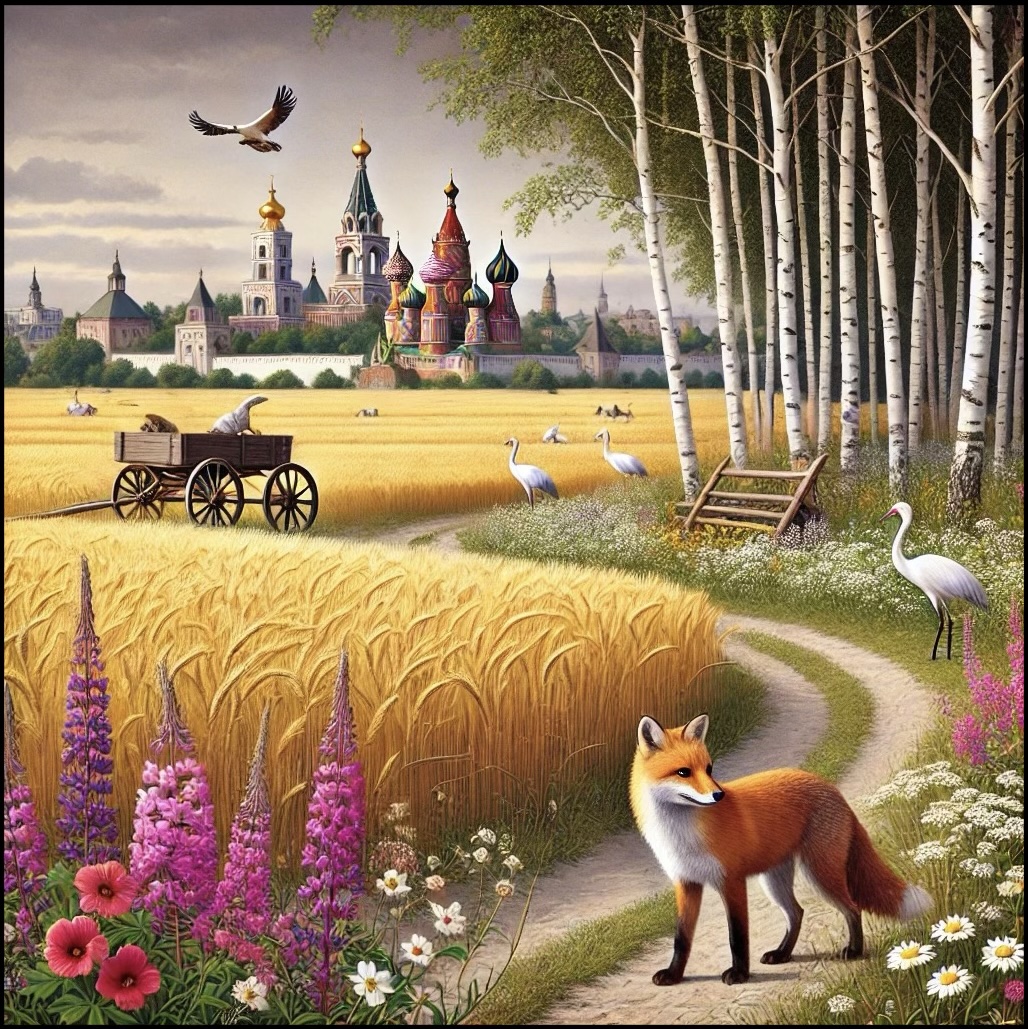
East Europe (with civilization) ©2024-25 Electric Prism, Inc. All rights reserved.
People
Groups
- Polytheism (“paganism”)
- Christianity, Chalcedonian
- Khazar Khaganate
- Volga Bulgaria, or Volga-Kama Bulgaria
- Novgorod, Principality of
- Roman Empire, Eastern: Macedonian dynasty
- Kievan Rus', or Kiev, Great Principality of
- Cumania (Cuman-Kipchak confederation)
- Chernigov (Chernihiv), Principality of
- Pereslavl, Principality of
- Cuman people, or Western Kipchaks, also called Polovtsy, Polovtsians)
- Smolensk, Principality of
- Christians, Eastern Orthodox
- Roman Empire, Eastern: Non-dynastic and Comnenid dynasty
- Roman Empire, Eastern: Doukid dynasty
- Roman Empire, Eastern: Komnenos dynasty, restored
Topics
Commodoties
- Weapons
- Hides and feathers
- Gem materials
- Domestic animals
- Oils, gums, resins, and waxes
- Grains and produce
- Ceramics
- Strategic metals
- Slaves
- Sweeteners
- Beer, wine, and spirits
- Money
Subjects
Regions
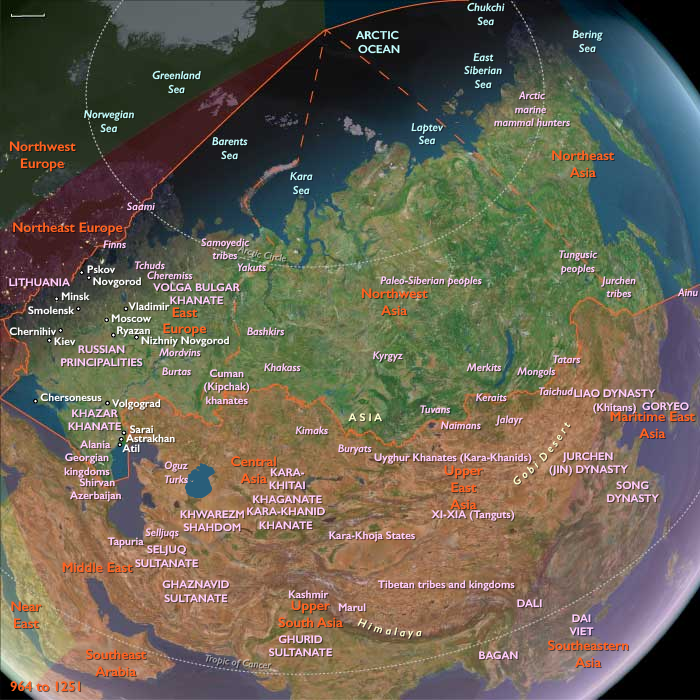
Subregions
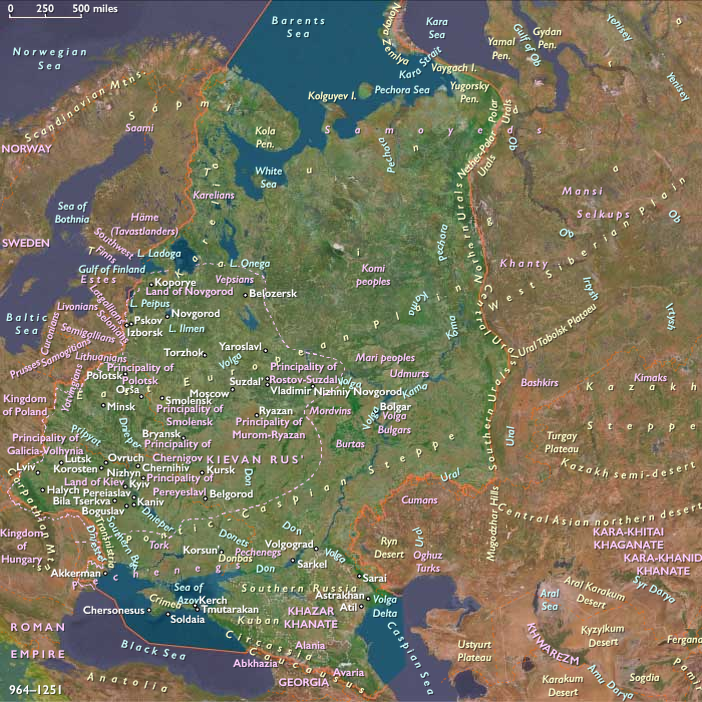
Related Events
Showing 10 events out of 52798 total
Years: 964 - 1107
East Europe (with civilization) ©2024-25 Electric Prism, Inc. All rights reserved.
People
Groups
- Polytheism (“paganism”)
- Christianity, Chalcedonian
- Khazar Khaganate
- Volga Bulgaria, or Volga-Kama Bulgaria
- Novgorod, Principality of
- Roman Empire, Eastern: Macedonian dynasty
- Kievan Rus', or Kiev, Great Principality of
- Cumania (Cuman-Kipchak confederation)
- Chernigov (Chernihiv), Principality of
- Pereslavl, Principality of
- Cuman people, or Western Kipchaks, also called Polovtsy, Polovtsians)
- Smolensk, Principality of
- Christians, Eastern Orthodox
- Roman Empire, Eastern: Non-dynastic and Comnenid dynasty
- Roman Empire, Eastern: Doukid dynasty
- Roman Empire, Eastern: Komnenos dynasty, restored
Topics
Commodoties
- Weapons
- Hides and feathers
- Gem materials
- Domestic animals
- Oils, gums, resins, and waxes
- Grains and produce
- Ceramics
- Strategic metals
- Slaves
- Sweeteners
- Beer, wine, and spirits
- Money
Subjects
Regions
Subregions