
Northeast Europe (49,293 – 28,578 BCE) …
Years: 49293BCE - 28578BCE
Northeast Europe
(49,293 – 28,578 BCE) Upper Pleistocene I — Ice Sheets, Mammoth-Steppe, and Southern Refuge Zones
Geographic and Environmental Context
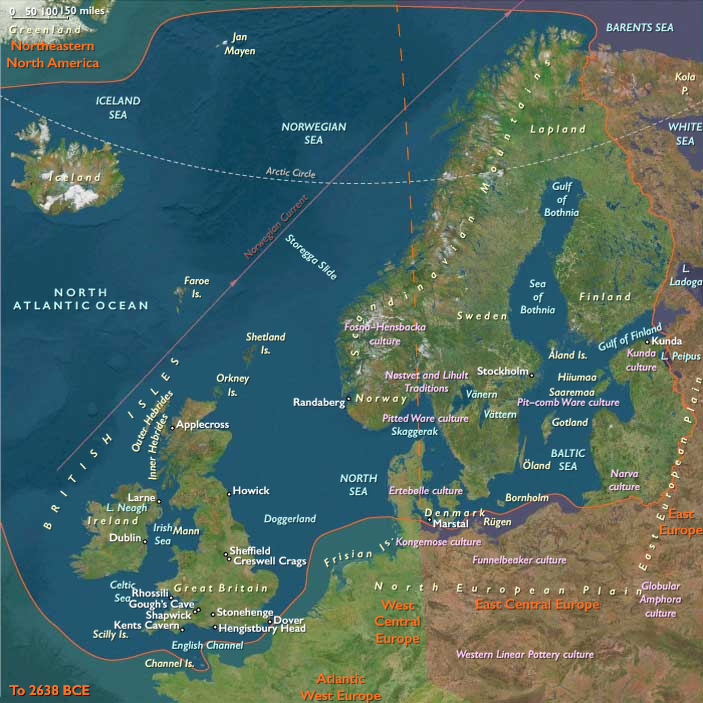
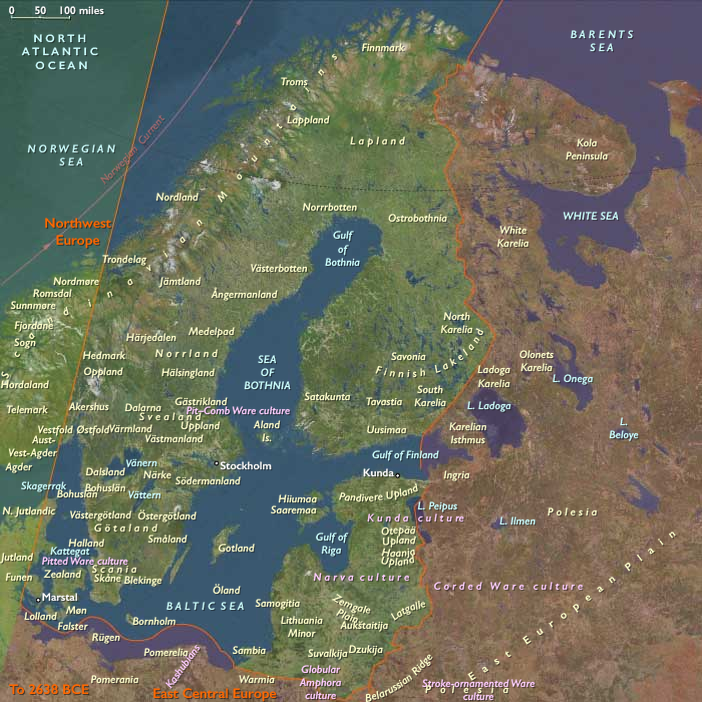
Northeast Europe includes Sweden, Finland, the Baltic States (Estonia, Latvia, Lithuania), eastern Denmark (including Copenhagen, Zealand, Bornholm), eastern Norway (including Oslo), and the Russian enclave of Kalingrad.
-
Anchors: Lake Mälaren–Uppland (Sweden), Lake Vänern–Oslofjord, Aland Islands–Gulf of Bothnia, Lake Ladoga–Karelia–Volga headwaters, Daugava–Nemunas corridors (Baltic States), Kaliningrad–Curonian/Neman delta.
-
Northern Fennoscandia buried under the Fennoscandian ice sheet.
-
Ice-free corridors survived along the southern Baltic coast (Lithuania, Latvia, Kaliningrad) and adjacent Poland.
-
Exposed Baltic shelf plains stretched far north due to sea-level fall.
Climate & Environmental Shifts
-
Last Glacial Maximum: cold, dry, glacial; tundra–steppe south of the ice sheet; sea level ~100 m below modern.
-
Glacial meltwaters carved proglacial channels feeding southward into the Vistula–Daugava systems.
Subsistence & Settlement
-
Human presence restricted to southern refugia: reindeer–horse hunters in Lithuania–Latvia–Kaliningradmargins.
-
Seasonal reindeer drives along ice-edge valleys; fish and waterfowl secondary.
Technology & Material Culture
-
Blade–microblade industries; bone/antler points; personal ornaments (pierced teeth, amber beads); ochre burials persisted.
Movement & Interaction Corridors
-
Daugava–Nemunas–Vistula river systems provided migration corridors; steppe–tundra routes linked to Central/Eastern Europe.
Cultural & Symbolic Expressions
-
Portable engravings of elk, reindeer, mammoth motifs; ochred burials signal continuity with wider European Upper Paleolithic.
Topics
Commodoties
Subjects
Regions
Subregions
Related Events
Showing 10 events out of 69706 total
Years: 49293BCE - 28578BCE
Topics
Commodoties
Subjects
Regions
Subregions