
East Europe (388–531 CE): Hunnic Invasions and …
Years: 388 - 531
East Europe (388–531 CE): Hunnic Invasions and the Transformation of Tribal Dynamics
Political and Military Developments
Rise and Expansion of the Huns
Between 388 and 531 CE, the Huns, a nomadic confederation originating from Central Asia, aggressively expanded westward into East Europe, dramatically reshaping regional power structures. Their powerful military campaigns significantly disrupted Gothic dominance and compelled various tribes to migrate further westward and southward.
Decline and Migration of the Goths
The Hunnic incursions severely destabilized established Gothic territories, forcing substantial Gothic migrations into Roman territories and other parts of Europe. This period notably includes the famous crossing of the Danube by the Visigoths and Ostrogoths, precipitating broader shifts throughout Europe.
Economic and Technological Developments
Disruption and Realignment of Trade Networks
Hunnic domination disrupted established Eurasian trade routes, prompting significant shifts in trade flows and economic relationships. Despite disruptions, trade persisted along alternate routes, adapting to changing political landscapes.
Military Innovation and Hunnic Warfare
The Huns introduced and perfected swift, highly mobile cavalry tactics, revolutionizing warfare in East Europe. Their military techniques, including superior horsemanship and composite bows, profoundly influenced European warfare practices and inspired adaptations among neighboring tribes.
Cultural and Artistic Developments
Influence of Hunnic Artistic Traditions
The artistic culture introduced by the Huns blended Central Asian motifs with existing Gothic and Roman influences, resulting in distinct new styles. Metalwork, weaponry, and personal adornments exhibited intricate designs and craftsmanship, indicative of this cultural fusion.
Shifts in Gothic and Local Artistic Traditions
Gothic artistic expressions adapted significantly in response to Hunnic influences. Local traditions continued to evolve, incorporating new symbolic and stylistic elements that reflected the dynamic cultural interactions of this period.
Settlement Patterns and Urban Development
Decline and Transformation of Urban Centers
The destabilizing impact of Hunnic invasions led to the abandonment or transformation of many urban centers, with populations relocating or fortifying their settlements against further incursions. Strategic and defensive considerations dominated urban and settlement planning.
Chernyakhov Culture’s Decline
The previously flourishing Chernyakhov culture experienced a decline and eventual dissolution under Hunnic pressure, giving way to smaller, more dispersed settlement patterns reflective of broader migratory and defensive strategies.
Social and Religious Developments
New Social Hierarchies and Power Structures
Hunnic domination imposed new hierarchical structures and alliances, with tribal leaders gaining prominence through military prowess and strategic cooperation with or resistance against Hunnic authority. Social structures became more fluid in response to shifting power dynamics.
Religious Pluralism and Adaptation
Religious practices diversified further during this period, reflecting the coexistence and adaptation of multiple belief systems including traditional paganism, Christianity, and Central Asian religious elements introduced by the Huns.
Long-Term Consequences and Historical Significance
The era from 388 to 531 CE was characterized by profound political, military, and cultural upheaval due to Hunnic invasions. These dramatic transformations significantly influenced subsequent historical developments, setting the stage for the emergence of medieval European political and social structures.
Groups
- Polytheism (“paganism”)
- Slavs, Proto-
- Bosporan Kingdom
- Sarmatians
- Goths (East Germanic tribe)
- Huns
- Chernyakhov culture
- Roman Empire (Rome): Non-dynastic
- Crimean Goths (East Germanic tribe)
- Christianity, Nicene
- Hunnic Empire
- Roman Empire: Theodosian dynasty (Constantinople)
- Ostrogoths, Realms of the
- Visigoths, Realm of the
- Christianity, Chalcedonian
- Roman Empire, Eastern: Leonid dynasty
- Roman Empire, Eastern: Justinian dynasty
Topics
Commodoties
- Weapons
- Hides and feathers
- Gem materials
- Domestic animals
- Grains and produce
- Ceramics
- Strategic metals
- Slaves
- Sweeteners
- Beer, wine, and spirits
Subjects
Regions
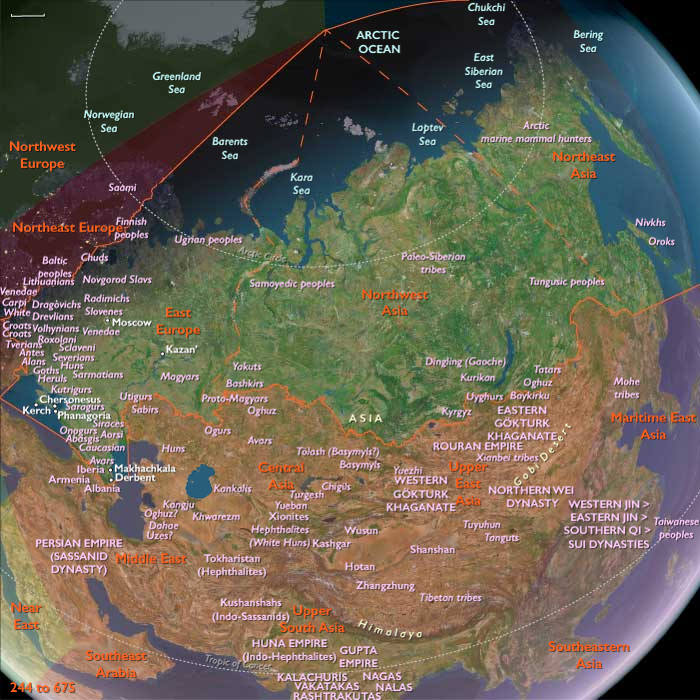
Subregions
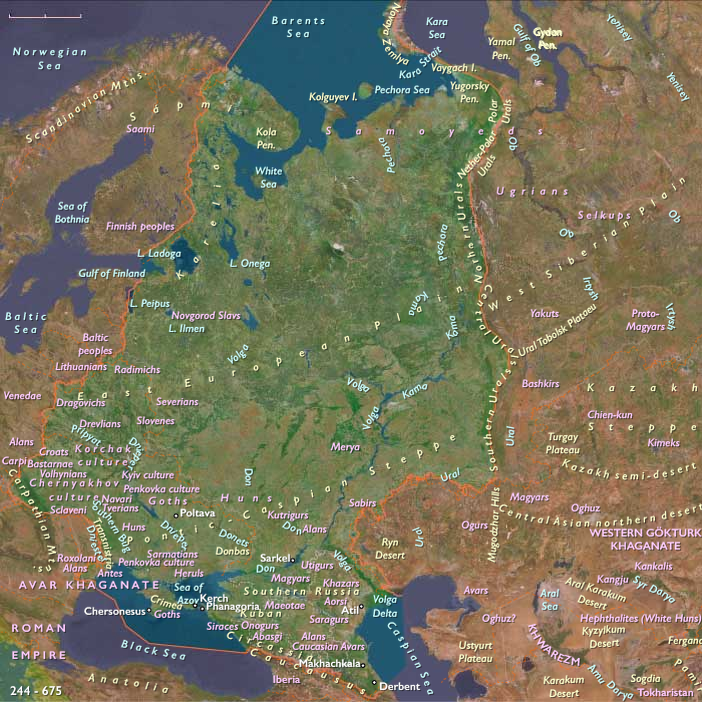
Years: 388 - 531
Groups
- Polytheism (“paganism”)
- Slavs, Proto-
- Bosporan Kingdom
- Sarmatians
- Goths (East Germanic tribe)
- Huns
- Chernyakhov culture
- Roman Empire (Rome): Non-dynastic
- Crimean Goths (East Germanic tribe)
- Christianity, Nicene
- Hunnic Empire
- Roman Empire: Theodosian dynasty (Constantinople)
- Ostrogoths, Realms of the
- Visigoths, Realm of the
- Christianity, Chalcedonian
- Roman Empire, Eastern: Leonid dynasty
- Roman Empire, Eastern: Justinian dynasty
Topics
Commodoties
- Weapons
- Hides and feathers
- Gem materials
- Domestic animals
- Grains and produce
- Ceramics
- Strategic metals
- Slaves
- Sweeteners
- Beer, wine, and spirits
Subjects
Regions
Subregions