
East Europe (1720–1731 CE): Post-War Consolidation and …
Years: 1720 - 1731
East Europe (1720–1731 CE): Post-War Consolidation and Continued Reform
Political and Military Developments
Post-War Stabilization and Governance
Between 1720 and 1731 CE, Russia entered a period of consolidation following its triumphs in the Great Northern War. Peter the Great focused on stabilizing and further centralizing governmental structures to solidify newly gained territories and strengthen administrative coherence.
Continued Diplomatic Engagements
Diplomatic relations expanded further, with Russia reinforcing its status among major European powers. Strategic alliances were nurtured, ensuring peace and regional stability, and enhancing Russia's international influence.
Military Modernization and Organization
Military modernization continued unabated, with substantial enhancements to Russia's naval and land forces. Further reforms in military organization, logistics, and fortification significantly strengthened Russia’s defensive capabilities and territorial security.
Economic and Technological Developments
Ongoing Economic Modernization
Economic growth persisted, driven by continuing industrialization and expansion in manufacturing sectors such as textiles, metallurgy, and shipbuilding. Robust trade networks facilitated sustained economic prosperity.
Infrastructure and Technological Advancements
Infrastructure development remained a priority, with significant improvements in roads, canals, and urban amenities. Technological progress, especially in military engineering and agriculture, enhanced productivity and regional stability.
Cultural and Artistic Developments
Deepening Cultural Integration
Cultural life flourished further, driven by sustained patronage from the Russian elite. Architectural developments, artistic endeavors, and cultural exchanges with Europe continued to enrich Russia's cultural landscape.
Expansion of Intellectual and Academic Activities
Intellectual pursuits thrived, with increasing interaction with European academic traditions. New scholarly institutions and continued literary production advanced Russia’s intellectual reputation and educational standards.
Settlement Patterns and Urban Development
Continued Urban Growth
Cities, notably Saint Petersburg and Moscow, experienced continued expansion and modernization. Infrastructure upgrades and urban planning improvements significantly enhanced livability, economic vitality, and administrative effectiveness.
Fortification and Strategic Defense
Urban and territorial fortifications saw ongoing enhancements, crucial for maintaining security and protecting vital economic and administrative centers from potential threats.
Social and Religious Developments
Social Integration and Stability
Social reforms maintained momentum, aiming at deeper integration and Westernization of societal structures. Efforts persisted to incorporate diverse ethnic and regional communities into Russia's administrative and cultural framework.
State and Orthodox Church Relations
Relations between the state and the Orthodox Church continued evolving, with further reforms ensuring greater alignment between religious institutions and governmental objectives. This restructuring continued to shape the Church’s societal role and influence.
Long-Term Consequences and Historical Significance
The period from 1720 to 1731 CE marked sustained post-war consolidation and ongoing reforms that cemented Russia's place as a leading European power. The stability, economic strength, and cultural richness achieved during this era set critical precedents for Russia's future development and international role.
People
Groups
- Christians, Eastern Orthodox
- Sweden, (second) Kingdom of
- Denmark-Norway, Kingdom of
- Russia, Tsardom of
- Polish-Lithuanian Commonwealth (Commonwealth of the Two Nations)
Topics
Commodoties
Subjects
Regions
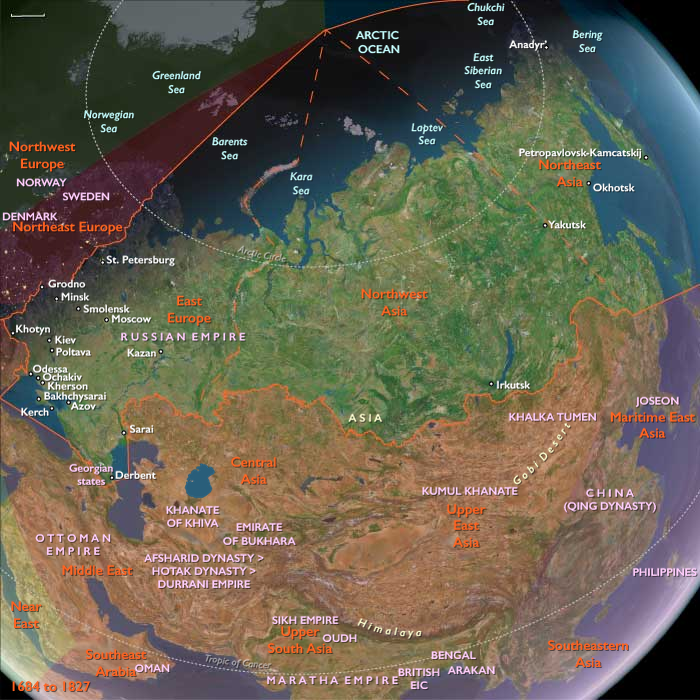
Subregions
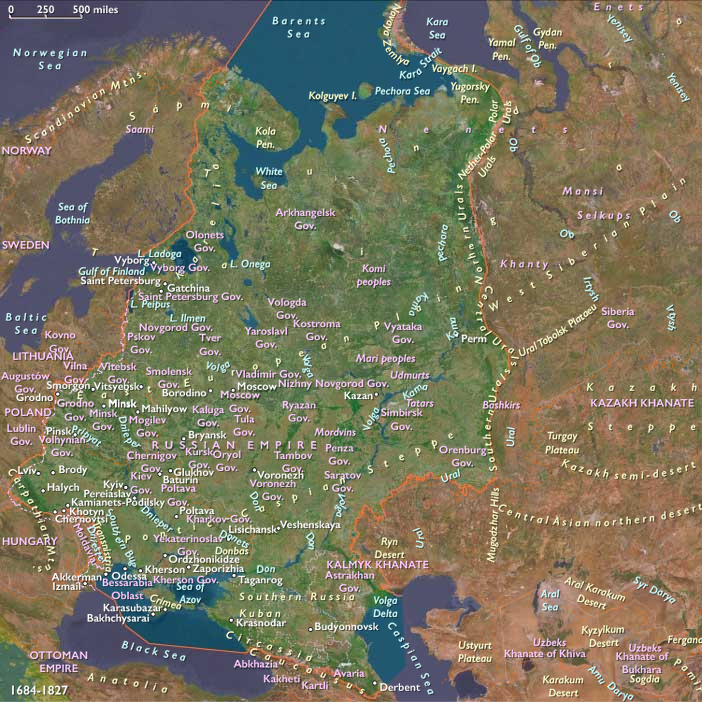
Related Events
Showing 10 events out of 28131 total
Years: 1720 - 1731
People
Groups
- Christians, Eastern Orthodox
- Sweden, (second) Kingdom of
- Denmark-Norway, Kingdom of
- Russia, Tsardom of
- Polish-Lithuanian Commonwealth (Commonwealth of the Two Nations)
Topics
Commodoties
Subjects
Regions
Subregions