
East Europe (1684–1695 CE): Expansion, Westernization, and …
Years: 1684 - 1695
East Europe (1684–1695 CE): Expansion, Westernization, and Military Reforms
Political and Military Developments
Rise of Peter the Great
Between 1684 and 1695 CE, Muscovy witnessed the ascent of Tsar Peter I (Peter the Great), marking a pivotal era of substantial reforms, modernization, and ambitious territorial expansion aimed at transforming Russia into a major European power.
Territorial Ambitions and Military Campaigns
Peter the Great initiated significant military campaigns, including early attempts to secure access to the Black Sea. His administration emphasized strategic military planning and aggressive diplomacy to expand Muscovy’s geopolitical influence.
Diplomatic and Strategic Realignment
Diplomatic relationships with European powers, notably Sweden, Poland-Lithuania, and the Ottoman Empire, became increasingly strategic. Peter actively sought alliances to strengthen Muscovy’s international position and enhance military preparedness.
Economic and Technological Developments
Economic Modernization
Economic policies began shifting towards modernization and increased integration with European markets. Efforts included the establishment of new industries, improvements in trade practices, and strategic economic reforms aimed at bolstering Muscovy’s economic resilience.
Military and Infrastructure Innovations
Under Peter, significant advancements in military organization and technology were initiated, notably the modernization of naval forces and improvement of fortification techniques. These changes were critical for achieving his strategic military objectives.
Cultural and Artistic Developments
Introduction of Western Influences
Peter's reign marked the introduction of Western European influences into Muscovite culture. Architectural styles, artistic expressions, and educational practices began incorporating Western elements, reshaping cultural identities.
Intellectual Growth and Literary Activity
Intellectual endeavors expanded significantly, reflecting increased contact with European scholarship. Literary production began to evolve, incorporating new forms and themes reflecting Western influences and broader intellectual currents.
Settlement Patterns and Urban Development
Urban Modernization
Cities, particularly Moscow, began modernizing with new urban planning methods, infrastructure improvements, and expanded administrative capacities. These developments supported increased population growth and urban efficiency.
Enhanced Fortifications
Significant improvements in urban and territorial fortifications enhanced Muscovy’s defensive capabilities, reflecting a strategic focus on military preparedness and security.
Social and Religious Developments
Social Reforms and Integration
Social structures began reflecting Peter’s reforms aimed at Westernization, impacting traditional societal frameworks. Integration efforts continued, focusing on accommodating diverse ethnic populations within a modernizing state.
Orthodox Church and State Relations
Relations between the Orthodox Church and state authorities evolved, influenced by Peter’s reforms. Efforts were made to align the church more closely with state objectives, adjusting its role in education, community life, and social governance.
Long-Term Consequences and Historical Significance
The period from 1684 to 1695 CE represented the initial stages of Peter the Great’s transformative influence on Muscovy. These reforms set critical foundations for Russia’s emergence as a significant European power, initiating profound changes in political structure, economic practices, cultural identity, and military strength.
People
Groups
- Christians, Eastern Orthodox
- Ottoman Empire
- Sweden, (second) Kingdom of
- Russia, Tsardom of
- Polish-Lithuanian Commonwealth (Commonwealth of the Two Nations)
Topics
Subjects
Regions
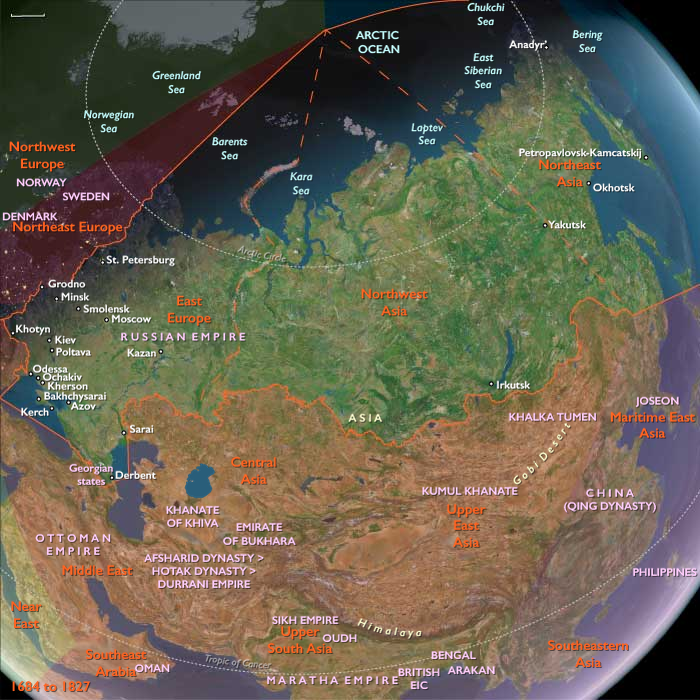
Subregions
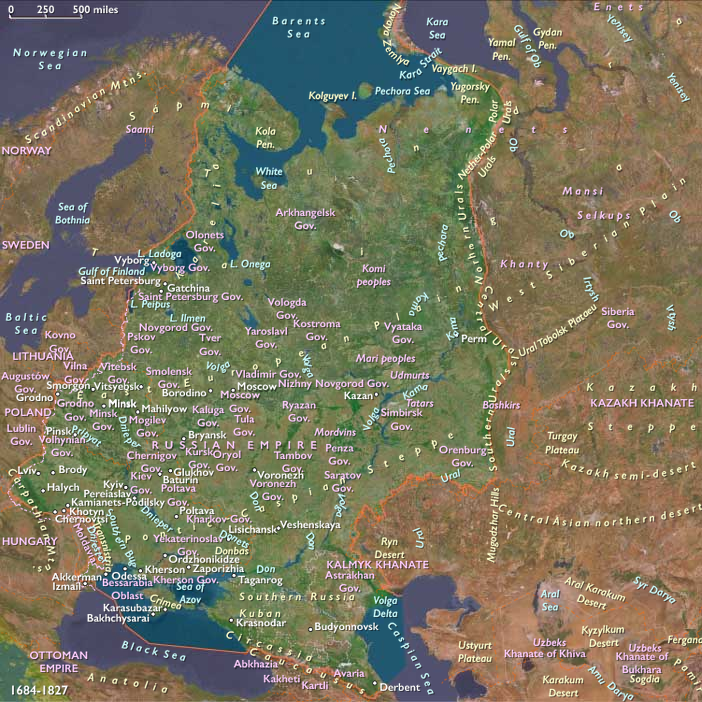
Years: 1684 - 1695
People
Groups
- Christians, Eastern Orthodox
- Ottoman Empire
- Sweden, (second) Kingdom of
- Russia, Tsardom of
- Polish-Lithuanian Commonwealth (Commonwealth of the Two Nations)
Topics
Subjects
Regions
Subregions