East Europe (1672–1683 CE): Expansion, Diplomacy, and …
Years: 1672 - 1683
East Europe (1672–1683 CE): Expansion, Diplomacy, and Cultural Maturation
Political and Military Developments
Continued Territorial Expansion
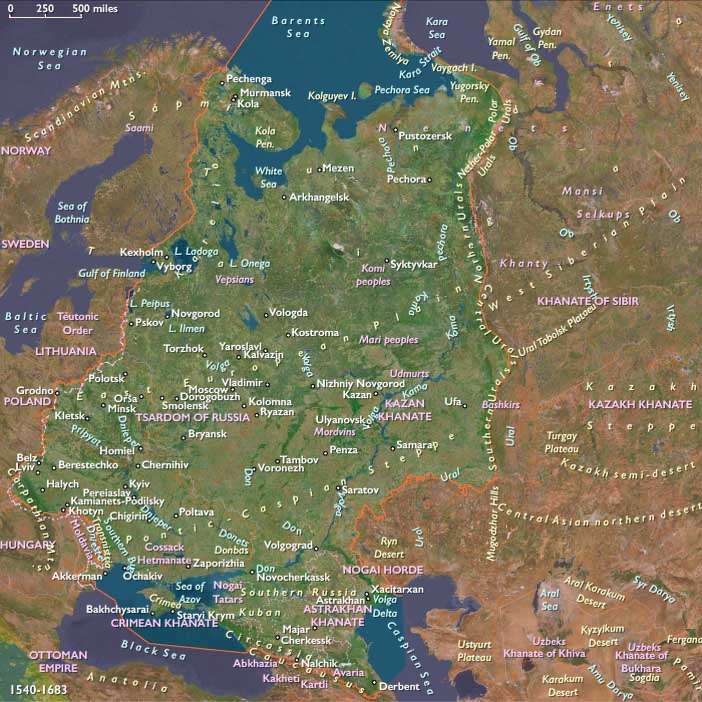
Between 1672 and 1683 CE, Muscovy pursued further territorial expansion, reinforcing its dominance in East Europe. The continued integration of new regions solidified political authority and enhanced administrative cohesion.
Complex Diplomatic Relations
Diplomatic interactions intensified, notably with the Ottoman Empire, Poland-Lithuania, and Sweden. Strategic diplomacy and occasional military conflicts shaped regional alliances and established a more secure geopolitical landscape for Muscovy.
Military Modernization and Strategic Fortifications
Muscovy invested significantly in modernizing its military forces, refining tactics, and strengthening fortifications. These advancements provided enhanced security, protecting territories and supporting further expansion.
Economic and Technological Developments
Economic Strength and Trade Expansion
Economic prosperity continued, bolstered by stable trade routes and increased commerce with neighboring regions. The robust economy contributed significantly to urban growth and regional development.
Innovations in Infrastructure and Technology
Technological advancements in infrastructure, agriculture, and military capabilities persisted, further stabilizing and enhancing regional economic strength and security.
Cultural and Artistic Developments
Cultural Patronage and Flourishing
The Romanov dynasty continued its substantial cultural patronage, leading to remarkable achievements in architecture, religious art, and secular cultural expressions. These efforts deepened Muscovy's rich cultural identity.
Vibrant Intellectual and Literary Culture
Intellectual and literary activities thrived, with scholars and chroniclers actively documenting political, social, and cultural developments, thus preserving historical memory and enriching cultural traditions.
Settlement Patterns and Urban Development
Urban Growth and Strategic Development
Urban centers, particularly Moscow, continued their robust expansion, benefiting from strategic urban planning and substantial infrastructure projects. Enhanced administrative efficiency and economic growth supported ongoing urban prosperity.
Strengthened Urban Defenses
Further improvements in urban fortifications reinforced security, safeguarding cities from external threats and internal instability, crucial for regional development and stability.
Social and Religious Developments
Increasing Social Cohesion
Social cohesion and integration continued to improve, supported by inclusive administrative policies that effectively incorporated diverse ethnic groups into Muscovite society, enhancing overall societal stability.
Expanding Influence of the Orthodox Church
The Orthodox Church expanded its societal role further, significantly influencing education, community values, and cultural practices across Muscovy’s territories. Its contributions were vital to regional unity and cultural coherence.
Long-Term Consequences and Historical Significance
The era from 1672 to 1683 CE was marked by strategic expansion, sophisticated diplomacy, and significant cultural advancements. These developments further solidified Muscovy’s regional dominance and laid robust foundations for future political, economic, and cultural maturation.
Years: 1672 - 1683
Groups
- Christians, Eastern Orthodox
- Moscow, Grand Principality of
- Ottoman Empire
- Sweden, (second) Kingdom of
- Polish-Lithuanian Commonwealth (Commonwealth of the Two Nations)
- Cossack Hetmanate
- Cossack Hetmanate
Subjects
Regions
Subregions