
East Europe (1600–1611 CE): Time of Troubles …
Years: 1600 - 1611
East Europe (1600–1611 CE): Time of Troubles and Political Crisis
Political and Military Developments
Onset of the Time of Troubles
Between 1600 and 1611 CE, Muscovy entered the tumultuous "Time of Troubles," characterized by political instability, succession crises, and significant internal conflict. Following the death of Tsar Feodor I in 1598 and the end of the Rurik dynasty, Boris Godunov assumed power, but his reign saw considerable internal dissent and challenges.
Dynastic Crisis and Pretenders
This period featured several claimants to the throne, notably the appearance of "False Dmitry," an impostor who claimed to be the son of Ivan IV. His brief success highlighted the deep divisions and instability within Muscovy.
Military Invasions and Foreign Interference
The political instability invited foreign invasions, including Polish-Lithuanian intervention, exacerbating Muscovy’s internal crisis. Muscovy’s territories faced significant threats, challenging regional governance and national sovereignty.
Economic and Technological Developments
Economic Disruption and Challenges
The period saw economic disruption due to political instability, military conflicts, and foreign intervention. Trade and commerce suffered significantly, leading to hardship across urban centers and rural areas.
Military Adjustments Amid Crisis
Despite internal turmoil, Muscovy continued to adapt and refine military technologies and strategies, crucial for addressing immediate threats and stabilizing territories amidst ongoing crises.
Cultural and Artistic Developments
Cultural Strains and Survival
The cultural scene experienced considerable strain due to political and economic upheaval. Nonetheless, cultural expressions, religious art, and architecture persisted, reflecting resilience amid adversity.
Intellectual Efforts and Chronicling of Events
Chroniclers and intellectuals actively documented events during this chaotic period, providing critical insights and historical narratives that contributed to the preservation of Muscovite identity and historical consciousness.
Settlement Patterns and Urban Development
Urban Struggles and Resilience
Cities, particularly Moscow, faced severe challenges due to political instability and warfare. However, strategic urban planning and infrastructure maintenance continued, albeit under difficult conditions, ensuring some degree of urban resilience.
Defensive Fortifications Amid Instability
Urban fortifications remained crucial, receiving attention despite broader crises, to provide essential protection against internal disorder and external threats.
Social and Religious Developments
Social Disruption and Efforts at Cohesion
Societal structures were significantly disrupted by political upheaval and conflict. Efforts continued to maintain social cohesion, with communities striving for stability amidst uncertainty.
Role of the Orthodox Church
The Orthodox Church played a vital stabilizing role during the Time of Troubles, offering moral guidance, maintaining educational continuity, and providing essential community support amid widespread instability.
Long-Term Consequences and Historical Significance
The period from 1600 to 1611 CE profoundly impacted Muscovite society, reshaping political structures, and highlighting vulnerabilities that would inform future governance strategies. These events significantly influenced the trajectory toward eventual political stabilization and the re-establishment of centralized authority.
People
Groups
- Bashkirs
- Christians, Eastern Orthodox
- Moscow, Grand Principality of
- Crimean Khanate
- Polish-Lithuanian Commonwealth (Commonwealth of the Two Nations)
Topics
Subjects
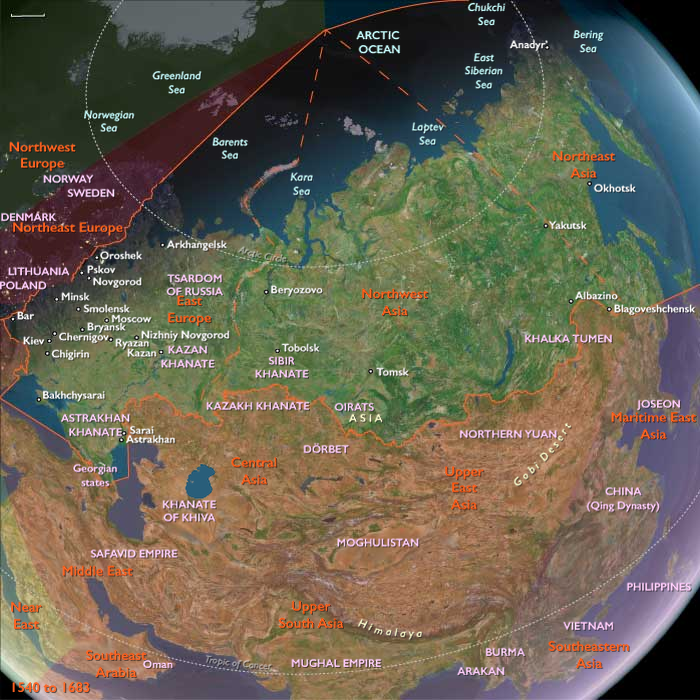
Regions
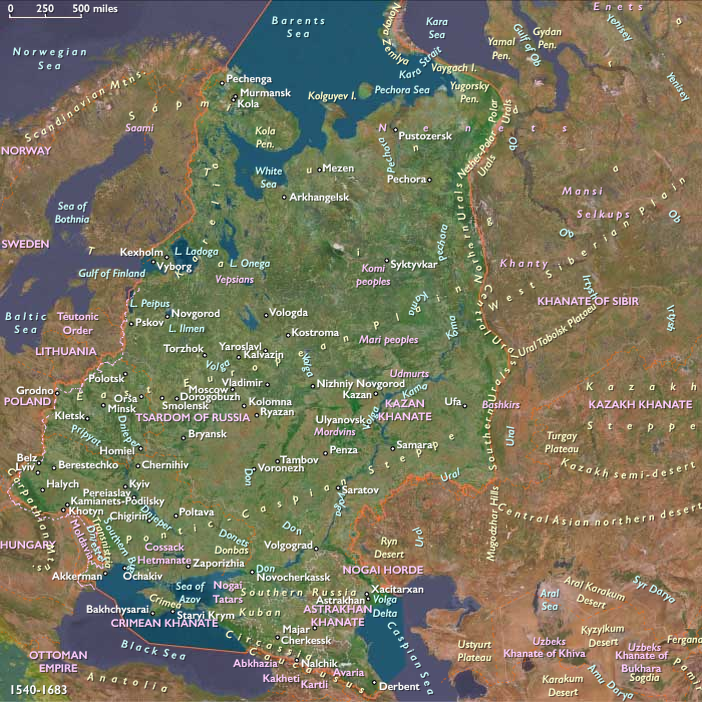
Subregions
Related Events
Showing 10 events out of 34015 total
Years: 1600 - 1611
People
Groups
- Bashkirs
- Christians, Eastern Orthodox
- Moscow, Grand Principality of
- Crimean Khanate
- Polish-Lithuanian Commonwealth (Commonwealth of the Two Nations)
Topics
Subjects
Regions
Subregions