
East Europe (1576–1587 CE): Post-Oprichnina Stabilization and …
Years: 1576 - 1587
East Europe (1576–1587 CE): Post-Oprichnina Stabilization and Territorial Reinforcement
Political and Military Developments
Recovery and Stabilization Post-Oprichnina
Between 1576 and 1587 CE, Muscovy began recovering from the destabilizing effects of Ivan IV’s Oprichnina policies. Efforts were directed toward restoring administrative efficiency, central governance, and political stability.
Territorial Management and Ethnic Integration
Muscovy continued to manage the integration of ethnic territories, especially those of the Bashkirs and other Ural-Volga groups. Diplomatic negotiations and military presence helped maintain regional stability and incorporate diverse populations into Muscovite governance.
Economic and Technological Developments
Economic Recovery and Trade Reinforcement
Economic conditions improved gradually, benefiting from renewed trade activities along the Volga River and within major urban centers. This recovery was critical in stabilizing Muscovy’s financial situation and promoting commercial confidence.
Ongoing Military Infrastructure Enhancement
Military technologies and infrastructures, particularly fortifications, siege tactics, and cavalry units, continued to be enhanced. These improvements ensured Muscovy’s defensive preparedness and territorial security.
Cultural and Artistic Developments
Resurgence in Cultural Activities
Cultural and artistic activities experienced renewed vigor, supported by revived patronage from the elite. Architecture, religious art, and secular cultural expressions regained prominence, contributing to Muscovy’s distinct cultural identity.
Intellectual and Literary Productivity
Scholars and chroniclers continued to document and analyze political, social, and cultural developments. These intellectual activities played a vital role in maintaining historical continuity and cultural awareness.
Settlement Patterns and Urban Development
Urban Recovery and Development
Urban areas, particularly Moscow, experienced renewed growth and development, benefiting from restored political stability and improved administrative management. Strategic urban planning facilitated infrastructure improvements and population growth.
Strengthened Urban Fortifications
Continued improvements in urban fortifications provided security and stability, supporting economic and demographic recovery in urban centers.
Social and Religious Developments
Restoring Social Stability
Social cohesion gradually improved following the disruptions of the Oprichnina. Efforts to integrate diverse ethnic groups into societal and administrative structures continued, reinforcing social harmony and administrative effectiveness.
Continued Influence of the Orthodox Church
The Orthodox Church sustained its critical role in stabilizing society through education, moral guidance, and community cohesion. Its influence remained integral to Muscovy’s social and cultural fabric.
Long-Term Consequences and Historical Significance
The period from 1576 to 1587 CE marked a phase of recovery and consolidation for Muscovy, following significant internal challenges. These developments laid essential groundwork for renewed political stability, territorial integrity, and cultural richness, shaping Muscovy’s future trajectory.
People
Groups
Subjects
Regions
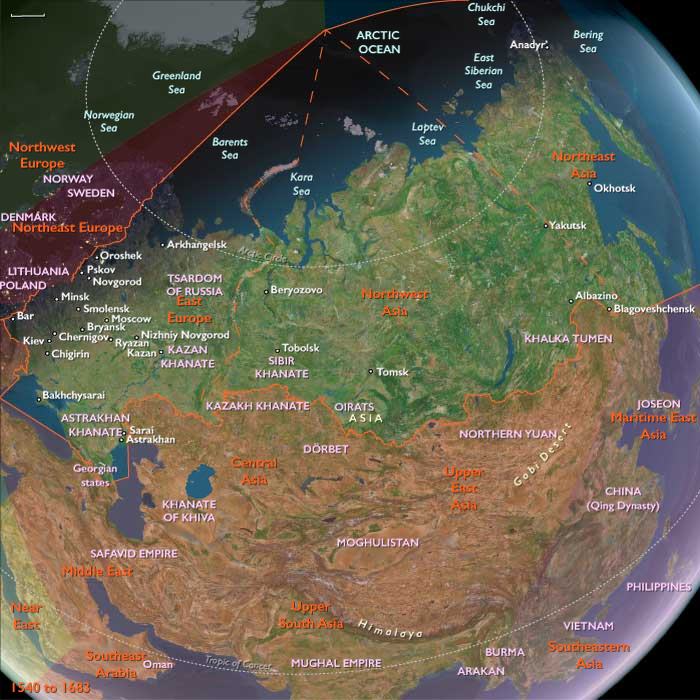
Subregions
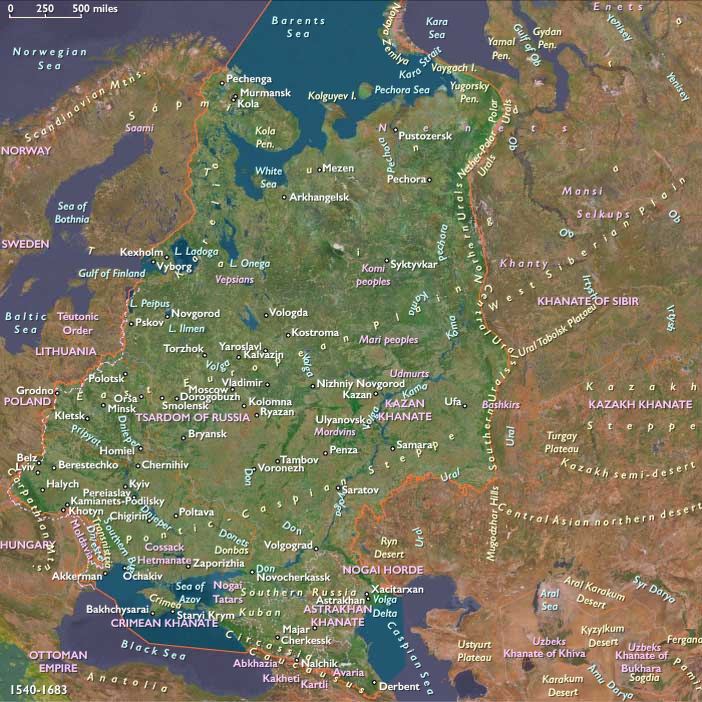
Years: 1576 - 1587
People
Groups
Subjects
Regions
Subregions