
East Europe (1528–1539 CE): Muscovite Consolidation and …
Years: 1528 - 1539
East Europe (1528–1539 CE): Muscovite Consolidation and Continued Diplomatic Engagement
Political and Military Developments
Territorial Stability and Administrative Centralization
Between 1528 and 1539 CE, Muscovy reinforced territorial gains and further refined its centralized administrative apparatus under Vasili III and Ivan IV's early reign. Governance improvements solidified political control across the expanded territories.
Complex Relations with Regional Khanates
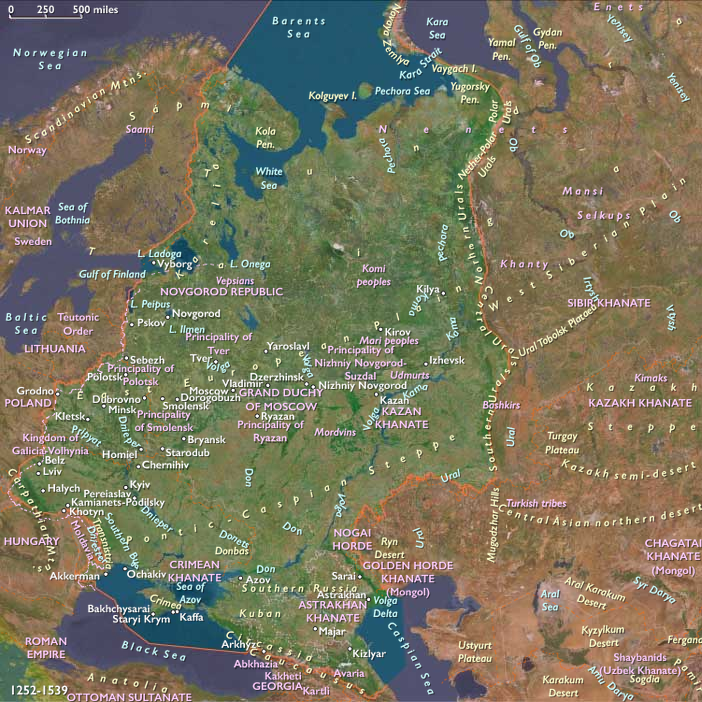
Diplomatic and military interactions with the Khanates of Kazan, Crimea, and Astrakhan persisted with fluctuating alliances and intermittent conflicts. Muscovy effectively maintained regional dominance through strategic diplomacy and military readiness.
Military Strengthening and Strategic Defense
Military innovations continued, notably improving fortifications, refining siege warfare strategies, and enhancing cavalry tactics, substantially strengthening Muscovy’s defensive capabilities and regional influence.
Economic and Technological Developments
Sustained Economic Growth
Economic prosperity continued through vibrant internal markets and active engagement in international trade. Prominent urban centers, particularly Moscow, flourished economically, reflecting Muscovy's robust regional economy.
Continued Technological Innovations
Technological advancements persisted, particularly in military infrastructure and urban development, further reinforcing regional stability and administrative efficiency.
Cultural and Artistic Developments
Artistic Flourishing and Cultural Expansion
Muscovy’s cultural life continued to thrive, marked by significant developments in architecture, religious artwork, and secular cultural activities, driven by strong patronage from Muscovite elites.
Vibrant Intellectual and Literary Environment
Literary and scholarly productivity remained active, documenting historical, religious, and cultural events. These efforts contributed significantly to preserving and enhancing regional identity and historical continuity.
Settlement Patterns and Urban Development
Urban Growth and Infrastructure Refinement
Urban areas, notably Moscow, experienced ongoing demographic and economic expansion, supported by continuous infrastructure development, sophisticated planning, and administrative organization.
Strategic Fortifications and Urban Security
Improvements in urban fortifications enhanced the defense of regional cities, safeguarding stability and security amid dynamic diplomatic and military circumstances.
Social and Religious Developments
Social Harmony and Ethnic Integration
Social integration deepened further, effectively including diverse ethnic groups like the Mari, Mordvins, Udmurts, Komi, and Vepsians. This inclusive approach supported administrative effectiveness and societal stability.
Orthodox Church’s Ongoing Influence
The Orthodox Church continued to play a significant role, shaping education, social values, and community cohesion, thus contributing notably to societal stability and cultural continuity.
Long-Term Consequences and Historical Significance
The period from 1528 to 1539 CE marked significant Muscovite territorial consolidation, diplomatic sophistication, and cultural enrichment, establishing essential foundations for the increasingly centralized and culturally diverse Russian state.
People
Groups
- Komi peoples
- Mordvins
- Veps, or Vepsians
- Mari people
- Christians, Eastern Orthodox
- Udmurt people
- Ryazan, Principality of
- Moscow, Grand Principality of
- Kazan, Khanate of
- Crimean Khanate
- Astrakhan Khanate
Subjects
Regions
Subregions
Related Events
Showing 10 events out of 38215 total
Years: 1528 - 1539
People
Groups
- Komi peoples
- Mordvins
- Veps, or Vepsians
- Mari people
- Christians, Eastern Orthodox
- Udmurt people
- Ryazan, Principality of
- Moscow, Grand Principality of
- Kazan, Khanate of
- Crimean Khanate
- Astrakhan Khanate
Subjects
Regions
Subregions