
East Europe (1504–1515 CE): Muscovite Expansion and …
Years: 1504 - 1515
East Europe (1504–1515 CE): Muscovite Expansion and Administrative Refinement
Political and Military Developments
Territorial Consolidation and Administration
Between 1504 and 1515 CE, Muscovy expanded further and solidified its hold over newly acquired territories. Under the leadership of Vasili III, administrative reforms improved governance and facilitated stronger centralized control.
Complex Relations with Regional Khanates
Muscovy's interactions with the Khanates of Kazan, Crimea, and Astrakhan remained dynamic and occasionally tense. Strategic diplomacy and targeted military campaigns helped secure Muscovy’s territorial integrity and political influence.
Military Innovations and Defense Enhancements
Continued military advancements, including improved fortifications, refined siege tactics, and sophisticated cavalry strategies, enhanced Muscovy’s defense capabilities and supported its regional ambitions.
Economic and Technological Developments
Economic Stability and Growth
The Muscovite economy continued to thrive, supported by robust internal commerce and active participation in international trade. Key urban centers, particularly Moscow, prospered significantly.
Infrastructure and Technological Advancements
Technological progress continued, particularly in military infrastructure and urban development, reinforcing regional security and supporting administrative efficiency.
Cultural and Artistic Developments
Cultural Flourishing and Artistic Innovation
Cultural development thrived, driven by Muscovite patronage, with notable advancements in architecture, religious art, and secular cultural activities. These achievements further enriched Muscovite cultural identity.
Literary and Intellectual Continuity
Intellectual and literary productivity remained high, with scholars and chroniclers extensively documenting historical, religious, and cultural events, significantly reinforcing regional identity and continuity.
Settlement Patterns and Urban Development
Continued Urban Expansion
Urban centers, especially Moscow, experienced ongoing demographic and economic growth, facilitated by improved infrastructure and advanced urban planning, thus enhancing regional administrative coherence.
Strategic Urban Fortifications
Continued improvement in fortifications strengthened urban defense systems, safeguarding regional stability amid political and military challenges.
Social and Religious Developments
Social Cohesion and Ethnic Integration
Social integration of diverse ethnic communities—including the Mari, Mordvins, Udmurts, Komi, and Vepsians—continued, enhancing social cohesion and administrative effectiveness.
Influential Role of the Orthodox Church
The Orthodox Church continued to exert significant influence over educational, moral, and social aspects of Muscovite life, further stabilizing society and reinforcing cultural continuity.
Long-Term Consequences and Historical Significance
The period from 1504 to 1515 CE saw continued Muscovite expansion, administrative refinement, and cultural enrichment. These developments laid important foundations for the cohesive political structure and robust cultural identity of the emerging Russian state.
People
Groups
- Komi peoples
- Mordvins
- Veps, or Vepsians
- Mari people
- Christians, Eastern Orthodox
- Udmurt people
- Ryazan, Principality of
- Moscow, Grand Principality of
- Kazan, Khanate of
- Crimean Khanate
- Astrakhan Khanate
Subjects
Regions
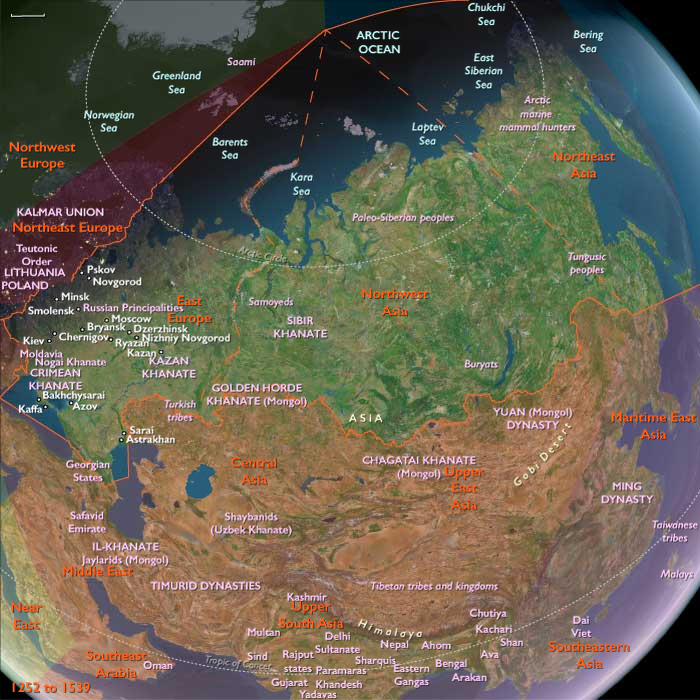
Subregions
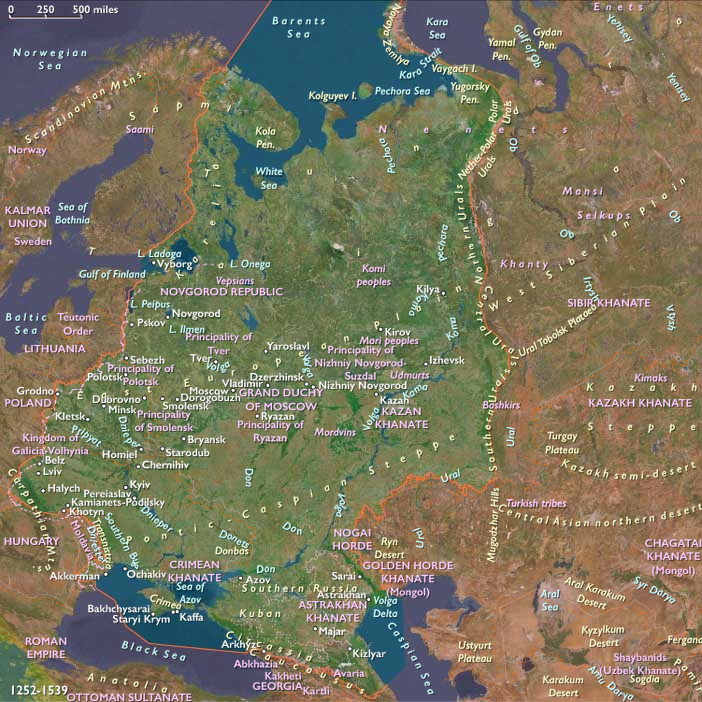
Years: 1504 - 1515
People
Groups
- Komi peoples
- Mordvins
- Veps, or Vepsians
- Mari people
- Christians, Eastern Orthodox
- Udmurt people
- Ryazan, Principality of
- Moscow, Grand Principality of
- Kazan, Khanate of
- Crimean Khanate
- Astrakhan Khanate
Subjects
Regions
Subregions