East Europe (1444–1455 CE): Muscovite Centralization and …
Years: 1444 - 1455
East Europe (1444–1455 CE): Muscovite Centralization and Cultural Enrichment
Political and Military Developments
Expansion and Centralization of Muscovite Authority
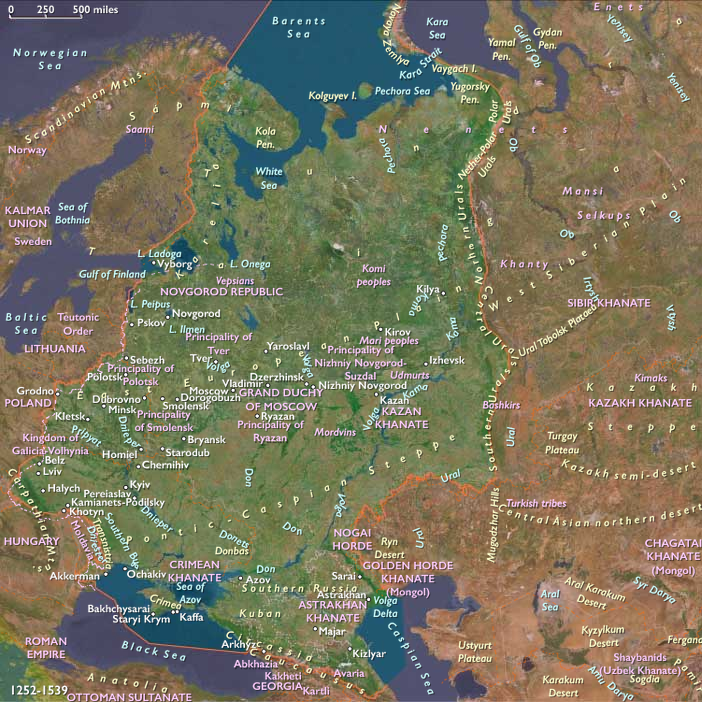
From 1444 to 1455 CE, Muscovy continued to expand its territories, centralizing authority and reinforcing administrative governance. Its dominance within East Europe grew significantly, stabilizing regional power dynamics.
Resolution of Remaining Regional Conflicts
Muscovy effectively managed remaining tensions with neighboring principalities, employing diplomacy and targeted military strategies to resolve lingering conflicts, further securing regional peace and stability.
Integration and Empowerment of Ethnic Communities
The ongoing integration of ethnic groups such as the Mari, Mordvins, Udmurts, Komi, and Vepsians into Muscovite governance structures continued to strengthen regional cohesion and administrative efficiency.
Economic and Technological Developments
Economic Stability and Expansion
The period witnessed sustained economic stability and growth, driven by vibrant domestic trade networks and continuing international commerce. Major urban centers, notably Moscow, Novgorod, and Tver, flourished economically.
Continued Advances in Military Infrastructure
Advancements in military technology persisted, especially in fortifications, siege warfare, and cavalry strategies, further enhancing Muscovy’s defense capabilities and strategic preparedness.
Cultural and Artistic Developments
Rich Cultural Development
The era was marked by significant cultural enrichment, blending Rus', Mongol, and ethnic traditions into unique artistic expressions. Architecture, religious iconography, and secular art saw notable advancements.
Literary and Intellectual Achievements
Continued literary and intellectual activities thrived, with chroniclers diligently recording historical, religious, and cultural narratives. These efforts preserved cultural identity and reinforced historical continuity.
Settlement Patterns and Urban Development
Urban Growth and Infrastructure Development
Cities, particularly Moscow, continued to expand both demographically and economically, supported by substantial infrastructure investments and sophisticated urban management. These developments facilitated increased regional administrative effectiveness.
Enhanced Urban Defense Mechanisms
Strategic fortifications and defensive infrastructure saw further improvements, protecting urban centers and securing regional stability.
Social and Religious Developments
Increased Social Harmony and Ethnic Diversity
Societal structures evolved further, effectively accommodating diverse ethnic communities, thus fostering social harmony, cohesion, and regional stability.
Orthodox Church Influence and Social Stability
The Orthodox Church maintained its central societal influence, guiding educational frameworks, moral values, and community interactions. Its prominent role significantly contributed to regional stability and cultural continuity.
Long-Term Consequences and Historical Significance
The period from 1444 to 1455 CE further strengthened Muscovy’s political centralization, economic stability, and cultural vibrancy. These developments provided crucial foundations for the emergence of a unified, culturally enriched Russian state.
Related Events
Showing 10 events out of 41742 total
Years: 1444 - 1455
Groups
- Komi peoples
- Mordvins
- Veps, or Vepsians
- Mari people
- Christians, Eastern Orthodox
- Novgorod Republic
- Udmurt people
- Ryazan, Principality of
- Yaroslavl, Principality of
- Tver, Principality of
- Moscow, Grand Principality of
Subjects
Regions
Subregions