East Europe (1432–1443 CE): Muscovite Expansion and …
Years: 1432 - 1443
East Europe (1432–1443 CE): Muscovite Expansion and Cultural Flourishing
Political and Military Developments
Continued Muscovite Territorial Expansion
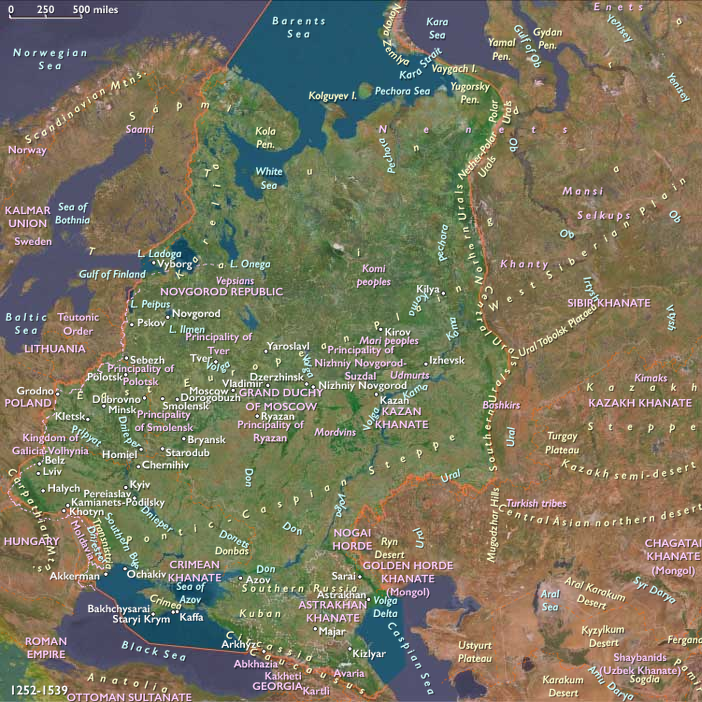
Between 1432 and 1443 CE, Muscovy further extended its territorial control, solidifying its political influence across East Europe. Strategic acquisitions and strengthened administration allowed for greater regional governance and cohesion.
Diplomatic Success and Regional Stability
Muscovy adeptly managed diplomatic relationships with neighboring principalities, reducing tensions through political alliances, marital ties, and negotiated treaties. The resultant stability significantly enhanced Moscow's regional standing.
Further Integration of Ethnic Communities
The ethnic groups, such as the Mari, Mordvins, Udmurts, Komi, and Vepsians, experienced deeper integration into Muscovite governance and society, further promoting administrative efficiency and societal cohesion.
Economic and Technological Developments
Economic Diversification and Growth
Muscovy's economy continued to prosper, driven by a diversified internal market and sustained international trade. Major cities, including Moscow, Novgorod, and Tver, became increasingly affluent economic centers.
Advancement in Military and Infrastructure Technologies
Technological progress in military engineering, including advancements in fortifications, siege equipment, and cavalry strategies, continued to enhance Muscovy’s defensive capabilities and military preparedness.
Cultural and Artistic Developments
Cultural Renaissance and Artistic Synthesis
The continued blending of Rus', Mongol, and ethnic traditions produced a rich cultural renaissance. Architectural innovations, vibrant religious art, and expressive secular cultural works marked this period.
Literary Flourishing and Intellectual Growth
Intellectual endeavors and literary activities expanded significantly, with chroniclers documenting extensive historical, religious, and cultural developments. These scholarly efforts solidified cultural continuity and reinforced Muscovite identity.
Settlement Patterns and Urban Development
Sustained Urban Expansion and Development
Cities like Moscow witnessed ongoing demographic growth and economic expansion, supported by extensive infrastructure development and sophisticated urban planning. These improvements facilitated increased administrative efficiency and commercial activity.
Enhanced Fortifications and Urban Defense
Urban centers continued to upgrade their defensive infrastructure, strategically enhancing protection and regional stability in response to potential threats.
Social and Religious Developments
Deepened Social Cohesion and Diversity
Social structures further evolved to accommodate and integrate diverse ethnic communities effectively. This inclusive approach fostered increased social harmony and political stability.
Centralized Role of Orthodox Christianity
The Orthodox Church maintained a central position in societal development, guiding moral education, community cohesion, and cultural continuity. Its influence significantly bolstered societal stability and identity.
Long-Term Consequences and Historical Significance
The era from 1432 to 1443 CE witnessed significant Muscovite territorial growth, cultural flourishing, and strengthened regional stability. These developments reinforced foundations crucial for the emergence of a unified and culturally vibrant Russian state.
Related Events
Showing 6 events out of 6 total
Years: 1432 - 1443
Groups
- Komi peoples
- Mordvins
- Veps, or Vepsians
- Mari people
- Christians, Eastern Orthodox
- Novgorod Republic
- Udmurt people
- Ryazan, Principality of
- Yaroslavl, Principality of
- Tver, Principality of
- Moscow, Grand Principality of
Subjects
Regions
Subregions