
East Europe (1384–1395 CE): Final Stages of …
Years: 1384 - 1395
East Europe (1384–1395 CE): Final Stages of Mongol Dominance and Muscovite Ascendancy
Political and Military Developments
Collapse of Golden Horde Authority
From 1384 to 1395 CE, the Golden Horde experienced near-total collapse in central authority, with internal fragmentation and succession crises leaving power increasingly decentralized. This collapse opened substantial political opportunities for local principalities.
Muscovy's Firm Establishment as a Regional Power
Moscow emerged decisively as the dominant political and military power in East Europe, expanding its territories significantly and solidifying centralized rule. Muscovite rulers further enhanced governance structures and diplomatic capabilities.
By the end of the 13th century, the Grand Principality of Vladimir-Suzdal had fragmented into over a dozen appanages. Moscow and Tver emerged as the two leading principalities, competing fiercely for the grand princely throne. From 1331, the prince of Moscow also held the title of Grand Prince of Vladimir, with a brief interruption from 1359 to 1363, when the throne passed temporarily to Nizhny Novgorod. In 1389, the grand principality became a family possession of the prince of Moscow, uniting the two thrones and forming a critical territorial and political foundation for the future Russian state.
Ethnic Integration and Cooperative Governance
Ethnic groups such as the Mari, Mordvins, Udmurts, Komi, and Vepsians continued their integration into Muscovite society, enhancing demographic diversity and administrative cohesion within the growing state.
Economic and Technological Developments
Economic Strengthening and Independence
Regional economies, particularly in Moscow, Novgorod, and Tver, achieved greater economic independence and prosperity through thriving internal trade and continued engagement in Eurasian commerce.
Military Technological Advancements
Further improvements in military strategies, siege tactics, and fortifications bolstered Muscovy's defensive and offensive capabilities, solidifying its position as a formidable regional power.
Cultural and Artistic Developments
Rich Cultural Fusion and Innovation
Continued cultural synthesis created a vibrant artistic landscape blending Rus', Mongol, and diverse ethnic influences. Architecture, religious iconography, and decorative arts reached notable levels of innovation and distinctiveness.
Continued Literary and Scholarly Activity
Chroniclers and intellectuals remained actively engaged in documenting historical narratives, cultural developments, and religious traditions, reinforcing regional identity and intellectual continuity.
Settlement Patterns and Urban Development
Sustained Urban Growth and Prosperity
Cities, particularly Moscow, maintained robust demographic growth and economic vitality. Urban development and infrastructure improvements supported increasingly sophisticated commercial and administrative functions.
Reinforcement of Urban Defense Systems
Advanced fortifications continued to evolve, enhancing strategic defense capabilities and protecting urban centers from potential internal and external threats.
Social and Religious Developments
Integration and Complexity in Social Structures
Societal structures further adapted to integrate diverse ethnic communities, enriching administrative and aristocratic frameworks. Social complexity increased, reflecting the diverse composition of the expanding Muscovite state.
Orthodox Church as Cultural Pillar
The Orthodox Church maintained its influential role, guiding cultural traditions, educational initiatives, and community cohesion. Its centrality remained vital in shaping regional identity and maintaining social stability.
Long-Term Consequences and Historical Significance
The period from 1384 to 1395 CE marked the definitive end of centralized Mongol control and the robust ascendance of Muscovy as the primary regional power. These developments significantly shaped future trajectories, laying the foundations for a unified Russian state and richly diverse cultural identity.
Groups
- Mordvins
- Komi peoples
- Veps, or Vepsians
- Mari people
- Polatsk, Principality of
- Novgorod, Principality of
- Christians, Eastern Orthodox
- Smolensk, Principality of
- Mongols
- Udmurt people
- Ryazan, Principality of
- Vladimir-Suzdal, Great Principality of
- Galicia–Volhynia, Principality of
- Mongol Empire
- Moscow, Principality of
- Nizhny Novgorod-Suzdal
- Golden Horde, Khanate of the (Kipchak Khanate)
Commodoties
- Weapons
- Hides and feathers
- Gem materials
- Domestic animals
- Grains and produce
- Ceramics
- Strategic metals
- Slaves
- Sweeteners
- Beer, wine, and spirits
Subjects
Regions
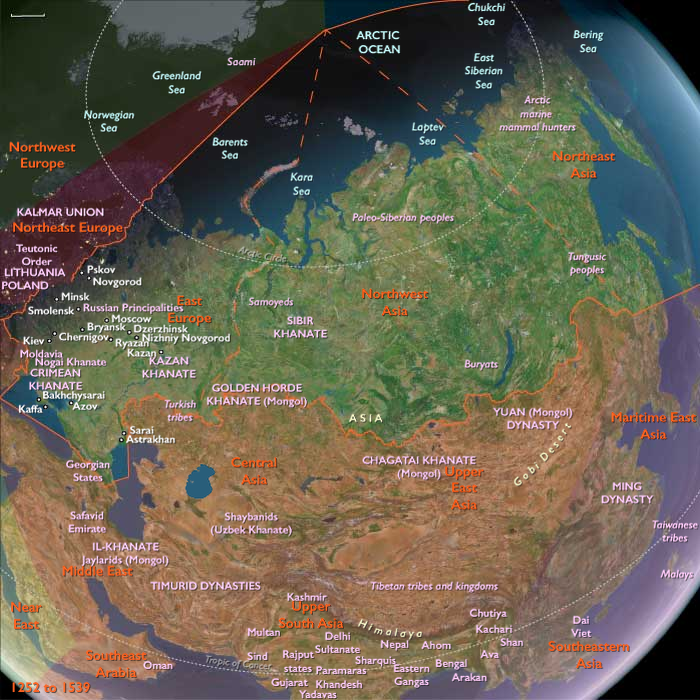
Subregions
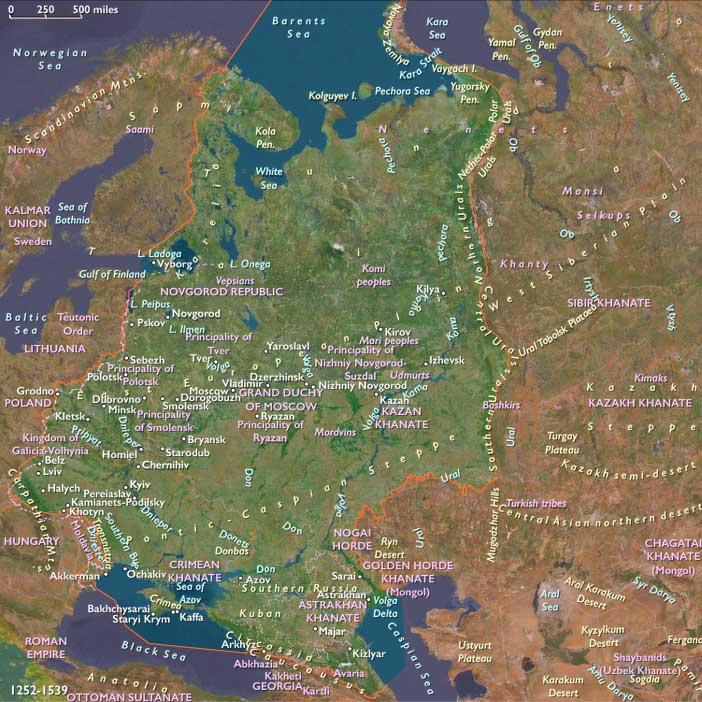
Related Events
Showing 10 events out of 43629 total
Years: 1384 - 1395
Groups
- Mordvins
- Komi peoples
- Veps, or Vepsians
- Mari people
- Polatsk, Principality of
- Novgorod, Principality of
- Christians, Eastern Orthodox
- Smolensk, Principality of
- Mongols
- Udmurt people
- Ryazan, Principality of
- Vladimir-Suzdal, Great Principality of
- Galicia–Volhynia, Principality of
- Mongol Empire
- Moscow, Principality of
- Nizhny Novgorod-Suzdal
- Golden Horde, Khanate of the (Kipchak Khanate)
Commodoties
- Weapons
- Hides and feathers
- Gem materials
- Domestic animals
- Grains and produce
- Ceramics
- Strategic metals
- Slaves
- Sweeteners
- Beer, wine, and spirits
Subjects
Regions
Subregions