
East Europe (1360–1371 CE): Deepening Muscovite Authority …
Years: 1360 - 1371
East Europe (1360–1371 CE): Deepening Muscovite Authority and Continued Mongol Fragmentation
Political and Military Developments
Ongoing Golden Horde Fragmentation
From 1360 to 1371 CE, the Golden Horde continued its decline due to internal divisions and leadership struggles, further weakening Mongol dominance in East Europe. This instability provided greater political freedom for local principalities.
Consolidation of Muscovite Power
Moscow solidified and extended its authority, taking advantage of the continued weakening of Mongol control. Muscovite rulers advanced central governance and further expanded their territory, significantly bolstering their political influence.
Integration and Cooperation of Ethnic Communities
Further integration occurred among ethnic groups such as the Mari, Mordvins, Udmurts, Komi, and Vepsians, fostering cooperative governance structures and enriched demographic diversity within the expanding Muscovite state.
Economic and Technological Developments
Strengthening Regional Economies
Local economies in Muscovy, Novgorod, and Tver continued thriving, benefiting from both internal commerce and sustained Eurasian trade. Economic growth was increasingly driven by regional autonomy and robust local trade networks.
Military Technological Innovations
Continued development and adoption of advanced military tactics, siege techniques, and fortifications significantly strengthened regional defense capabilities, helping consolidate Muscovite military power.
Cultural and Artistic Developments
Enhanced Cultural Exchange and Innovation
Artistic and cultural synthesis flourished, drawing from Rus', Mongol, and diverse ethnic traditions. Distinctive local artistic styles emerged prominently in architecture, iconography, and decorative arts.
Active Literary and Intellectual Pursuits
Chroniclers and intellectuals maintained active literary production, meticulously documenting historical events, religious developments, and cultural narratives. This scholarly work reinforced regional identity and continuity.
Settlement Patterns and Urban Development
Continued Urban Growth and Economic Stability
Cities, notably Moscow, Novgorod, and Tver, experienced consistent urban growth, driven by economic prosperity and stable governance. Infrastructure development supported increased urbanization and regional economic integration.
Fortification and Defense Infrastructure
Further enhancements to urban fortifications were undertaken, strategically strengthening defensive infrastructure against internal and external threats amid shifting regional power balances.
Social and Religious Developments
Increased Social Integration and Hierarchical Complexity
Social structures continued evolving, incorporating diverse ethnic groups into Muscovite society. Aristocratic power remained influential, with families adapting to increased ethnic diversity within their territories.
Strengthened Orthodox Influence
The Orthodox Church further solidified its societal prominence, providing education, community cohesion, and moral leadership. Its influence remained pivotal in maintaining cultural continuity and social stability.
Long-Term Consequences and Historical Significance
The era from 1360 to 1371 CE marked continued political and economic strengthening of Muscovy, further Mongol fragmentation, and increased ethnic integration. These developments were essential in shaping the trajectory towards a centralized Russian state and diversified cultural identity.
Groups
- Komi peoples
- Mordvins
- Veps, or Vepsians
- Mari people
- Polatsk, Principality of
- Novgorod, Principality of
- Smolensk, Principality of
- Christians, Eastern Orthodox
- Mongols
- Udmurt people
- Ryazan, Principality of
- Vladimir-Suzdal, Great Principality of
- Galicia–Volhynia, Principality of
- Mongol Empire
- Golden Horde, Khanate of the (Mongol Khanate)
- Moscow, Principality of
Commodoties
- Weapons
- Hides and feathers
- Gem materials
- Domestic animals
- Grains and produce
- Ceramics
- Strategic metals
- Slaves
- Sweeteners
- Beer, wine, and spirits
Subjects
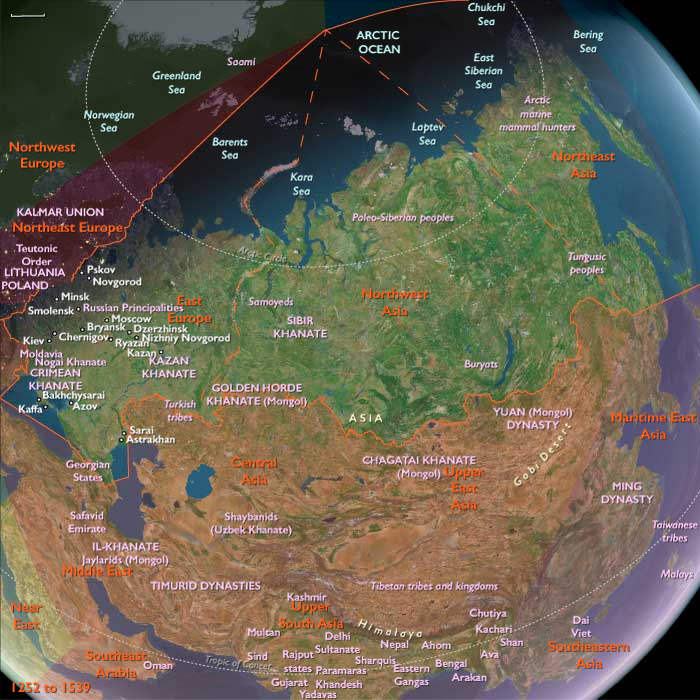
Regions
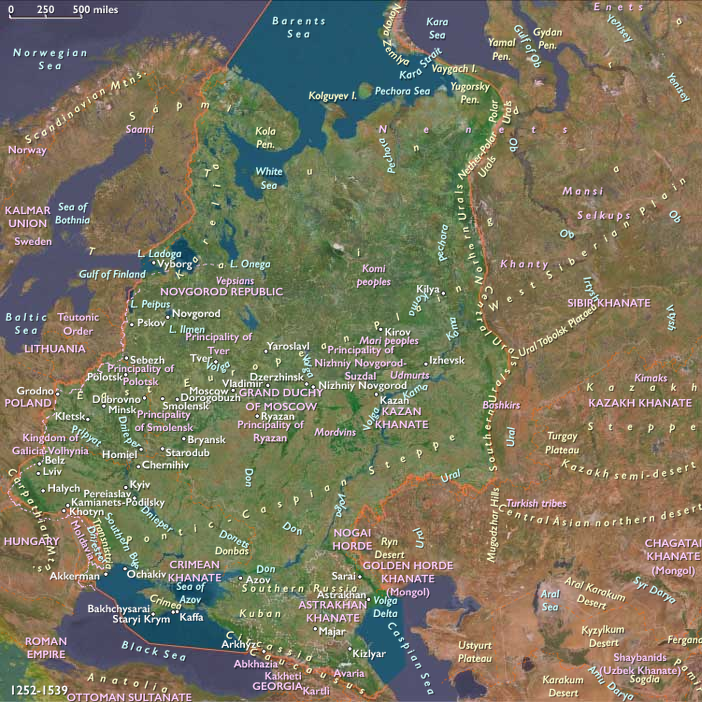
Subregions
Years: 1360 - 1371
Groups
- Komi peoples
- Mordvins
- Veps, or Vepsians
- Mari people
- Polatsk, Principality of
- Novgorod, Principality of
- Smolensk, Principality of
- Christians, Eastern Orthodox
- Mongols
- Udmurt people
- Ryazan, Principality of
- Vladimir-Suzdal, Great Principality of
- Galicia–Volhynia, Principality of
- Mongol Empire
- Golden Horde, Khanate of the (Mongol Khanate)
- Moscow, Principality of
Commodoties
- Weapons
- Hides and feathers
- Gem materials
- Domestic animals
- Grains and produce
- Ceramics
- Strategic metals
- Slaves
- Sweeteners
- Beer, wine, and spirits
Subjects
Regions
Subregions