
East Europe (1336–1347 CE): Muscovite Strengthening and …
Years: 1336 - 1347
East Europe (1336–1347 CE): Muscovite Strengthening and Shifts in Mongol Influence
Political and Military Developments
Golden Horde Fragmentation and Local Autonomy
Between 1336 and 1347 CE, increasing fragmentation within the Golden Horde allowed local East European principalities, particularly Moscow, greater political maneuvering and autonomy. Regional dynamics shifted notably as Mongol authority waned incrementally.
Expansion and Centralization of Muscovite Power
Moscow actively expanded its territorial control and centralized political authority, capitalizing on weakening Mongol oversight. This period marked substantial advancements in Muscovite regional influence, governance consolidation, and internal stability.
Diverse Ethnic Engagements
Ethnic communities including the Mari, Mordvins, Udmurts, Komi, and Vepsians continued deepening their integration into Muscovite administration and society, further enriching regional demographic and cultural complexity.
Economic and Technological Developments
Increasing Local Economic Vitality
Although Eurasian trade remained important, regional economies increasingly sought autonomy. Muscovy, Tver, and Novgorod expanded local markets and strengthened internal trade, supporting continued urban and regional economic growth.
Enhanced Military and Technological Capabilities
Muscovite and regional forces refined military tactics, fortification technologies, and siege capabilities, significantly enhancing their defensive and offensive potential. These advancements were crucial as Mongol control weakened.
Cultural and Artistic Developments
Continued Cultural Fusion and Innovation
Artistic traditions flourished through further blending of Mongol, Rus', and local ethnic influences, creating distinct and innovative styles in architecture, ornamentation, and iconography.
Robust Literary and Intellectual Efforts
Chroniclers and intellectuals remained active in documenting historical, religious, and cultural narratives, reinforcing Rus' heritage and intellectual traditions amidst changing political dynamics.
Settlement Patterns and Urban Development
Urban Prosperity and Expansion
Moscow, along with other significant cities, saw continued growth, reflecting enhanced governance, economic prosperity, and demographic stability. Infrastructure improvements supported expanding populations and economic activities.
Further Fortification and Defensive Strategies
Enhanced fortification efforts were implemented, focusing on strategic defense and urban security amidst shifting regional power balances and potential external threats.
Social and Religious Developments
Complex Social Structures and Ethnic Inclusion
Society became increasingly complex, with greater integration and representation of diverse ethnic groups in governance and social hierarchies. Aristocratic and administrative structures adapted to accommodate these diverse communities.
Orthodox Church as Cultural Anchor
The Orthodox Church maintained and strengthened its central societal role, providing continuity, education, and moral guidance during this dynamic period. Its cultural influence persisted as a stabilizing factor.
Long-Term Consequences and Historical Significance
The era from 1336 to 1347 CE marked significant progress in Muscovite centralization and regional autonomy, driven by Mongol fragmentation. The integration of diverse ethnic groups further enriched regional society, laying essential foundations for future state consolidation and cultural identity.
Groups
- Komi peoples
- Mordvins
- Veps, or Vepsians
- Mari people
- Polatsk, Principality of
- Novgorod, Principality of
- Smolensk, Principality of
- Christians, Eastern Orthodox
- Mongols
- Udmurt people
- Ryazan, Principality of
- Vladimir-Suzdal, Great Principality of
- Galicia–Volhynia, Principality of
- Mongol Empire
- Golden Horde, Khanate of the (Mongol Khanate)
- Moscow, Principality of
Commodoties
- Weapons
- Hides and feathers
- Gem materials
- Domestic animals
- Grains and produce
- Ceramics
- Strategic metals
- Slaves
- Sweeteners
- Beer, wine, and spirits
Subjects
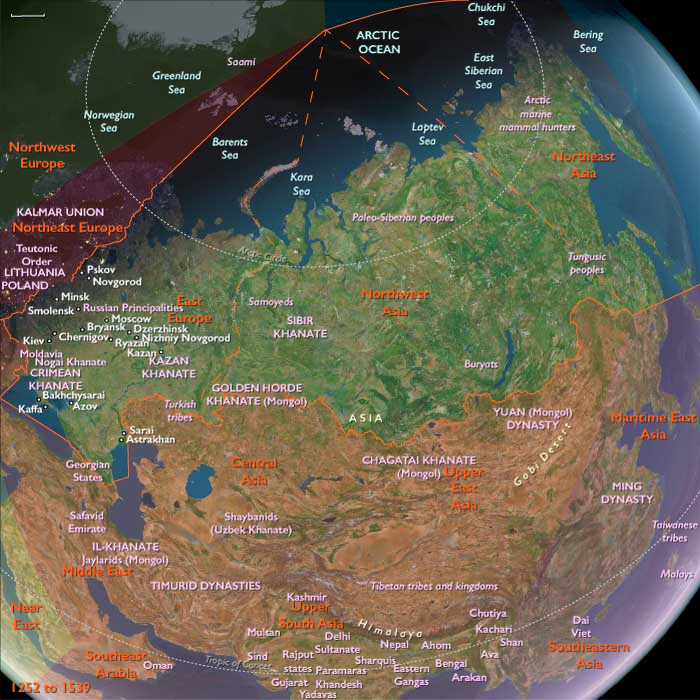
Regions
Subregions
Related Events
Showing 10 events out of 44539 total
Years: 1336 - 1347
Groups
- Komi peoples
- Mordvins
- Veps, or Vepsians
- Mari people
- Polatsk, Principality of
- Novgorod, Principality of
- Smolensk, Principality of
- Christians, Eastern Orthodox
- Mongols
- Udmurt people
- Ryazan, Principality of
- Vladimir-Suzdal, Great Principality of
- Galicia–Volhynia, Principality of
- Mongol Empire
- Golden Horde, Khanate of the (Mongol Khanate)
- Moscow, Principality of
Commodoties
- Weapons
- Hides and feathers
- Gem materials
- Domestic animals
- Grains and produce
- Ceramics
- Strategic metals
- Slaves
- Sweeteners
- Beer, wine, and spirits
Subjects
Regions
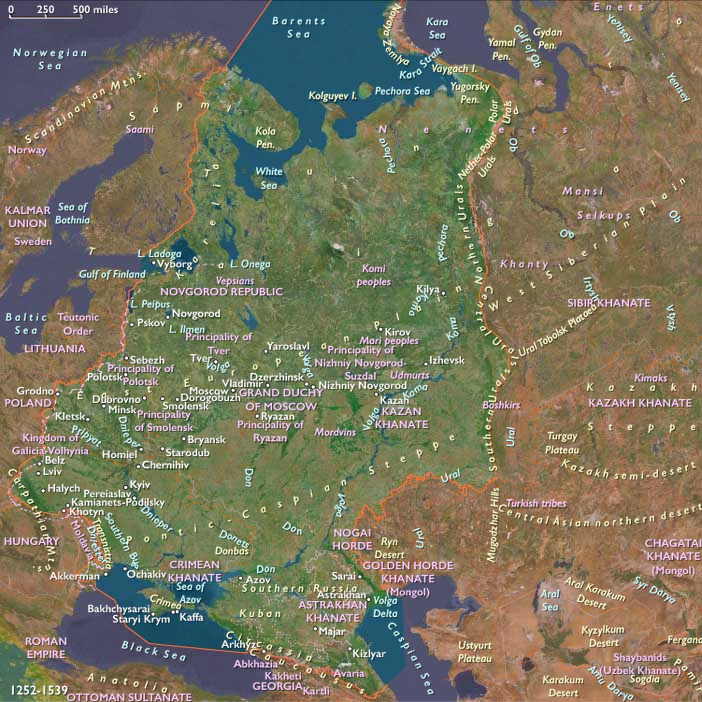
Subregions