
East Europe (1264–1275 CE): Strengthening Mongol Influence …
Years: 1264 - 1275
East Europe (1264–1275 CE): Strengthening Mongol Influence and Early Muscovite Growth
Political and Military Developments
Mongol Control and Local Governance
From 1264 to 1275 CE, the Golden Horde continued reinforcing its dominance over East European principalities, solidifying a governance system based on tributes and vassal relationships. Mongol administrative practices increasingly integrated with local governance structures.
Rise and Consolidation of Muscovite Authority
During this era, the principality of Moscow further solidified its position as a significant intermediary and administrative hub under Mongol oversight. Moscow's princes skillfully navigated Mongol politics, enhancing their local influence.
Economic and Technological Developments
Flourishing Eurasian Trade Networks
Trade between East Europe and broader Eurasian regions thrived, facilitated by the Pax Mongolica. Cities such as Moscow, Novgorod, and Vladimir prospered economically due to increased commerce, benefiting from access to luxury goods and commodities from the East.
Adoption of Mongol Military Innovations
Local principalities increasingly adopted Mongol military techniques, including sophisticated cavalry tactics and enhanced siege capabilities. These adaptations significantly improved Rus' military effectiveness and preparedness.
Cultural and Artistic Developments
Blending of Mongol and Rus' Artistic Traditions
Cultural exchanges continued to flourish, resulting in a rich synthesis of Mongol and local Rus' artistic styles. Architecture, decorative arts, and religious iconography reflected this unique cultural fusion.
Intellectual and Literary Preservation
Literary traditions persisted and grew, with chroniclers actively documenting historical events, genealogies, and religious texts. These intellectual efforts aimed at preserving Rus' heritage amidst foreign domination.
Settlement Patterns and Urban Development
Urban Growth and Stability
Cities under Mongol oversight experienced continued urban development, characterized by stable economic growth and increased population densities. Moscow, in particular, emerged prominently due to strategic political and economic positioning.
Expansion of Fortifications
Urban centers further enhanced their fortifications, responding to ongoing geopolitical threats and maintaining internal stability. The strengthening of defensive infrastructure was crucial for local governance and economic continuity.
Social and Religious Developments
Entrenchment of Local Aristocratic Power
Social hierarchies deepened as local aristocracies maintained and expanded their roles within the Mongol administrative structure. Aristocratic families leveraged their positions to consolidate power and influence.
Orthodox Church as Cultural Pillar
The Orthodox Church remained a cornerstone of social and cultural life, preserving religious traditions and providing stability amidst Mongol rule. The church’s influence extended into education, community organization, and cultural preservation.
Long-Term Consequences and Historical Significance
The period from 1264 to 1275 CE was significant in solidifying Mongol control and fostering Moscow's early growth. These developments profoundly influenced East Europe's subsequent political evolution, laying foundational structures for regional governance and cultural identity.
People
Groups
- Polatsk, Principality of
- Novgorod, Principality of
- Kievan Rus', or Kiev, Great Principality of
- Christians, Eastern Orthodox
- Mongols
- Vladimir-Suzdal, Great Principality of
- Galicia–Volhynia, Principality of
- Mongol Empire
- Golden Horde, Khanate of the (Mongol Khanate)
- Moscow, Principality of
Topics
Commodoties
- Weapons
- Hides and feathers
- Gem materials
- Domestic animals
- Grains and produce
- Ceramics
- Strategic metals
- Slaves
- Sweeteners
- Beer, wine, and spirits
Subjects
Regions
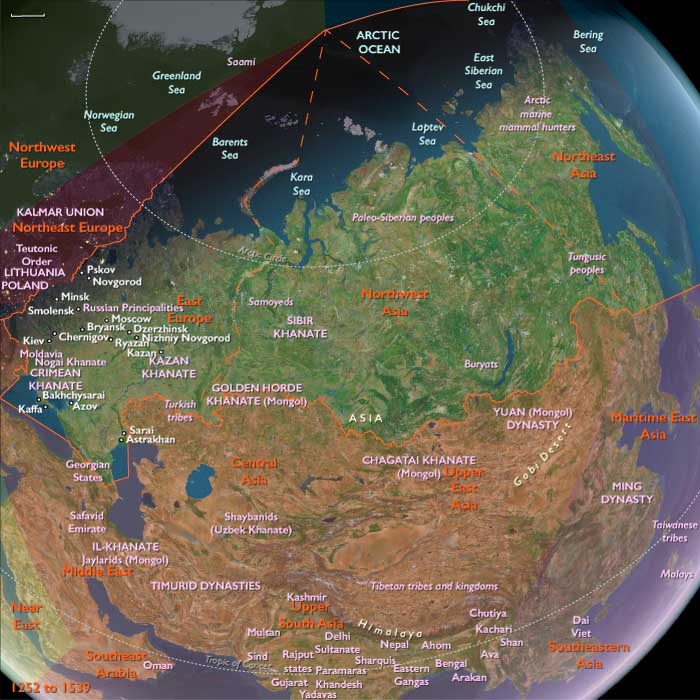
Subregions
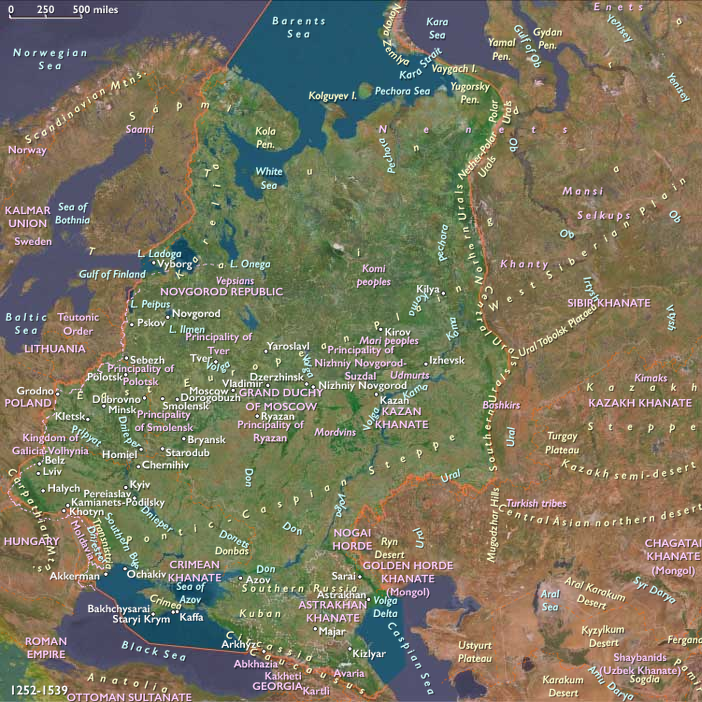
Years: 1264 - 1275
People
Groups
- Polatsk, Principality of
- Novgorod, Principality of
- Kievan Rus', or Kiev, Great Principality of
- Christians, Eastern Orthodox
- Mongols
- Vladimir-Suzdal, Great Principality of
- Galicia–Volhynia, Principality of
- Mongol Empire
- Golden Horde, Khanate of the (Mongol Khanate)
- Moscow, Principality of
Topics
Commodoties
- Weapons
- Hides and feathers
- Gem materials
- Domestic animals
- Grains and produce
- Ceramics
- Strategic metals
- Slaves
- Sweeteners
- Beer, wine, and spirits
Subjects
Regions
Subregions