
East Europe (244–387 CE): Gothic Migration and …
Years: 244 - 387
East Europe (244–387 CE): Gothic Migration and the Rise of New Powers
Political and Military Developments
Migration and Settlement of the Goths
Between 244 and 387 CE, the Goths, originally from northern Europe, migrated southeastward into the territories of East Europe, significantly impacting regional power dynamics. This migration introduced new military and cultural pressures, profoundly reshaping existing Sarmatian and local tribal structures.
Decline of Sarmatian Influence
The arrival and expansion of Gothic tribes significantly challenged and reduced the dominance of the Sarmatians in the Pontic–Caspian steppe. Military confrontations led to territorial shifts, ultimately resulting in diminished Sarmatian political control.
Economic and Technological Developments
Shift in Trade Networks
The Goths actively participated in existing Eurasian trade networks, leading to shifts in trade routes and economic interactions. Commerce continued, though increasingly influenced by Gothic demands and territorial realignments.
Adaptations in Military Technology
Military encounters between Goths, Romans, and local tribes drove continued innovations in warfare, particularly in infantry and cavalry tactics. Gothic forces effectively combined traditional northern European methods with adapted Roman and Sarmatian techniques.
Cultural and Artistic Developments
Rise of Gothic Artistic Traditions
Gothic migrations introduced northern European artistic styles into East Europe, blending with established Sarmatian and Roman traditions. This fusion resulted in distinctive Gothic metalwork, jewelry, and ceremonial artifacts, characterized by bold geometric patterns and animal motifs.
Continued Roman Cultural Influence
Interactions with the Roman Empire continued to shape regional cultural expressions, evident in architectural influences, urban planning, and burial practices. The exchange of artistic traditions between Goths, Romans, and local populations enriched regional diversity.
Settlement Patterns and Urban Development
Gothic Settlement and Urban Expansion
The Goths established new settlements and revitalized existing urban centers, promoting growth in areas previously underdeveloped or marginal. Cities and fortified settlements grew along strategic locations and trade corridors.
Flourishing of Chernyakhov Culture
The Chernyakhov culture flourished during this period, marking extensive Gothic and local tribal settlements across large areas of present-day Ukraine, Moldova, and adjacent regions. The culture represented a peak of socio-economic complexity, integrating diverse populations and traditions.
Social and Religious Developments
Emerging Gothic Social Structures
Gothic society exhibited distinct hierarchical structures, influenced by interactions with Roman and Sarmatian traditions. Leaders and warrior elites were prominently recognized through lavish burials, ornate personal adornments, and ceremonial weaponry.
Religious Shifts and Syncretism
The religious landscape became more diverse, with the introduction of Gothic pagan practices alongside existing syncretic traditions influenced by Roman, Greek, and Iranian beliefs. Gradual Christianization began to affect Gothic tribes, further diversifying religious practices in East Europe.
Long-Term Consequences and Historical Significance
The era from 244 to 387 CE marked a major transformation in East Europe's historical narrative, driven by Gothic migrations and interactions with existing powers. The resulting cultural, economic, and political shifts laid essential groundwork for subsequent historical developments, significantly influencing the region's evolution into the late antique and early medieval periods.
Groups
- Polytheism (“paganism”)
- Slavs, Proto-
- Bosporan Kingdom
- Sarmatians
- Goths (East Germanic tribe)
- Chernyakhov culture
- Roman Empire (Rome): Non-dynastic
- Crimean Goths (East Germanic tribe)
- Roman Empire: Tetrarchy
- Roman Empire: Constantinian dynasty (Nicomedia)
- Roman Empire: Constantinian dynasty (Constantinople)
- Roman Empire: Theodosian dynasty (Constantinople)
Topics
Commodoties
- Weapons
- Hides and feathers
- Gem materials
- Domestic animals
- Grains and produce
- Ceramics
- Strategic metals
- Slaves
- Sweeteners
- Beer, wine, and spirits
Subjects
Regions
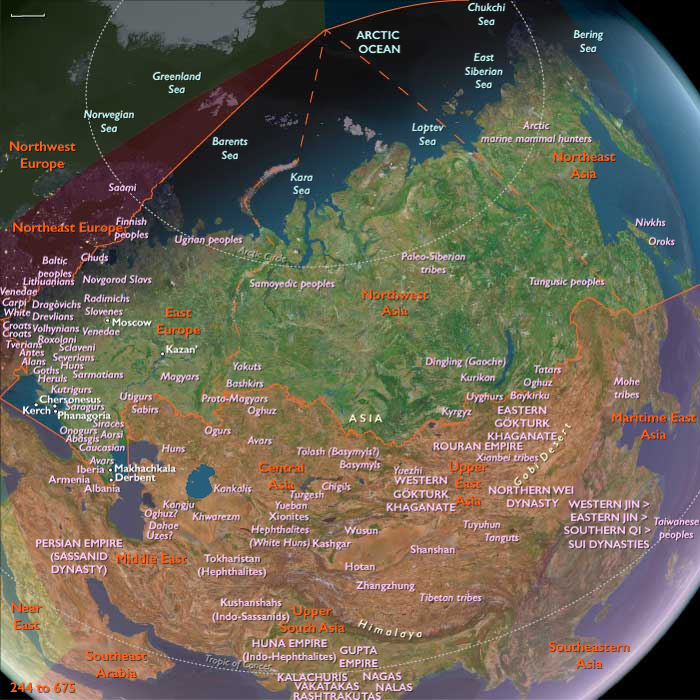
Subregions
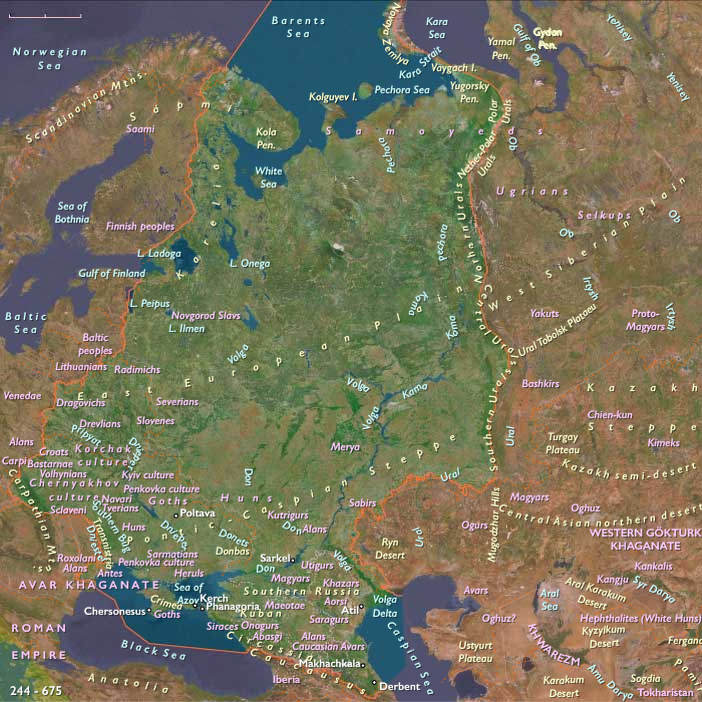
Related Events
Showing 10 events out of 34 total
Years: 244 - 387
Groups
- Polytheism (“paganism”)
- Slavs, Proto-
- Bosporan Kingdom
- Sarmatians
- Goths (East Germanic tribe)
- Chernyakhov culture
- Roman Empire (Rome): Non-dynastic
- Crimean Goths (East Germanic tribe)
- Roman Empire: Tetrarchy
- Roman Empire: Constantinian dynasty (Nicomedia)
- Roman Empire: Constantinian dynasty (Constantinople)
- Roman Empire: Theodosian dynasty (Constantinople)
Topics
Commodoties
- Weapons
- Hides and feathers
- Gem materials
- Domestic animals
- Grains and produce
- Ceramics
- Strategic metals
- Slaves
- Sweeteners
- Beer, wine, and spirits
Subjects
Regions
Subregions