
East Central Europe (976–987 CE): Ottonian Conflicts …
Years: 976 - 987
East Central Europe (976–987 CE): Ottonian Conflicts and Bohemian Expansion, Consolidation of Polish Christianity, and Hungary’s Path toward Kingdom
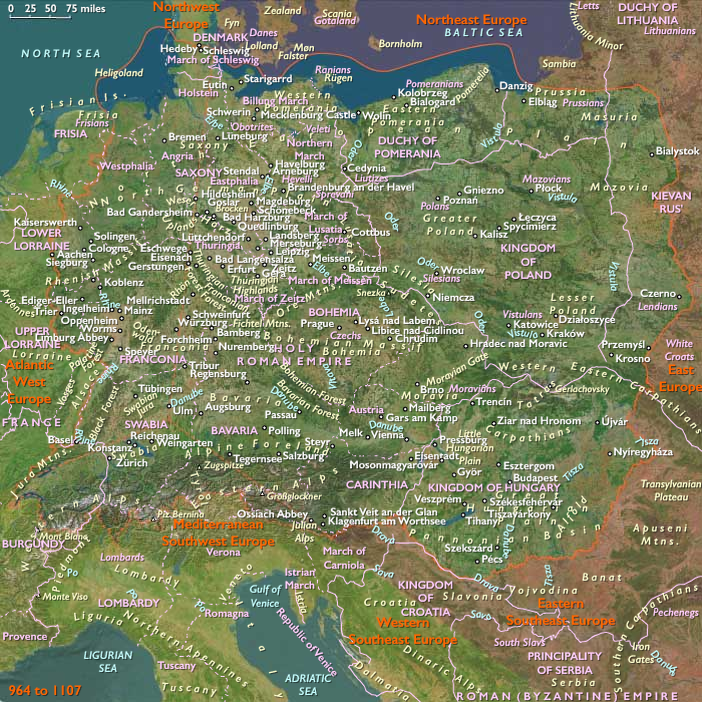
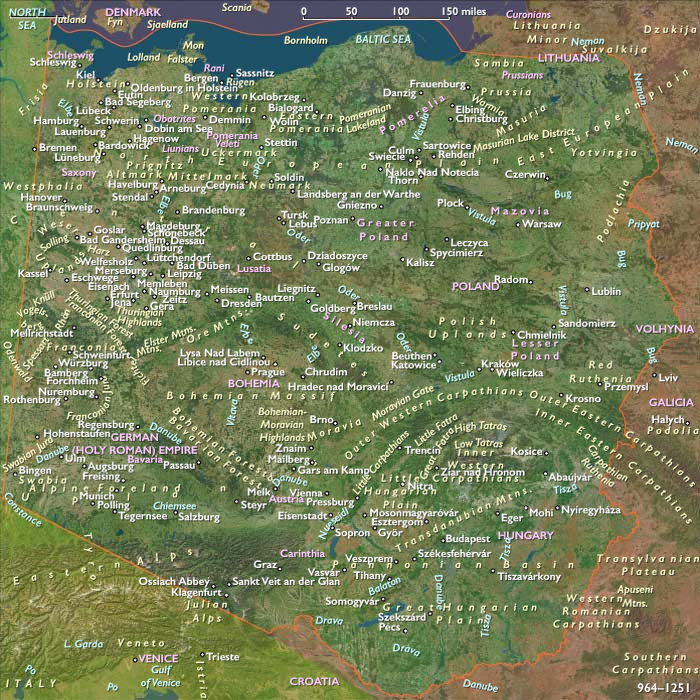
Between 976 and 987 CE, East Central Europe—encompassing modern-day Poland, Czechia, Slovakia, Hungary, and the eastern regions of Germany and Austria east of 10°E and north of the defined southeastern boundary—experienced intensified political competition, internal consolidation, and cultural integration. This era saw significant dynastic conflicts within the Ottonian Empire, territorial expansion and strengthening under the Bohemian Přemyslid dynasty, the deepening Christianization and political consolidation of Poland under Mieszko I, and further Magyar political stabilization under Prince Géza as Hungary moved decisively toward Christian statehood.
Political and Military Developments
Ottonian Internal Struggles and Regional Instability
-
Following Otto I’s death (973), his successor Otto II (973–983) faced considerable internal dissent and external pressures, particularly rebellions among eastern frontier nobles in Bavaria and Austria, temporarily weakening imperial authority and regional stability.
Přemyslid Bohemia’s Expansion
-
Under Boleslaus II "the Pious" (r. 972–999), Bohemia expanded its territorial and political influence significantly. The Přemyslid state became a prominent regional power, asserting autonomy from Ottonian overlordship and extending its influence into Silesia, Moravia, and parts of modern Slovakia.
Polish State Strengthening under Mieszko I
-
Mieszko I consolidated his rule by strategic alliances, territorial expansions, and the deepening of Poland’s integration into Christian Europe. His alliance through marriage to the Přemyslid princess Doubravka solidified Polish-Bohemian relations and reinforced Christianization.
Hungary’s Continued Political Consolidation
-
Magyar ruler Géza (r. c. 972–997) reinforced central authority, furthering Christian influence, fortifying settlements, and diplomatically navigating relations with neighboring states, positioning Hungary to emerge soon as a Christian kingdom under his son, Stephen I.
Economic and Technological Developments
Expansion of Regional Commerce
-
Continued political stabilization, especially in Bohemia and Poland, revitalized regional commerce, strengthening trade networks and economic prosperity. Trade routes linked East Central Europe firmly with the broader European economy, exchanging textiles, metals, and agricultural commodities.
Further Development of Defensive Infrastructure
-
Persistent threats and political rivalries led to intensified construction of fortified towns and castles across Bohemia, Poland, and Hungary, significantly shaping medieval settlement patterns and regional security infrastructure.
Cultural and Artistic Developments
Bohemian Cultural Renaissance under the Přemyslids
-
Under Boleslaus II, Bohemian culture flourished, evident in ecclesiastical architecture, monastic foundations, illuminated manuscripts, and liturgical traditions. Prague solidified its role as a vibrant cultural and religious center.
Deepening of Polish Christian Identity
-
Mieszko I’s patronage facilitated rapid growth of ecclesiastical institutions and Slavic-Christian culture within Poland, creating a distinct Polish Christian identity evident in religious architecture, literature, and administrative structures.
Magyar Cultural Synthesis and Christian Influence
-
Géza’s rule further encouraged Magyar acceptance of Christianity, integrating Western European cultural and ecclesiastical traditions into Hungarian society, laying foundations for Hungary’s distinct medieval Christian identity.
Settlement and Urban Development
Growth of Bohemian Urban Centers
-
Bohemia experienced significant urban growth under Přemyslid rule, notably in Prague, which developed into a key political, cultural, and commercial hub, centralizing administrative functions and regional influence.
Expansion of Polish Administrative Settlements
-
Polish towns, particularly Gniezno and Poznań, further expanded, developing into important administrative and ecclesiastical centers that fostered early urbanization and stable political governance.
Hungarian Administrative Centers
-
Under Géza, Hungarian settlements, especially Esztergom and Székesfehérvár, strengthened administrative structures and urban organization, providing critical foundations for Hungary’s later royal administration and urban networks.
Social and Religious Developments
Ecclesiastical Integration and Expansion
-
Christianity deepened its influence, reshaping social structures and governance. Churches and monasteries played essential roles in governance, education, and social organization, integrating East Central Europe fully into European Christendom.
Strengthening of Dynastic Power
-
Dynastic and aristocratic hierarchies in Bohemia, Poland, and Hungary grew stronger, laying clear foundations for medieval political institutions and social organization.
Long-Term Consequences and Historical Significance
The era 976–987 CE significantly shaped East Central Europe’s medieval trajectory. Ottonian internal challenges temporarily shifted power balances, allowing Bohemian expansion, Polish state consolidation under Mieszko I, and Hungary’s decisive shift toward Christian statehood. These developments established lasting political structures, cultural traditions, and regional identities central to the medieval histories of Poland, Bohemia, and Hungary.
People
Groups
- Polytheism (“paganism”)
- Franks
- Saxons
- Germans
- Hungarian people
- Wends, or Sorbs (West Slavs)
- Christianity, Chalcedonian
- Bavarians (West Germanic tribe)
- Polans, Western (West Slavic tribe)
- Thuringia, Duchy of
- Thuringia, (Frankish) Duchy of
- Carantania
- Carantanians
- Frankish, or Carolingian (Roman) Empire
- Saxony, Duchy of
- Moravia, Great, Kingdom of
- Francia Orientalis (East Francia), Kingdom of
- Roman Empire, Eastern: Macedonian dynasty
- Bohemia, Duchy of
- Hungary, Principality of
- Bavaria, Ottonian Duchy of
- Holy Roman Empire
- Germany, Kingdom of (within the Holy Roman Empire)
- German, or Ottonian (Roman) Empire
- Austria, Margravate of
Topics
Commodoties
Subjects
Regions
Subregions
Years: 976 - 987
People
Groups
- Polytheism (“paganism”)
- Franks
- Saxons
- Germans
- Hungarian people
- Wends, or Sorbs (West Slavs)
- Christianity, Chalcedonian
- Bavarians (West Germanic tribe)
- Polans, Western (West Slavic tribe)
- Thuringia, Duchy of
- Thuringia, (Frankish) Duchy of
- Carantania
- Carantanians
- Frankish, or Carolingian (Roman) Empire
- Saxony, Duchy of
- Moravia, Great, Kingdom of
- Francia Orientalis (East Francia), Kingdom of
- Roman Empire, Eastern: Macedonian dynasty
- Bohemia, Duchy of
- Hungary, Principality of
- Bavaria, Ottonian Duchy of
- Holy Roman Empire
- Germany, Kingdom of (within the Holy Roman Empire)
- German, or Ottonian (Roman) Empire
- Austria, Margravate of
Topics
Commodoties
Subjects
Regions
Subregions