
East Central Europe (1108 – 1251 CE): …
Years: 1108 - 1251
East Central Europe (1108 – 1251 CE): Piast Fragmentation, Přemyslid Kingship, Árpád Reforms, and the Ostsiedlung
Geographic and Environmental Context
East Central Europe includes the greater part of Germany east of 10°E, Poland, Czechia (Bohemia and Moravia), Slovakia, and Hungary.
-
A vast corridor of plains and uplands—the Elbe, Oder, Vistula, and Danube basins—connected the Baltic to the Carpathians and the Pannonian Plain.
-
Forest clearance and settlement expansion tied the German imperial east to the kingdoms of Poland, Bohemia, and Hungary.
Climate and Environmental Shifts
-
The Medieval Warm Period favored population growth, higher cereal yields, and the spread of viticulture and orchards into sheltered valleys.
-
Floods and periodic droughts punctuated stability, but improved ploughs and crop rotations spread resilience.
Societies and Political Developments
-
Germany east of 10°E: Fragmented imperial principalities encouraged the founding of towns and the granting of civic laws (e.g., Magdeburg Law), attracting settlers and merchants.
-
Poland (Piast dynasty): The Testament of Bolesław III (1138) divided the realm among dukes, initiating a period of long-lasting fragmentation. Kraków served as the notional senior capital, while Silesia and Pomerania drew intense German colonization.
-
Bohemia and Moravia (Přemyslids): Elevated to hereditary kingship with the Golden Bull of Sicily (1212)under Přemysl Otakar I. Prague and Moravian centers like Brno and Olomouc flourished.
-
Hungary (Árpád dynasty): The Golden Bull of 1222 limited royal power and confirmed noble rights. The Mongol invasion (1241–1242) devastated the kingdom, forcing Béla IV into a massive rebuilding effort with stone castles and settlement incentives.
-
Slovakia (Upper Hungary): Integrated into Hungarian mining and defense networks.
Economy and Trade
-
Agrarian expansion: heavy plough, three-field system, and mass clearances extended farmland.
-
Mining: silver at Jihlava and Kutná Hora; salt at Wieliczka.
-
Trade corridors: Oder–Elbe–Danube routes moved grain, timber, and salt to the Baltic and Rhineland; Kraków, Wrocław, Prague, Pressburg, and Buda–Pest acted as hubs.
-
German urban law (Magdeburg, Lübeck) standardized town governance.
Subsistence and Technology
-
Watermills, collar harnesses, and improved ploughs boosted productivity.
-
Romanesque fortresses and Gothic cathedrals reshaped urban skylines.
-
Castles spread across Hungary and Bohemia, especially after Mongol devastation.
Movement and Interaction Corridors
-
The Ostsiedlung carried German-speaking peasants and artisans into Silesia, Pomerania, Brandenburg, and Bohemia.
-
Cistercian monasteries coordinated land clearance and settlement.
-
Mongol invasion briefly severed Carpathian corridors but reforms re-opened them.
Belief and Symbolism
-
Latin Christianity unified political culture: archbishoprics in Gniezno, Esztergom, and Prague guided ecclesiastical governance.
-
Cistercians, Dominicans, Franciscans spread reform, preaching, and literacy.
-
Cults of royal saints (e.g., St. Elizabeth of Hungary) tied dynastic legitimacy to sanctity.
Adaptation and Resilience
-
Multipolar politics (Piast duchies, Přemyslid Bohemia, Árpád Hungary) created redundancy.
-
Hungary’s reconstruction after the Mongols demonstrated adaptive resilience, with stone fortifications and immigrant resettlement.
-
Town networks spread risk through market integration.
Long-Term Significance
By 1251 CE, East Central Europe had become a densely networked agrarian and urban region: fragmented Piast duchies, a hereditary Bohemian kingdom, and a restructured Hungary coexisted within the framework of German colonization and urban law. This laid the institutional and demographic foundations for its later medieval flowering.
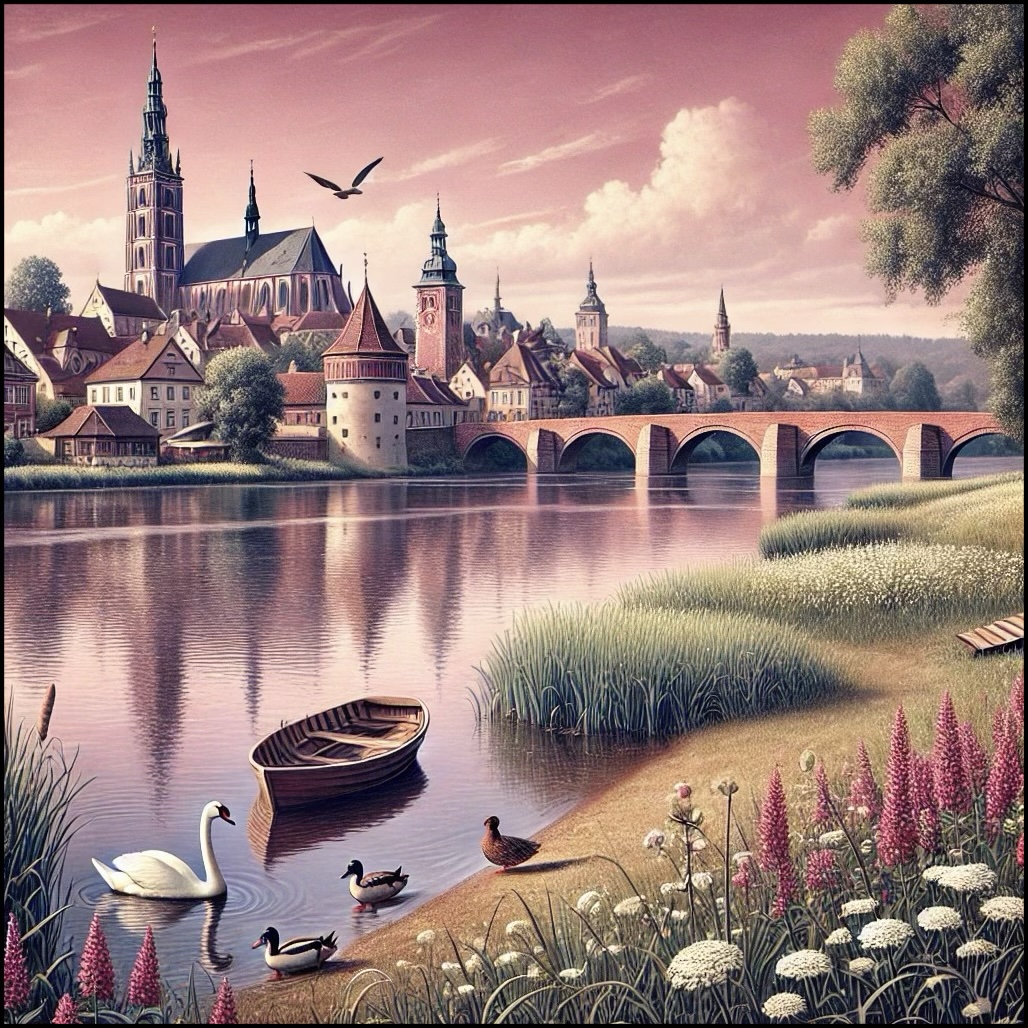
East Central Europe (with civilization) ©2024-25 Electric Prism, Inc. All rights reserved.
People
Groups
- Germans
- Hungarian people
- Slavs, West
- Germany, Kingdom of (within the Holy Roman Empire)
- Holy Roman Empire
- Hanseatic league (informally organized)
- Hungary, Kingdom of
- Poland of the first Piasts, Kingdom of
- Christians, Roman Catholic
- Bavaria, Welf Duchy of
- Roman Empire, Eastern: Komnenos dynasty, restored
- Bohemia, Kingdom of
- Bohemia, Duchy of
- Cistercians, Order of the (White Friars)
- Mongols
- Poland during the period of fragmentation, Kingdom of
- Poland, Greater
- Bohemia, Kingdom of
- Bohemia, Duchy of
- Bavaria, Wittelsbach Duchy of
- Moravian Margravate
- Roman Empire, Eastern: Angelid dynasty
- Bohemia, Kingdom of
- Mongol Empire
- Franciscans, or Order of St. Francis
- Dominicans, or Order of St. Dominic
- Hungary, Kingdom of
Topics
- Medieval Warm Period (MWP) or Medieval Climate Optimum
- Ostsiedlung (German: Settlement in the East), a.k.a. German eastward expansion
- Western Architecture: 1108 to 1252
- Poland, Fragmentation of
- Mongol Conquests
- Mongol Invasion of Europe
- Mongol Invasion of Poland
- Legnica, (Liegnitz) or Wahlstadt, Battle of
- Mohi, Battle of
Commodoties
- Weapons
- Hides and feathers
- Gem materials
- Domestic animals
- Grains and produce
- Textiles
- Ceramics
- Strategic metals
- Salt
Subjects
- Commerce
- Symbols
- Architecture
- Decorative arts
- Conflict
- Government
- Custom and Law
- Technology
- Metallurgy
- Human Migration
Regions
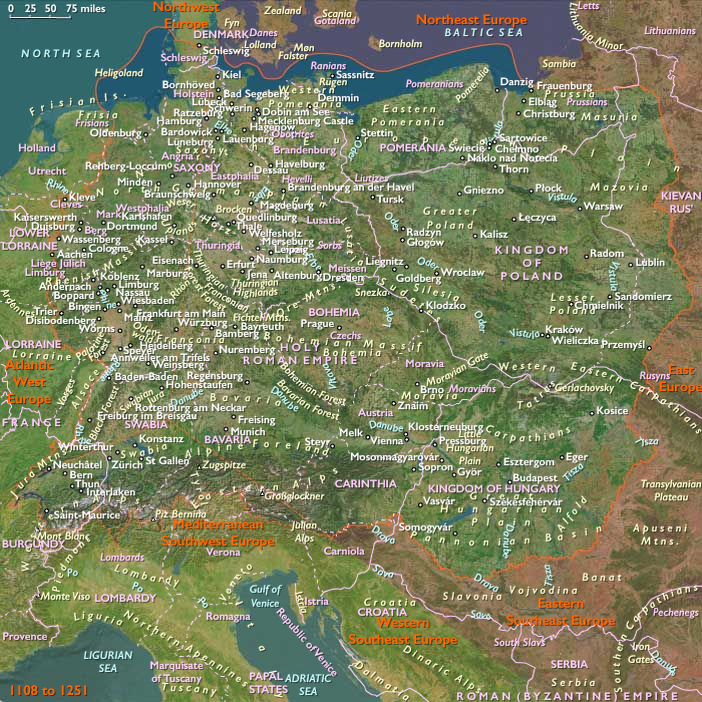
Subregions
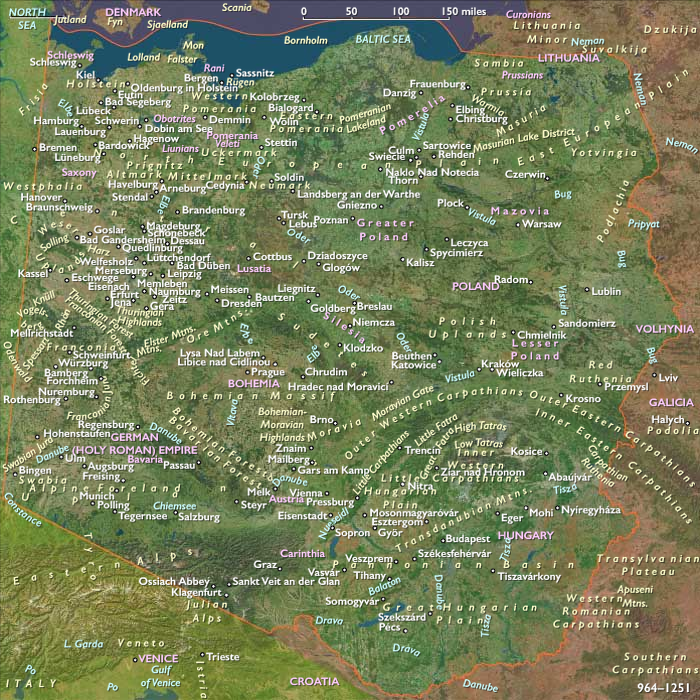
Years: 1108 - 1251
East Central Europe (with civilization) ©2024-25 Electric Prism, Inc. All rights reserved.
People
Groups
- Germans
- Hungarian people
- Slavs, West
- Germany, Kingdom of (within the Holy Roman Empire)
- Holy Roman Empire
- Hanseatic league (informally organized)
- Hungary, Kingdom of
- Poland of the first Piasts, Kingdom of
- Christians, Roman Catholic
- Bavaria, Welf Duchy of
- Roman Empire, Eastern: Komnenos dynasty, restored
- Bohemia, Kingdom of
- Bohemia, Duchy of
- Cistercians, Order of the (White Friars)
- Mongols
- Poland during the period of fragmentation, Kingdom of
- Poland, Greater
- Bohemia, Kingdom of
- Bohemia, Duchy of
- Bavaria, Wittelsbach Duchy of
- Moravian Margravate
- Roman Empire, Eastern: Angelid dynasty
- Bohemia, Kingdom of
- Mongol Empire
- Franciscans, or Order of St. Francis
- Dominicans, or Order of St. Dominic
- Hungary, Kingdom of
Topics
- Medieval Warm Period (MWP) or Medieval Climate Optimum
- Ostsiedlung (German: Settlement in the East), a.k.a. German eastward expansion
- Western Architecture: 1108 to 1252
- Poland, Fragmentation of
- Mongol Conquests
- Mongol Invasion of Europe
- Mongol Invasion of Poland
- Legnica, (Liegnitz) or Wahlstadt, Battle of
- Mohi, Battle of
Commodoties
- Weapons
- Hides and feathers
- Gem materials
- Domestic animals
- Grains and produce
- Textiles
- Ceramics
- Strategic metals
- Salt
Subjects
- Commerce
- Symbols
- Architecture
- Decorative arts
- Conflict
- Government
- Custom and Law
- Technology
- Metallurgy
- Human Migration
Regions
Subregions