
East Central Europe (964–975 CE): Ottonian Imperial …
Years: 964 - 975
East Central Europe (964–975 CE): Ottonian Imperial Expansion, Christianization of Poland under Mieszko I, and the Formation of the Hungarian Principality
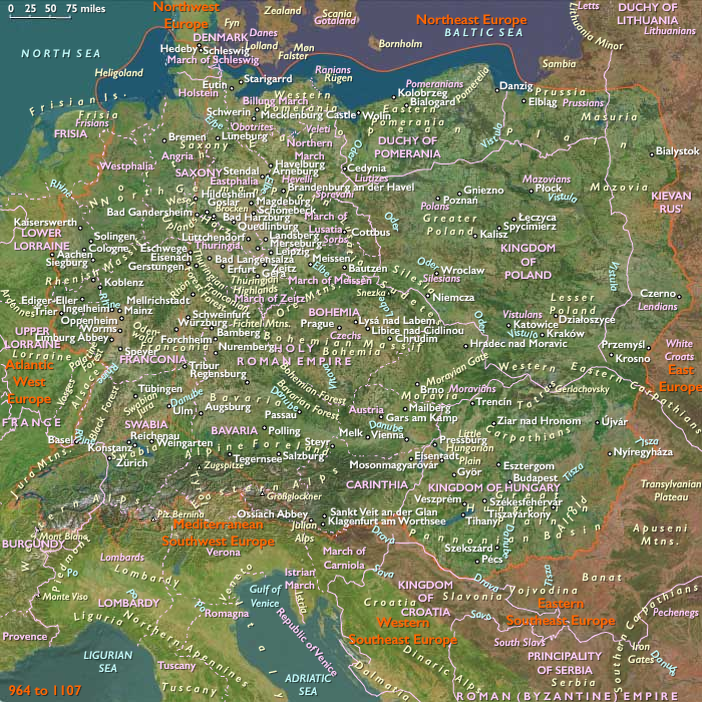
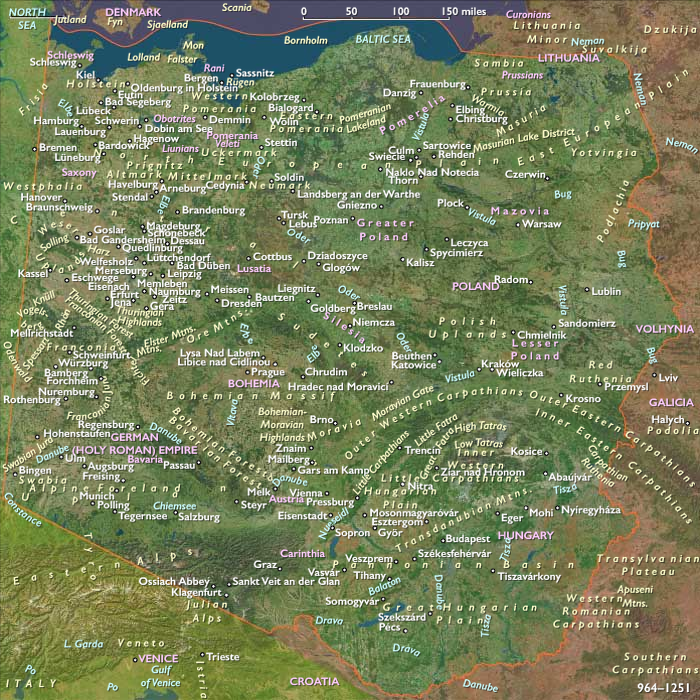
Between 964 and 975 CE, East Central Europe—comprising present-day Poland, Czechia, Slovakia, Hungary, and the eastern regions of Germany and Austria east of 10°E and north of the defined southeastern boundary—underwent significant political consolidation and cultural transformation. The period was marked by the continued ascendancy of the Ottonian Empire under Otto I and Otto II, the pivotal Christianization and early state formation in Poland under Mieszko I, and the final political consolidation of the Hungarian Principality under Géza, father of the future King Stephen I. These developments defined a clear political order, facilitating the region's integration into the broader medieval European world.
Political and Military Developments
Ottonian Imperial Expansion and Influence
-
After his imperial coronation (962 CE), Otto I (r. 936–973) solidified his dominance over East Central Europe, asserting control and influence across Bohemia and deeper into Slavic territories through diplomacy, military campaigns, and ecclesiastical influence.
-
His son Otto II (r. 973–983) continued this policy of eastward expansion and consolidation, establishing and reinforcing political alliances and dependencies across Bohemia, Bavaria, and eastern frontier regions.
Christianization and Consolidation of Poland
-
Mieszko I (r. c. 960–992), ruler of the emerging Polish state, was baptized in 966 CE, marking Poland’s formal adoption of Christianity. This act significantly enhanced Poland’s political legitimacy, integrated it into European Christian diplomatic circles, and firmly laid the foundations for future Polish statehood.
Formation of the Hungarian Principality
-
Under Prince Géza (r. c. 972–997), the Magyars transitioned decisively from nomadic raiding toward settled governance. Géza centralized power, fortified settlements, and embraced Christianity strategically, setting the stage for the future Kingdom of Hungary.
Economic and Technological Developments
Expanded and Stabilized Trade Routes
-
Ottonian stability, Polish consolidation, and Magyar settlement enabled a flourishing of commerce. Robust trade networks linked East Central Europe to the rest of the continent, exchanging metals, agricultural products, amber, textiles, and luxury goods, boosting regional prosperity.
Growth of Fortified Settlements and Infrastructure
-
Significant investment in fortified urban centers and improved defensive infrastructure occurred throughout the region, notably in Polish towns (Gniezno, Poznań), Hungarian centers (Esztergom, Székesfehérvár), and along the Ottonian frontiers, strengthening security and supporting economic expansion.
Cultural and Artistic Developments
Ottonian Ecclesiastical and Cultural Patronage
-
The Ottonian emperors fostered a vibrant ecclesiastical culture, demonstrated through architectural achievements, richly illuminated manuscripts, and artistic patronage, significantly influencing regional aesthetics and religious practices.
Early Polish Christian Culture
-
Under Mieszko I’s patronage, Christianity spread rapidly throughout Poland, developing distinct Polish ecclesiastical institutions, liturgical traditions, and artistic styles, laying firm cultural foundations for future Polish identity.
Magyar Cultural and Religious Integration
-
Géza actively promoted Christianity within the Hungarian principality, facilitating a blending of Magyar traditions with Christian practices, thus forming a distinctive Hungarian cultural synthesis.
Settlement and Urban Development
Development of Polish Urban and Religious Centers
-
Early Polish cities, notably Gniezno and Poznań, expanded as major political, religious, and commercial hubs under Piast leadership, facilitating early urbanization and administrative centralization.
Consolidation of Hungarian Settlements
-
Géza established significant administrative and ecclesiastical centers, particularly at Esztergom, laying foundations for the future Hungarian capital and reinforcing political stability and cultural integration.
Expansion of Ottonian Urban Centers
-
Ottonian rule further developed fortified towns and administrative centers throughout Saxony and eastern Bavaria, consolidating regional authority and promoting sustained urban growth.
Social and Religious Developments
Firm Establishment of Christianity
-
The formal Christianization of Poland (966 CE) and Hungary under Géza deeply transformed regional societies. Ecclesiastical institutions became cornerstones of governance, education, and social structure, integrating these areas into broader European Christendom.
Strengthening Dynastic Leadership
-
The Ottonian dynasty, Piast Poland, and the Hungarian principality solidified dynastic authority, enhancing hierarchical governance structures that would dominate regional political and social organization throughout the medieval era.
Long-Term Consequences and Historical Significance
The era 964–975 CE marked a pivotal period in East Central Europe’s integration into medieval Europe, characterized by significant Ottonian influence, the Christianization of Poland under Mieszko I, and the political consolidation of Hungary under Géza. These decisive developments reshaped regional identities, strengthened state structures, and established enduring cultural and religious legacies, fundamentally defining East Central Europe’s trajectory into the high medieval period.
People
Groups
- Polytheism (“paganism”)
- Franks
- Saxons
- Germans
- Hungarian people
- Wends, or Sorbs (West Slavs)
- Christianity, Chalcedonian
- Bavarians (West Germanic tribe)
- Polans, Western (West Slavic tribe)
- Thuringia, Duchy of
- Thuringia, (Frankish) Duchy of
- Carantania
- Carantanians
- Frankish, or Carolingian (Roman) Empire
- Saxony, Duchy of
- Moravia, Great, Kingdom of
- Francia Orientalis (East Francia), Kingdom of
- Roman Empire, Eastern: Macedonian dynasty
- Bohemia, Duchy of
- Hungary, Principality of
- Bavaria, Ottonian Duchy of
- Holy Roman Empire
- Germany, Kingdom of (within the Holy Roman Empire)
- German, or Ottonian (Roman) Empire
Topics
Commodoties
Subjects
Regions
Subregions
Related Events
Showing 10 events out of 52798 total
Years: 964 - 975
People
Groups
- Polytheism (“paganism”)
- Franks
- Saxons
- Germans
- Hungarian people
- Wends, or Sorbs (West Slavs)
- Christianity, Chalcedonian
- Bavarians (West Germanic tribe)
- Polans, Western (West Slavic tribe)
- Thuringia, Duchy of
- Thuringia, (Frankish) Duchy of
- Carantania
- Carantanians
- Frankish, or Carolingian (Roman) Empire
- Saxony, Duchy of
- Moravia, Great, Kingdom of
- Francia Orientalis (East Francia), Kingdom of
- Roman Empire, Eastern: Macedonian dynasty
- Bohemia, Duchy of
- Hungary, Principality of
- Bavaria, Ottonian Duchy of
- Holy Roman Empire
- Germany, Kingdom of (within the Holy Roman Empire)
- German, or Ottonian (Roman) Empire
Topics
Commodoties
Subjects
Regions
Subregions