
East Central Europe (952–963 CE): Ottonian Imperial …
Years: 952 - 963
East Central Europe (952–963 CE): Ottonian Imperial Ambitions, Magyar Stabilization, and Formation of Early Polish Polities
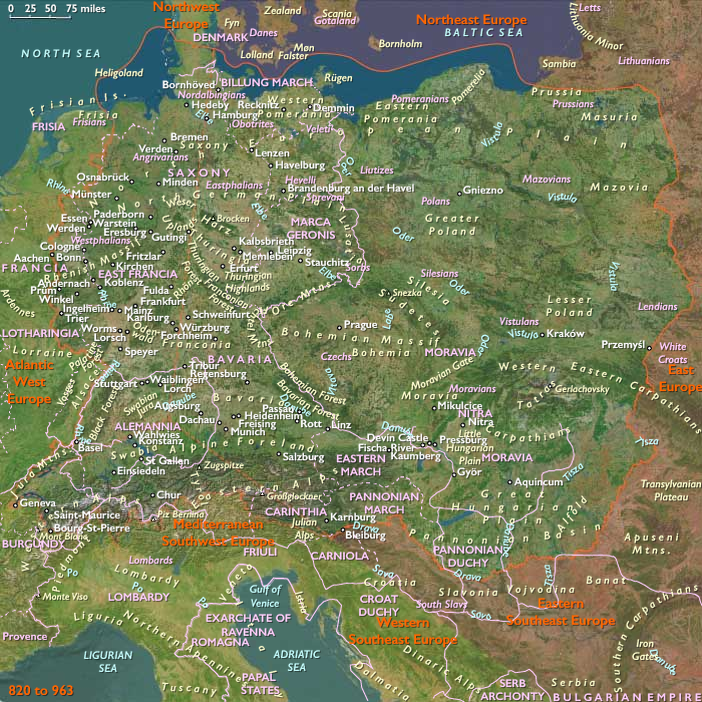
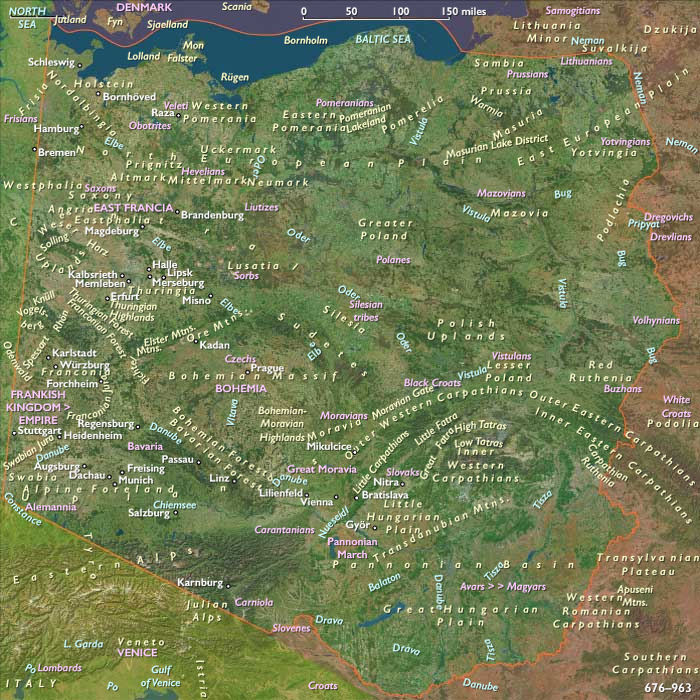
Between 952 and 963 CE, East Central Europe—encompassing modern-day Poland, Czechia, Slovakia, Hungary, and eastern regions of Germany and Austria east of 10°E and north of a line from approximately 48.2°N at 10°E to the Austro-Slovenian border near 46.7°N, 15.4°E—underwent significant political consolidation marked by Otto I’s imperial ambitions, the continued stabilization of the Magyar principality, and the emergence of early Polish political structures under the Piast dynasty. These transformative developments solidified medieval political frameworks, clearly defined cultural identities, and laid critical foundations for the region’s subsequent historical trajectory.
Political and Military Developments
Ottonian Imperial Consolidation
-
Otto I the Great (r. 936–973) significantly extended Saxon political and military authority, culminating in his imperial coronation as Holy Roman Emperor in 962 CE. His reign strengthened German dominance across Saxony, Bavaria, Thuringia, and significantly influenced Bohemian and Polish territories.
Magyar Transition from Raiding to Statehood
-
The Magyar principality continued its transition from aggressive raiding to stable state formation, building fortified towns, improving internal governance, and stabilizing frontiers, preparing the foundations for the later medieval Kingdom of Hungary.
Formation of Early Polish States under the Piast Dynasty
-
In the territories of modern-day Poland, the Piast dynasty began consolidating smaller Slavic tribal entities under leaders such as Mieszko I (c. 960–992), marking the early stages of organized Polish statehood and political centralization.
Economic and Technological Developments
Expanded Economic Stability and Trade
-
Regional political stability fostered by Ottonian dominance, Magyar settlement, and emergent Polish entities facilitated expanding trade routes, leading to increased commerce in textiles, metals, agricultural products, and luxury goods, significantly boosting regional economies.
Development of Defensive Infrastructure and Urbanization
-
Otto’s reign led to the expansion of fortified urban centers along Saxony’s eastern frontiers and in Bavarian territories. Similarly, Magyar and early Polish polities invested in fortified settlements, enhancing security and economic vitality across the region.
Cultural and Artistic Developments
Ottonian Cultural and Ecclesiastical Flourishing
-
Otto I’s imperial court fostered significant cultural achievements through ecclesiastical patronage, artistic innovations, manuscript illumination, and architectural projects, solidifying Saxon cultural influence throughout East Central Europe.
Magyar Cultural Synthesis and Christian Influence
-
Magyar rulers increasingly adopted cultural and religious influences from neighboring Christian polities, initiating gradual Christianization and integration into broader European cultural traditions, setting crucial foundations for Hungarian medieval culture.
Early Polish Cultural Identity and Piast Patronage
-
Under the emerging Piast dynasty, early Polish polities fostered distinct cultural and artistic traditions, including Slavic-Christian syncretism, settlement organization, and artisanal production, which established enduring foundations for medieval Polish identity.
Settlement and Urban Development
Saxon and Bavarian Fortified Towns
-
Otto significantly expanded and improved fortified towns along Saxony’s eastern frontier and within Bavaria, creating critical administrative and economic centers that became integral to medieval urban life.
Magyar Administrative Centers and Settlements
-
Magyar urban centers like Esztergom, Székesfehérvár, and other fortified towns continued expanding, becoming focal points of administration, commerce, and emerging Hungarian cultural identity.
Early Polish Tribal Centers and Settlement Growth
-
Tribal centers associated with the Piast dynasty began consolidating into early urban settlements, notably around Gniezno and Poznań, laying critical foundations for future Polish urban and administrative development.
Social and Religious Developments
Expansion and Consolidation of Christianity
-
Christianity continued to expand under Ottonian influence, profoundly shaping Saxon, Magyar, and Polish social structures. Ecclesiastical institutions became increasingly integral to governance and cultural life, defining regional identities and societal norms.
Formation of Dynastic and Aristocratic Structures
-
Saxony under the Ottonians, Magyar Hungary, and early Piast Poland witnessed the strengthening of hierarchical aristocratic and dynastic structures, defining patterns of medieval governance, administration, and social cohesion.
Long-Term Consequences and Historical Significance
The era 952–963 CE decisively influenced East Central Europe's historical trajectory, characterized by Otto I’s imperial ascension, the solidification of Magyar state structures, and the emergence of organized Polish political entities. These significant developments established foundational medieval political and cultural frameworks, profoundly shaping regional identities, state formations, and geopolitical dynamics that endured throughout the subsequent medieval period.
People
Groups
- Polytheism (“paganism”)
- Franks
- Saxons
- Germans
- Hungarian people
- Wends, or Sorbs (West Slavs)
- Christianity, Chalcedonian
- Bavarians (West Germanic tribe)
- Polans, Western (West Slavic tribe)
- Thuringia, Duchy of
- Thuringia, (Frankish) Duchy of
- Carantania
- Carantanians
- Frankish, or Carolingian (Roman) Empire
- Saxony, Duchy of
- Moravia, Great, Kingdom of
- Francia Orientalis (East Francia), Kingdom of
- Roman Empire, Eastern: Macedonian dynasty
- Bohemia, Duchy of
- Hungary, Principality of
- Bavaria, Ottonian Duchy of
- Holy Roman Empire
- Germany, Kingdom of (within the Holy Roman Empire)
- German, or Ottonian (Roman) Empire
Topics
Commodoties
Subjects
Regions
Subregions
Related Events
Showing 3 events out of 3 total
Years: 952 - 963
People
Groups
- Polytheism (“paganism”)
- Franks
- Saxons
- Germans
- Hungarian people
- Wends, or Sorbs (West Slavs)
- Christianity, Chalcedonian
- Bavarians (West Germanic tribe)
- Polans, Western (West Slavic tribe)
- Thuringia, Duchy of
- Thuringia, (Frankish) Duchy of
- Carantania
- Carantanians
- Frankish, or Carolingian (Roman) Empire
- Saxony, Duchy of
- Moravia, Great, Kingdom of
- Francia Orientalis (East Francia), Kingdom of
- Roman Empire, Eastern: Macedonian dynasty
- Bohemia, Duchy of
- Hungary, Principality of
- Bavaria, Ottonian Duchy of
- Holy Roman Empire
- Germany, Kingdom of (within the Holy Roman Empire)
- German, or Ottonian (Roman) Empire
Topics
Commodoties
Subjects
Regions
Subregions