
East Central Europe (940–951 CE): Ottonian Ascendancy, …
Years: 940 - 951
East Central Europe (940–951 CE): Ottonian Ascendancy, Magyar Stabilization in Hungary, and Bohemian Expansion under Boleslaus I
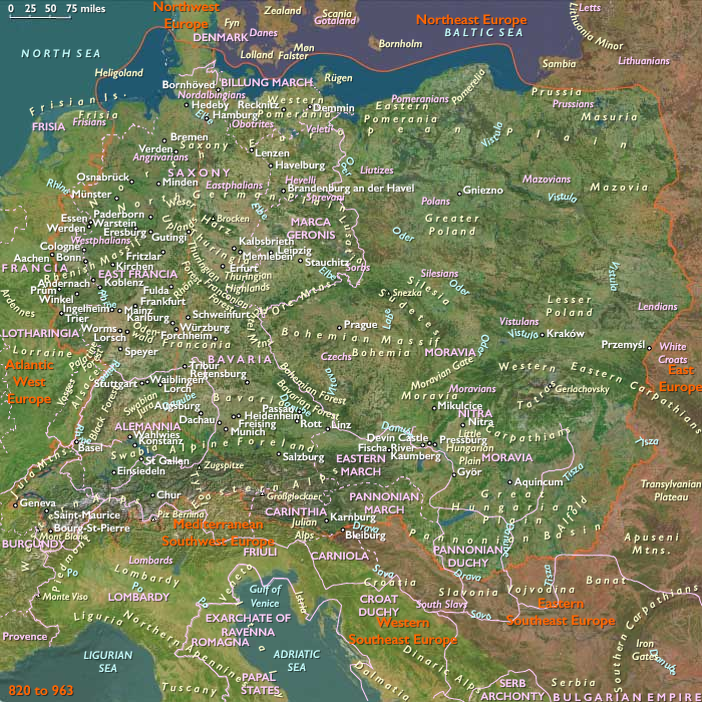
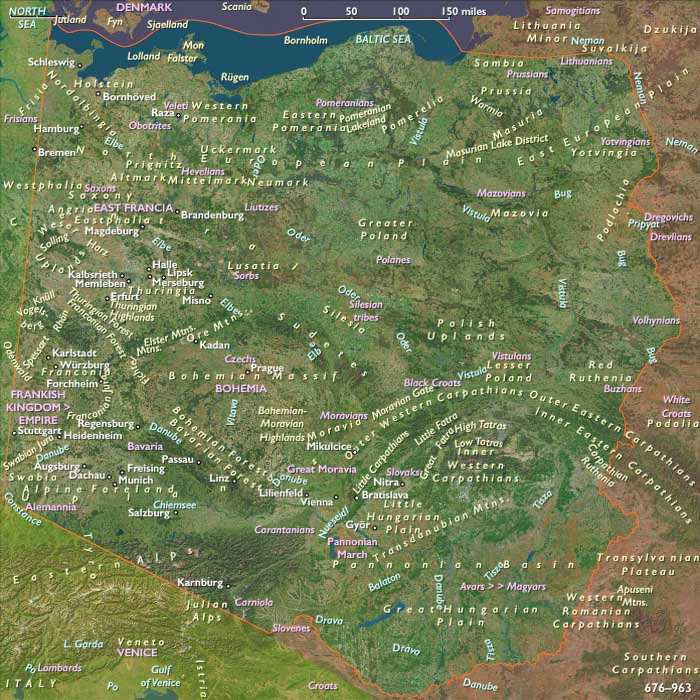
Between 940 and 951 CE, East Central Europe—encompassing modern-day Poland, Czechia, Slovakia, Hungary, and eastern portions of Germany and Austria east of 10°E and north of a line from approximately 48.2°N at 10°E to the Austro-Slovenian border near 46.7°N, 15.4°E—experienced profound developments characterized by the rise of the Saxon Ottonian dynasty under Otto I the Great, the political stabilization of the Magyar principality, and the aggressive territorial expansion of Bohemia under Duke Boleslaus I. These developments significantly reshaped political boundaries, cultural identities, and power dynamics, influencing medieval East Central Europe's trajectory.
Political and Military Developments
Ottonian Rise and Saxon Dominance
-
In 936 CE, Otto I the Great (r. 936–973) ascended as King of East Francia, initiating the Ottonian dynasty’s dominance. By the early 940s, Otto had firmly established Saxon military and political supremacy, extending authority across Bavaria, Thuringia, and deeper into Slavic territories.
Magyar Political Consolidation
-
During the early 940s, Magyar leaders successfully stabilized internal power structures within the Carpathian Basin, transitioning from raiding incursions to a more sedentary, organized state with developing administrative and territorial frameworks.
Bohemian Expansion under Boleslaus I
-
Boleslaus I (r. 935–972) consolidated Přemyslid control and aggressively expanded Bohemia’s territories. His rule marked a critical expansion period, integrating neighboring Slavic tribes and asserting independence from external powers, notably from Saxon and Magyar influences.
Economic and Technological Developments
Revitalized Trade and Regional Prosperity
-
Political stabilization across Saxony, Bohemia, and Hungary fostered renewed trade networks, increasing economic prosperity. Goods such as textiles, precious metals, agricultural products, and luxury items flowed along revived trade routes.
Fortification and Urban Expansion
-
Under Ottonian direction, fortified towns proliferated along Saxony’s eastern frontier and Bavarian territories. Simultaneously, Bohemia under Boleslaus and Magyar principalities reinforced their own urban defenses, supporting economic growth and political control.
Cultural and Artistic Developments
Ottonian Cultural Renaissance
-
Otto I’s reign saw significant cultural flourishing, notably in ecclesiastical art, manuscript illumination, and architectural innovation. Saxon monasteries and bishoprics became key cultural and religious centers of medieval East Central Europe.
Bohemian Cultural Identity under Přemyslid Rule
-
Boleslaus I actively promoted Bohemia’s distinct cultural identity, significantly expanding ecclesiastical patronage, Slavic liturgical traditions, and artisanal production, strengthening Bohemia’s cultural legacy.
Magyar Cultural and Administrative Development
-
Magyar rulers increasingly embraced elements of neighboring Slavic and European cultures, developing distinct Magyar administrative systems, settlement patterns, and artistic styles, laying foundations for the Hungarian medieval kingdom.
Settlement and Urban Development
Ottonian Fortified Towns
-
Otto I furthered the development of strategically important fortified settlements across eastern Saxony and Bavaria, enhancing regional security, administrative cohesion, and economic vitality.
Bohemian Urban Consolidation
-
Prague and other Bohemian towns experienced sustained growth and consolidation under Boleslaus, becoming major political, cultural, and ecclesiastical hubs central to Přemyslid territorial expansion.
Magyar Settlement Patterns
-
Magyar settlements became increasingly permanent and organized, notably around Esztergom, Székesfehérvár, and emerging trade and administrative centers, reflecting their evolving political stability and social organization.
Social and Religious Developments
Expansion and Influence of Christianity
-
Under Otto I, Christianity expanded vigorously into eastern Saxon and Slavic territories. Ecclesiastical institutions became pivotal to regional governance, social cohesion, and cultural identity throughout East Central Europe.
Dynastic and Aristocratic Strengthening
-
Saxony, Bohemia, and Hungary witnessed strengthened aristocratic and dynastic structures. Ottonian, Přemyslid, and Magyar ruling elites solidified their hierarchical positions, profoundly influencing governance and societal organization.
Long-Term Consequences and Historical Significance
The era 940–951 CE decisively shaped medieval East Central Europe through the ascendant Ottonian dynasty, Magyar political consolidation, and Bohemian territorial expansion. These transformative developments realigned regional politics, fortified distinct cultural identities, and set essential governance structures, significantly impacting East Central Europe’s historical trajectory and influencing political and cultural landscapes for generations.
People
Groups
- Polytheism (“paganism”)
- Franks
- Saxons
- Germans
- Hungarian people
- Wends, or Sorbs (West Slavs)
- Christianity, Chalcedonian
- Bavarians (West Germanic tribe)
- Polans, Western (West Slavic tribe)
- Thuringia, Duchy of
- Thuringia, (Frankish) Duchy of
- Carantania
- Carantanians
- Frankish, or Carolingian (Roman) Empire
- Saxony, Duchy of
- Moravia, Great, Kingdom of
- Francia Orientalis (East Francia), Kingdom of
- Roman Empire, Eastern: Macedonian dynasty
- Bohemia, Duchy of
- Hungary, Principality of
- Bavaria, Ottonian Duchy of
Topics
Commodoties
Subjects
Regions
Subregions
Years: 940 - 951
People
Groups
- Polytheism (“paganism”)
- Franks
- Saxons
- Germans
- Hungarian people
- Wends, or Sorbs (West Slavs)
- Christianity, Chalcedonian
- Bavarians (West Germanic tribe)
- Polans, Western (West Slavic tribe)
- Thuringia, Duchy of
- Thuringia, (Frankish) Duchy of
- Carantania
- Carantanians
- Frankish, or Carolingian (Roman) Empire
- Saxony, Duchy of
- Moravia, Great, Kingdom of
- Francia Orientalis (East Francia), Kingdom of
- Roman Empire, Eastern: Macedonian dynasty
- Bohemia, Duchy of
- Hungary, Principality of
- Bavaria, Ottonian Duchy of
Topics
Commodoties
Subjects
Regions
Subregions