
East Central Europe (904–915 CE): Magyar Domination, …
Years: 904 - 915
East Central Europe (904–915 CE): Magyar Domination, Saxon Ducal Strengthening, and Post-Moravian Political Realignment
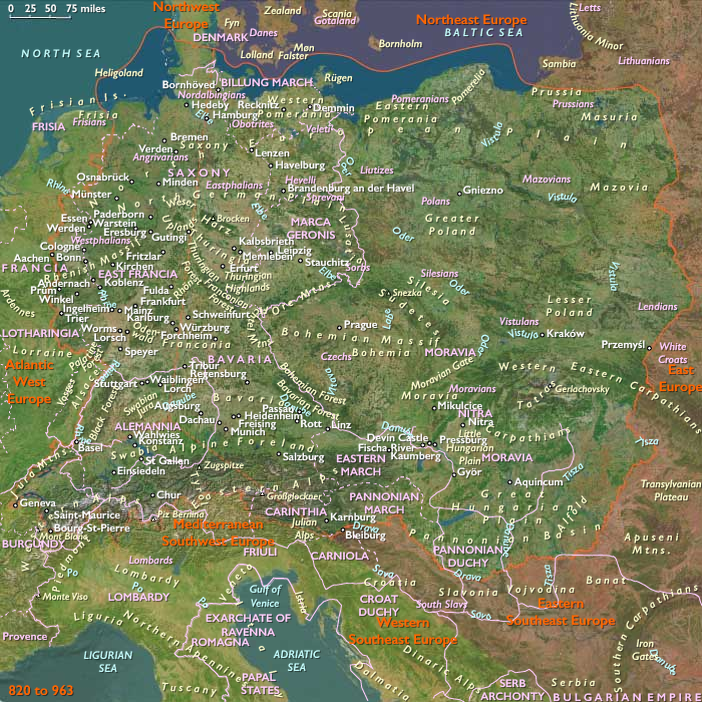
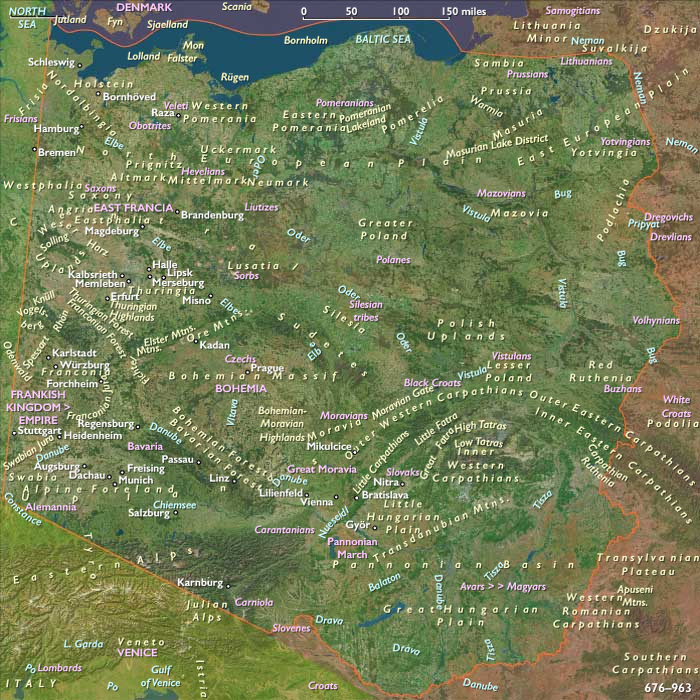
Between 904 and 915 CE, East Central Europe—encompassing modern-day Poland, Czechia, Slovakia, Hungary, and eastern portions of Germany and Austria east of 10°E and north of a line from approximately 48.2°N at 10°E to the Austro-Slovenian border near 46.7°N, 15.4°E—underwent transformative shifts due to the firm establishment of Magyar dominance in the Carpathian Basin, the strengthening of Saxon autonomy under the Liudolfing dynasty, and the political fragmentation following Great Moravia’s collapse. These changes significantly redefined the region’s political landscape, cultural dynamics, and demographic patterns, influencing future medieval states and principalities.
Political and Military Developments
Magyar Consolidation in the Carpathian Basin
-
By the early 10th century, Magyar tribes firmly established themselves in present-day Hungary, exerting regional dominance through continuous raids into neighboring territories, including Moravia, Bavaria, and the Carolingian East Frankish realms, significantly destabilizing regional power structures.
Saxon Ducal Strengthening under Otto the Illustrious
-
In Saxony, Otto the Illustrious (d. 912) further consolidated political and military authority, fortifying the Liudolfing dynasty’s territorial and political control. His leadership set the foundation for Saxony’s pivotal role in the upcoming Ottonian imperial ascendancy.
Fragmentation and Emergence of Successor States after Great Moravia
-
Following Great Moravia’s collapse under relentless Magyar incursions, the region fragmented into smaller Slavic principalities, notably in Bohemia and the emerging Přemyslid state, as well as in territories later forming parts of Poland and Slovakia.
Economic and Technological Developments
Regional Economic Disruption and Shift
-
Persistent Magyar raids severely disrupted traditional trade networks, particularly impacting Moravia and the eastern frontier regions. Economic activity increasingly shifted toward stable western areas, notably Bavaria and Saxony, adjusting trade patterns accordingly.
Intensified Fortification and Military Infrastructure
-
Heightened insecurity due to Magyar threats prompted significant investments in military infrastructure, notably reinforced hillforts, walled settlements, and frontier defensive systems, particularly in Saxony, Bavaria, and emerging Bohemian strongholds.
Cultural and Artistic Developments
Persistence and Adaptation of Moravian Cultural Traditions
-
Despite political disintegration, Moravian cultural traditions survived in regional ecclesiastical centers, notably preserving the Cyril-Methodian legacy and the Slavic liturgical heritage across successor principalities in Bohemia and Slovakia.
Saxon Cultural and Ecclesiastical Growth
-
Under Liudolfing patronage, Saxon territories continued developing distinctive cultural identities through ecclesiastical foundations, manuscript illumination, monastic learning, and the integration of Frankish artistic and administrative traditions.
Settlement and Urban Development
Decline of Former Moravian Centers
-
Major Moravian urban centers experienced further decline or abandonment due to political fragmentation and ongoing Magyar invasions, leading to increased settlement decentralization and relocation toward defensible highlands and fortified sites.
Continued Saxon and Bavarian Urban Stability
-
In Saxony and Bavaria, urban centers maintained relative stability and modest growth despite disruptions, supported by regional economic realignment, strong dynastic governance, and strategic fortification efforts.
Social and Religious Developments
Ecclesiastical Resilience Amid Regional Instability
-
Ecclesiastical institutions maintained resilience throughout East Central Europe, offering stability and continuity amid ongoing military threats and political upheaval. The Christian Church's presence provided essential social cohesion across fragmented territories.
Saxon Aristocratic Consolidation
-
The Liudolfing dynasty further entrenched its aristocratic dominance, reinforcing hierarchical social structures that became central to Saxon governance, administration, and cultural life.
Long-Term Consequences and Historical Significance
The era 904–915 CE dramatically reshaped East Central Europe, characterized by Magyar territorial consolidation, the rise of influential Saxon ducal power, and the political fragmentation of former Moravian lands. These pivotal developments defined new political alignments, cultural trajectories, and demographic patterns, laying essential foundations for medieval regional dynamics and significantly influencing subsequent historical developments across East Central Europe.
People
Groups
- Polytheism (“paganism”)
- Franks
- Saxons
- Germans
- Hungarian people
- Wends, or Sorbs (West Slavs)
- Christianity, Chalcedonian
- Bavarians (West Germanic tribe)
- Thuringia, Duchy of
- Thuringia, (Frankish) Duchy of
- Carantania
- Carantanians
- Bavaria, Carolingian Duchy of
- Frankish, or Carolingian (Roman) Empire
- Saxony, Duchy of
- Hungarians, Realm of the (Etelköz)
- Moravia, Great, Kingdom of
- Francia Orientalis (East Francia), Kingdom of
- Roman Empire, Eastern: Macedonian dynasty
- Bohemia, Duchy of
- Bavaria, Luitpolding Duchy of
Topics
Commodoties
Subjects
Regions
Subregions
Related Events
Showing 3 events out of 3 total
Years: 904 - 915
People
Groups
- Polytheism (“paganism”)
- Franks
- Saxons
- Germans
- Hungarian people
- Wends, or Sorbs (West Slavs)
- Christianity, Chalcedonian
- Bavarians (West Germanic tribe)
- Thuringia, Duchy of
- Thuringia, (Frankish) Duchy of
- Carantania
- Carantanians
- Bavaria, Carolingian Duchy of
- Frankish, or Carolingian (Roman) Empire
- Saxony, Duchy of
- Hungarians, Realm of the (Etelköz)
- Moravia, Great, Kingdom of
- Francia Orientalis (East Francia), Kingdom of
- Roman Empire, Eastern: Macedonian dynasty
- Bohemia, Duchy of
- Bavaria, Luitpolding Duchy of
Topics
Commodoties
Subjects
Regions
Subregions