
East Central Europe (880–891 CE): Height of …
Years: 880 - 891
East Central Europe (880–891 CE): Height of Great Moravia under Svatopluk, Carolingian Decline, and Strengthening of Saxon Autonomy
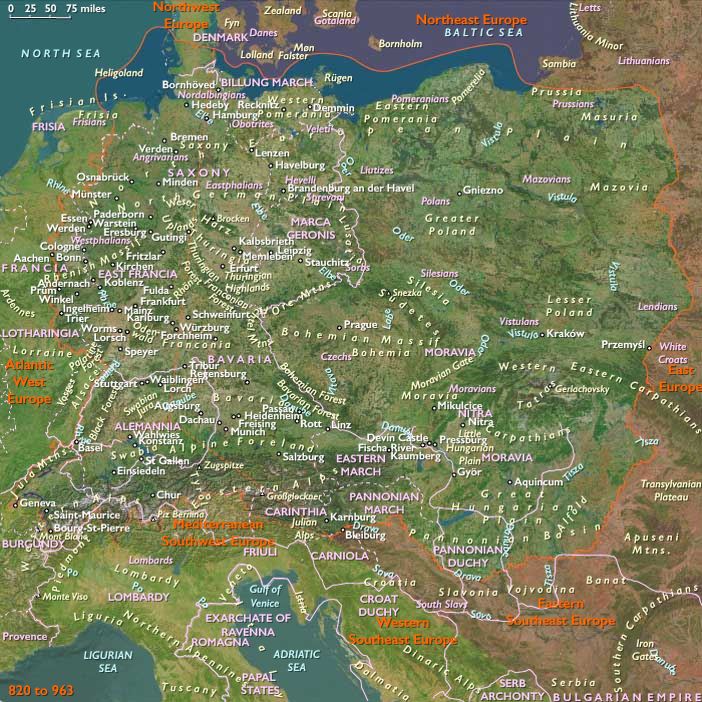
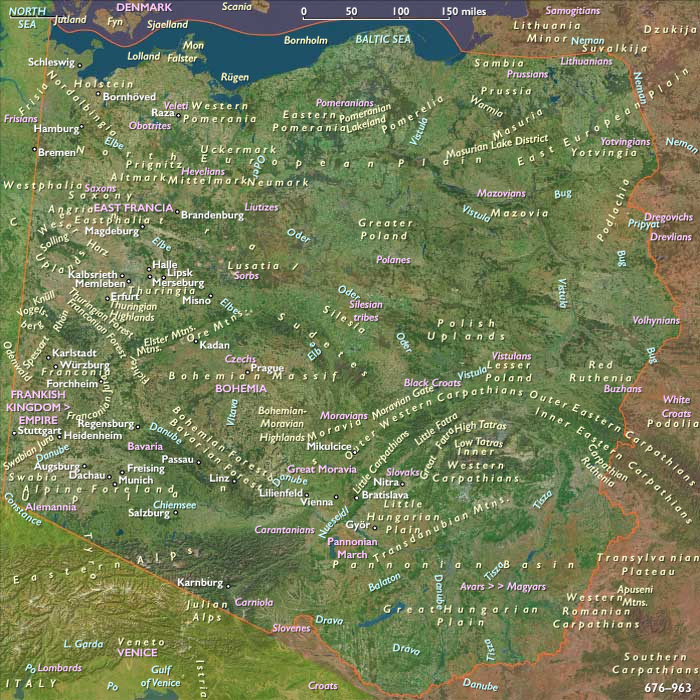
Between 880 and 891 CE, East Central Europe—comprising modern-day Poland, Czechia, Slovakia, Hungary, and eastern parts of Germany and Austria east of 10°E and north of a line from approximately 48.2°N at 10°E to the Austro-Slovenian border near 46.7°N, 15.4°E—entered a pivotal period defined by the peak of Great Moravia’s influence under Svatopluk I (r. 870–894). Concurrently, the gradual decline of centralized Carolingian authority under Louis the German’s successors reshaped regional politics, while the Liudolfing dynasty in Saxony, under Otto the Illustrious, firmly established Saxon autonomy and power.
Political and Military Developments
Peak and Expansion of Great Moravia
-
Under Svatopluk I, Great Moravia reached its territorial and political zenith, significantly expanding influence into neighboring territories, including parts of modern-day Poland, Bohemia, Slovakia, and Hungary, while successfully countering Carolingian military pressures.
Carolingian Decline and Fragmentation
-
Following the death of Louis the German (876 CE), East Francia suffered political fragmentation and internal struggles among his heirs. This instability weakened centralized authority, reducing Carolingian control over frontier territories and enabling greater regional autonomy, notably benefiting Great Moravia and Saxony.
Saxon Strength and the Liudolfing Dynasty
-
In Saxony, Otto the Illustrious (d. 912) expanded and consolidated Liudolfing power, firmly establishing a dynasty poised to dominate future East Frankish and German political developments. Saxony emerged as a stable and influential political center amidst Carolingian disintegration.
Economic and Technological Developments
Thriving Regional Trade
-
Economic prosperity persisted, sustained by active trade networks linking Moravia, Saxony, Bavaria, and Thuringia, fueling commerce in precious metals, textiles, agricultural products, and luxury goods, and fostering sustained regional growth.
Improved Defensive and Administrative Infrastructure
-
Continuing regional tensions prompted significant investments in fortified settlements, roads, and administrative centers, enhancing defense capabilities and administrative efficiency, particularly within Great Moravia and Saxon territories.
Cultural and Artistic Developments
Great Moravian Cultural Pinnacle
-
Svatopluk’s Moravia continued flourishing culturally, prominently featuring Slavic liturgical traditions and the Glagolitic script introduced by Cyril and Methodius. Moravia's distinctive cultural and religious identity was firmly entrenched during this era.
Saxon Integration and Carolingian Cultural Influence
-
Saxony’s Liudolfing rulers actively promoted cultural integration with Frankish traditions through ecclesiastical patronage, establishment of monasteries, and fostering Frankish artistic and administrative customs, solidifying Saxony’s elevated cultural position.
Settlement and Urban Development
Expansion and Consolidation of Moravian Centers
-
Urban centers in Moravia, notably Mikulčice, Nitra, and Devín, further expanded, becoming significant regional hubs of administration, trade, religion, and culture, emblematic of Great Moravia’s political and cultural prestige.
Stable Urban Growth in Saxon, Bavarian, and Thuringian Towns
-
Saxony, Bavaria, and Thuringia experienced steady urban growth, facilitated by prosperous trade, stable governance, and robust administrative structures that endured despite declining Carolingian central authority.
Social and Religious Developments
Deepened Christianization and Ecclesiastical Growth
-
Christianity strengthened across the region, notably in Great Moravia through the efforts of Cyril and Methodius’s followers. Ecclesiastical institutions flourished, shaping the religious and social life of the entire region.
Strengthening of Dynastic and Aristocratic Structures
-
Powerful dynasties, particularly the Liudolfings in Saxony and Mojmirid rulers in Moravia, solidified their social and political hierarchies, establishing enduring patterns of governance and aristocratic dominance that shaped medieval society.
Long-Term Consequences and Historical Significance
The period 880–891 CE was crucial in defining East Central Europe’s medieval political and cultural landscape. The height of Great Moravian power under Svatopluk, the continued decline of Carolingian central authority, and the ascendant influence of the Saxon Liudolfing dynasty significantly reshaped regional identities, politics, and cultural traditions. These developments profoundly influenced the subsequent historical trajectory, laying firm foundations for medieval kingdoms and dynastic alliances across East Central Europe.
People
Groups
- Polytheism (“paganism”)
- Franks
- Germans
- Saxons
- Wends, or Sorbs (West Slavs)
- Christianity, Chalcedonian
- Bavarians (West Germanic tribe)
- Thuringia, Duchy of
- Thuringia, (Frankish) Duchy of
- Carantania
- Carantanians
- Bavaria, Carolingian Duchy of
- Frankish, or Carolingian (Roman) Empire
- Saxony, Duchy of
- Moravia, Great, Kingdom of
- Francia Orientalis (East Francia), Kingdom of
- Roman Empire, Eastern: Macedonian dynasty
Topics
Commodoties
Subjects
Regions
Subregions
Related Events
Showing 10 events out of 53840 total
Years: 880 - 891
People
Groups
- Polytheism (“paganism”)
- Franks
- Germans
- Saxons
- Wends, or Sorbs (West Slavs)
- Christianity, Chalcedonian
- Bavarians (West Germanic tribe)
- Thuringia, Duchy of
- Thuringia, (Frankish) Duchy of
- Carantania
- Carantanians
- Bavaria, Carolingian Duchy of
- Frankish, or Carolingian (Roman) Empire
- Saxony, Duchy of
- Moravia, Great, Kingdom of
- Francia Orientalis (East Francia), Kingdom of
- Roman Empire, Eastern: Macedonian dynasty
Topics
Commodoties
Subjects
Regions
Subregions