
East Central Europe (844–855 CE): Consolidation of …
Years: 844 - 855
East Central Europe (844–855 CE): Consolidation of Great Moravia, Liudolfing Saxony, and Strengthening of East Francia
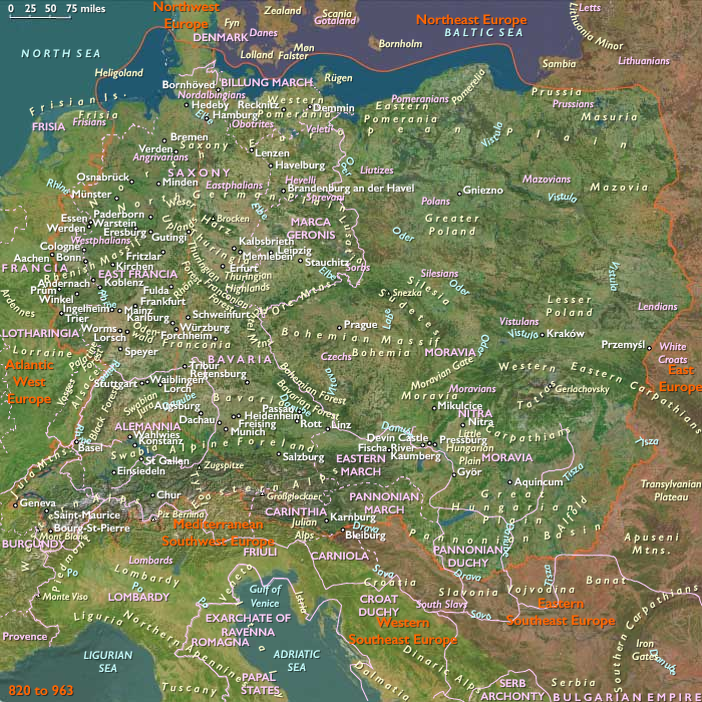
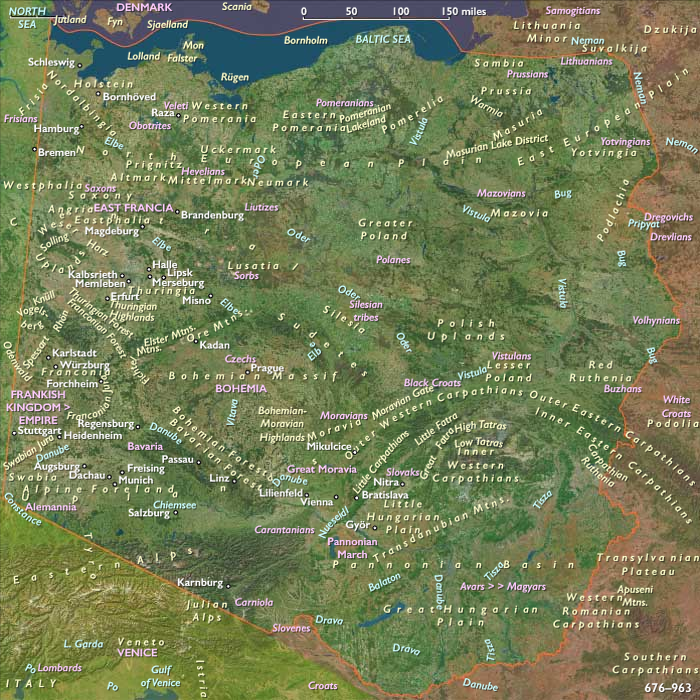
Between 844 and 855 CE, East Central Europe—comprising modern-day Poland, Czechia, Slovakia, Hungary, and the eastern parts of Germany and Austria east of 10°E and north of a line from approximately 48.2°N at 10°E to the Austro-Slovenian border near 46.7°N, 15.4°E—experienced notable political, cultural, and economic stabilization. The period saw the firm establishment of Great Moravia under Rastislav, rising Saxon political power through the influential Liudolfing dynasty, and growing stability within East Francia under the rule of Louis the German. These developments reinforced regional identities and laid important groundwork for future medieval kingdoms and dynastic struggles.
Political and Military Developments
Rastislav and the Consolidation of Great Moravia
-
Under Prince Rastislav (r. 846–870 CE), Great Moravia grew into a prominent Slavic polity, pursuing strategic autonomy from Carolingian dominance. Rastislav strengthened internal governance, established fortified settlements, and expanded his political reach diplomatically and militarily across neighboring Slavic territories.
Rise of the Liudolfing Dynasty in Saxony
-
Saxon noble power reached new prominence under Liudolf (d. 866), whose dynasty established influential territorial and ecclesiastical centers along the Leine River. Liudolf's family, now called the Liudolfings, laid crucial foundations for what would later become the Ottonian imperial dynasty.
Stabilization of East Francia Under Louis the German
-
In the aftermath of the Carolingian partition at the Treaty of Verdun (843 CE), Louis the German (r. 843–876)effectively stabilized and governed East Francia. His authority over Bavaria, Thuringia, and Saxony strengthened these territories' integration within a coherent political and administrative framework.
Economic and Technological Developments
Prosperity in Regional Trade Networks
-
Strong commercial links among Moravia, Saxony, Bavaria, and Thuringia supported vibrant trade in metals, textiles, agricultural products, and luxury goods. Economic stability promoted regional prosperity and facilitated sustained urban and rural development.
Infrastructure and Defensive Improvements
-
Continued investments in fortifications, roads, and administrative infrastructure bolstered regional security and facilitated economic and military coordination across Moravia, Saxony, and East Francia’s eastern frontier.
Cultural and Artistic Developments
Moravian Cultural Flourishing
-
Rastislav actively promoted a distinct Moravian culture, fostering the growth of unique artistic styles, ceramics, metalwork, and architecture. This cultural enrichment solidified Great Moravia’s identity and prestige within the region.
Carolingian Cultural Influence in Saxony
-
Saxon territories further integrated Carolingian cultural traditions, particularly through religious foundations like Gandersheim Abbey (founded in 852 CE by Liudolf and Bishop Altfrid of Hildesheim), embedding Christianity and Frankish administrative customs firmly into Saxon society.
Settlement and Urban Development
Moravian Urban Expansion
-
Major Moravian settlements continued their growth, becoming influential centers of administration, trade, and cultural production, providing essential foundations for later medieval urban centers.
Saxon and Bavarian Urban Stability
-
Urban areas in Saxony, Bavaria, and Thuringia maintained steady growth, benefiting from stable governance, improved infrastructure, and active commercial trade networks, reinforcing their regional importance within East Francia.
Social and Religious Developments
Deepening of Christianization
-
The sustained efforts of Carolingian missionaries and local leaders expanded Christianity significantly throughout Saxon and Moravian territories, reinforcing religious institutions and integrating East Central Europe deeper into the Christian cultural sphere.
Consolidation of Dynastic Power
-
Prominent dynasties, notably the Liudolfings in Saxony and Mojmirid rulers in Moravia, further solidified social hierarchies and leadership structures, shaping regional political and social organization significantly for future generations.
Long-Term Consequences and Historical Significance
The period 844–855 CE marked critical developments in East Central Europe’s historical trajectory. Rastislav's political and cultural consolidation in Great Moravia, the rise of influential Saxon noble families like the Liudolfings, and Louis the German’s stabilization of East Francia collectively reshaped regional identities and governance structures. These transformations established lasting foundations for subsequent medieval kingdoms, significantly influencing East Central Europe's political, social, and cultural landscape for centuries.
People
Groups
- Polytheism (“paganism”)
- Franks
- Germans
- Saxons
- Wends, or Sorbs (West Slavs)
- Christianity, Chalcedonian
- Bavarians (West Germanic tribe)
- Thuringia, Duchy of
- Thuringia, (Frankish) Duchy of
- Carantania
- Carantanians
- Bavaria, Carolingian Duchy of
- Saxony, Duchy of
- Roman Empire, Eastern: Phrygian or Armorian dynasty
- Moravia, Great, Kingdom of
- Francia Orientalis (East Francia), Kingdom of
Topics
Commodoties
Subjects
Regions
Subregions
Years: 844 - 855
People
Groups
- Polytheism (“paganism”)
- Franks
- Germans
- Saxons
- Wends, or Sorbs (West Slavs)
- Christianity, Chalcedonian
- Bavarians (West Germanic tribe)
- Thuringia, Duchy of
- Thuringia, (Frankish) Duchy of
- Carantania
- Carantanians
- Bavaria, Carolingian Duchy of
- Saxony, Duchy of
- Roman Empire, Eastern: Phrygian or Armorian dynasty
- Moravia, Great, Kingdom of
- Francia Orientalis (East Francia), Kingdom of
Topics
Commodoties
Subjects
Regions
Subregions