
East Central Europe (964 – 1107 CE): …
Years: 964 - 1107
East Central Europe (964 – 1107 CE): Christian Monarchies, Ottonian Frontiers, and Magyar Transformation
Geographic and Environmental Context
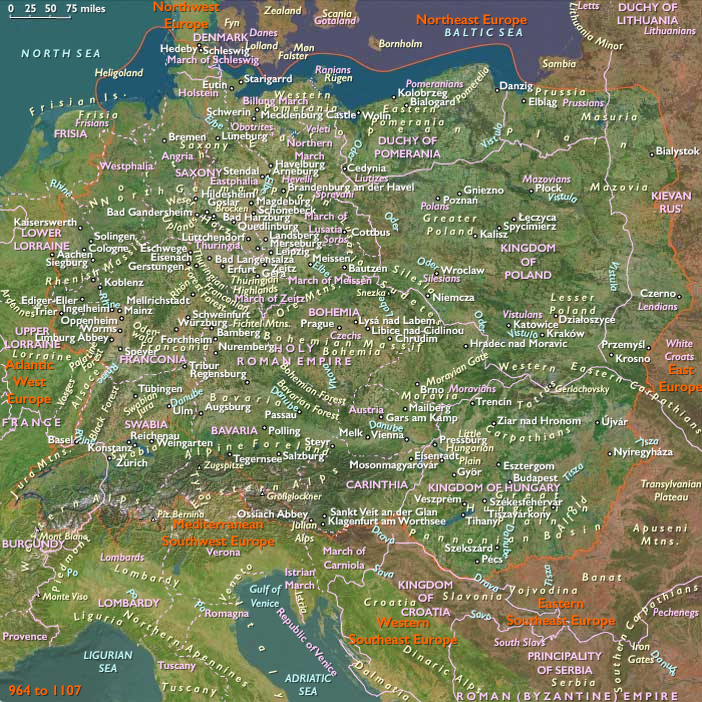
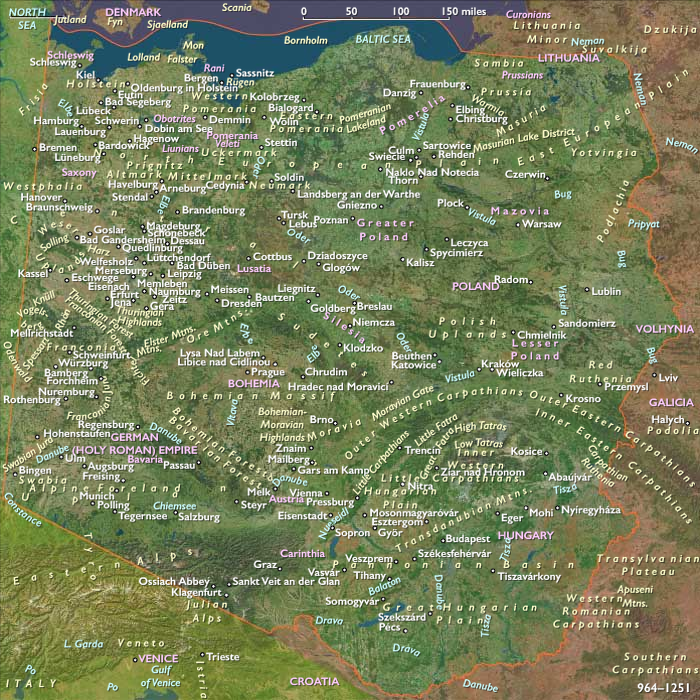
East Central Europe includes Poland, Czechia (Bohemia and Moravia), Slovakia, Hungary (the Carpathian Basin), northeastern Austria, and the greater part of Germany (including Berlin, Munich, and Hamburg).
-
Northern plains (Poland, Brandenburg, Saxony) opened into Baltic trade routes.
-
Bohemian Massif and Morava corridor tied Prague and Olomouc to Bavaria and the Danube.
-
The Carpathian Basin (Hungary) formed a steppe–agrarian arena linking to Byzantium and the Balkans.
-
The Danube–Vienna basin integrated northeastern Austria with German and Hungarian frontiers.
-
German lands east of the Rhine consolidated under Ottonian rule, anchoring expansion eastward.
Climate and Environmental Shifts
-
The Medieval Warm Period (c. 950–1250 CE) lengthened growing seasons and improved cereal yields, encouraging settlement expansion in loess uplands and forest clearings.
-
Extended navigability of rivers (Elbe, Oder, Danube) enhanced trade.
-
Steppe droughts occasionally spurred Magyar raids and nomadic unrest in the Carpathian frontier.
Societies and Political Developments
-
Germany (Ottonians → Salians):
-
Otto I (r. 936–973) crowned Holy Roman Emperor (962), after defeating the Magyars at the Battle of Lechfeld (955), ending their raids.
-
Saxony, Bavaria, and Franconia became stabilized duchies; bishoprics like Magdeburg expanded missionary work eastward.
-
Successors Otto II, Otto III, Henry II, and Henry IV built imperial authority, balancing duchies and papacy.
-
-
Hungary (Magyars → Christian Kingdom):
-
After Lechfeld, the Árpád dynasty turned toward state-building.
-
Grand Prince Géza (r. 972–997) initiated Christianization, forging alliances with the empire.
-
His son Stephen I (r. 997–1038) converted formally, crowned with the Holy Crown (1000/1001), founding the Christian Kingdom of Hungary.
-
The Árpád realm expanded bishoprics, counties, and fortresses, integrating the Carpathian Basin into Latin Christendom.
-
-
Bohemia and Moravia:
-
The Přemyslid dukes alternated between autonomy and imperial suzerainty.
-
Boleslaus II (r. 972–999) expanded Prague’s influence; in 973, a bishopric was established there.
-
After conflicts with Poland, Bohemia secured its position as an imperial duchy.
-
-
Poland (Piast dynasty):
-
Mieszko I (r. 960–992) consolidated Polans, baptized in 966, linking Poland to the Latin Church and Otto I’s empire.
-
His son Bolesław I Chrobry (r. 992–1025) crowned king in 1025, expanded into Lusatia, Bohemia, and Kiev; hosted the Congress of Gniezno (1000) with Otto III, elevating Gniezno’s archbishopric.
-
After his death, succession disputes weakened Piast power until restoration under Casimir I (r. 1034–1058).
-
-
Slovakia and Northeastern Austria:
-
Incorporated into shifting frontiers: early Magyar domain, later divided between Hungary, Bohemia, and Ottonian influence.
-
The Vienna basin became a frontier march, the Ostmark, evolving into medieval Austria.
-
Economy and Trade
-
Agriculture: rye, wheat, oats, barley expanded; three-field rotation spread in Germany and Bohemia.
-
Livestock: cattle and swine herding enriched manorial economies.
-
Salt & silver mining: Kraków and Moravian mines fueled regional wealth; Harz silver powered Ottonian coinage.
-
Trade routes:
-
Baltic corridor: amber, furs, and slaves exchanged at markets (Wolin, Gdańsk, Hamburg).
-
Elbe–Oder corridor: linked Saxony to Poland.
-
Danube corridor: Vienna–Pressburg–Buda connected Bavaria to Hungary and Byzantium.
-
-
Monetization: denarii minted in Regensburg, Cologne, and Magdeburg circulated widely; Polish and Hungarian mints developed by the 11th century.
Subsistence and Technology
-
Heavy plow (carruca): spread widely, supporting deeper tillage of heavy loess soils.
-
Horse collar & shoes: improved field traction and cavalry logistics.
-
Fortifications: stone castles began to appear beside older timber–earth gords.
-
Ecclesiastical architecture: stone Romanesque churches replaced wooden chapels in Poland, Bohemia, and Hungary.
-
River craft: larger planked vessels supplemented dugouts; alpine passes carried mule trains.
Movement and Interaction Corridors
-
Elbe–Oder frontier: Ottonian marches pressed against Polabian Slavs.
-
Morava–Danube route: corridor for Christian missions and Magyar–imperial diplomacy.
-
Carpathian passes: strategic channels for Magyar and Piast campaigns.
-
Baltic routes: connected Poland and Denmark to Norse and Rus’ markets.
Belief and Symbolism
-
Christianization:
-
Ottonian emperors promoted bishoprics and monasteries across Saxony, Thuringia, and Bohemia.
-
Poland (966), Hungary (1000), and Bohemia became Christian monarchies, with archbishoprics at Gniezno, Esztergom, and Prague.
-
-
Paganism: Baltic and Polabian Slavs (Lutici, Obodrites) and residual Magyar clans retained traditional cults into the 11th c.
-
Symbolism: Romanesque churches, reliquaries, and royal seals displayed integration into Christian Europe.
Adaptation and Resilience
-
Dynastic alliances: Piast, Přemyslid, and Árpád rulers used marriage with Ottonian and Salian houses to secure legitimacy.
-
Military adaptation: Magyars transformed from raiders to defenders, adopting armored cavalry and fortresses.
-
Economic resilience: silver mining and agricultural intensification stabilized revenues.
-
Cultural adaptation: adoption of Latin literacy, diocesan structures, and royal coronation rituals embedded local dynasties in European Christendom.
Long-Term Significance
By 1107 CE, East Central Europe was integrated into Latin Christendom as a region of Christian monarchies and imperial frontiers:
-
Germany emerged as the Holy Roman Empire’s core, projecting power eastward.
-
Hungary stood as a stable Christian kingdom under the Árpád dynasty.
-
Poland and Bohemia had secured monarchic legitimacy within the Christian order.
-
Pagan Polabian Slavs and Baltic tribes remained outside, setting the stage for future crusades.
This period transformed East Central Europe from a pagan–steppe frontier into a Christian heartland, aligned with Western Europe yet retaining its role as a frontier between empires, faiths, and cultures.
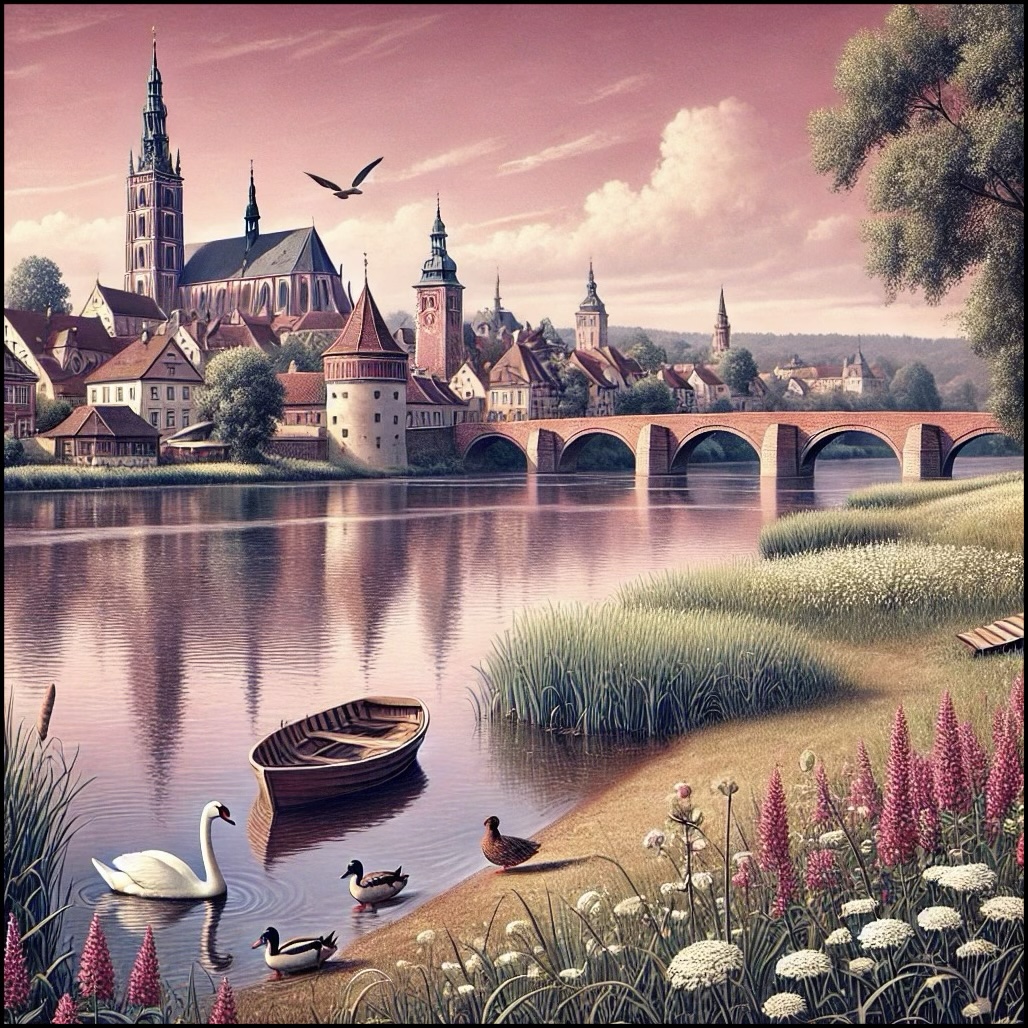
East Central Europe (with civilization) ©2024-25 Electric Prism, Inc. All rights reserved.
People
- Boleslaus II
- Boleslaw I Chrobry
- Casimir I the Restorer
- Géza
- Henry II, Holy Roman Emperor
- Henry IV, Holy Roman Emperor
- Mieszko I
- Otto I
- Otto II
- Otto III
- Stephen I of Hungary
Groups
- Germans
- Hungarian people
- Polabian Slavs (West Slavs)
- Slavs, West
- Christianity, Chalcedonian
- Obotrites (Slavic tribal confederation)
- Saxony, Duchy of
- Pechenegs, or Patzinaks
- Bohemia, Duchy of
- Hungary, Principality of
- Cumania (Cuman-Kipchak confederation)
- Franconia, Duchy of
- Bavaria, Ottonian Duchy of
- Germany, Kingdom of (within the Holy Roman Empire)
- German, or Ottonian (Roman) Empire
- Holy Roman Empire
- Poland, Principality of
- Lutici (West Slavic Polabian tribe)
- Eastern March
- Slovaks (West Slavs)
- Czechs [formerly Bohemians] (West Slavs)
- Austria, Margravate of
- Cuman people, or Western Kipchaks, also called Polovtsy, Polovtsians)
- Hungary, Kingdom of
- Poland of the first Piasts, Kingdom of
- Poland of the first Piasts, Kingdom of
- Christians, Roman Catholic
- Christians, Eastern Catholic (Uniate)
- Christians, Eastern Orthodox
- Bavaria, Welf Duchy of
- Bohemia, Kingdom of
- Bohemia, Duchy of
Topics
Commodoties
- Hides and feathers
- Gem materials
- Domestic animals
- Grains and produce
- Textiles
- Ceramics
- Strategic metals
- Salt
- Sweeteners
- Money
Subjects
Regions
Subregions
Years: 964 - 1107
East Central Europe (with civilization) ©2024-25 Electric Prism, Inc. All rights reserved.
People
- Boleslaus II
- Boleslaw I Chrobry
- Casimir I the Restorer
- Géza
- Henry II, Holy Roman Emperor
- Henry IV, Holy Roman Emperor
- Mieszko I
- Otto I
- Otto II
- Otto III
- Stephen I of Hungary
Groups
- Germans
- Hungarian people
- Polabian Slavs (West Slavs)
- Slavs, West
- Christianity, Chalcedonian
- Obotrites (Slavic tribal confederation)
- Saxony, Duchy of
- Pechenegs, or Patzinaks
- Bohemia, Duchy of
- Hungary, Principality of
- Cumania (Cuman-Kipchak confederation)
- Franconia, Duchy of
- Bavaria, Ottonian Duchy of
- Germany, Kingdom of (within the Holy Roman Empire)
- German, or Ottonian (Roman) Empire
- Holy Roman Empire
- Poland, Principality of
- Lutici (West Slavic Polabian tribe)
- Eastern March
- Slovaks (West Slavs)
- Czechs [formerly Bohemians] (West Slavs)
- Austria, Margravate of
- Cuman people, or Western Kipchaks, also called Polovtsy, Polovtsians)
- Hungary, Kingdom of
- Poland of the first Piasts, Kingdom of
- Poland of the first Piasts, Kingdom of
- Christians, Roman Catholic
- Christians, Eastern Catholic (Uniate)
- Christians, Eastern Orthodox
- Bavaria, Welf Duchy of
- Bohemia, Kingdom of
- Bohemia, Duchy of
Topics
Commodoties
- Hides and feathers
- Gem materials
- Domestic animals
- Grains and produce
- Textiles
- Ceramics
- Strategic metals
- Salt
- Sweeteners
- Money
Subjects
Regions
Subregions