
East Central Europe (808–819 CE): Consolidation of …
Years: 808 - 819
East Central Europe (808–819 CE): Consolidation of Carolingian Authority, Emergence of Great Moravia, and Slavic–Frankish Diplomacy
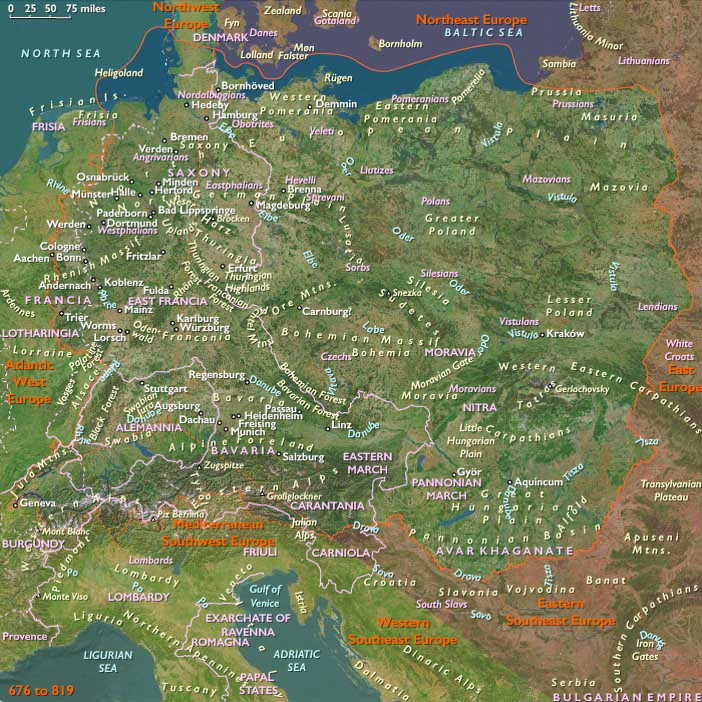
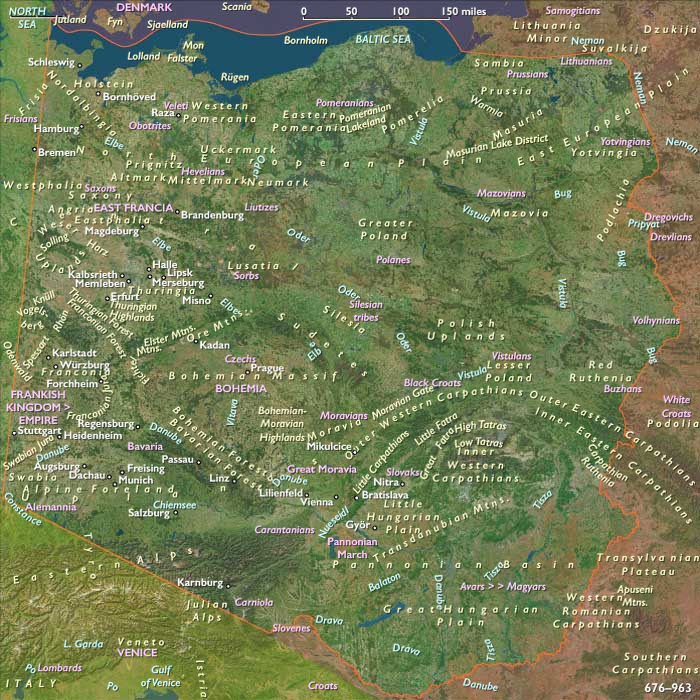
Between 808 and 819 CE, East Central Europe—encompassing Poland, Czechia, Slovakia, Hungary, and those portions of Germany and Austria lying east of 10°E and north of a line stretching from roughly 48.2°N at 10°E southeastward to the Austro-Slovenian border near 46.7°N, 15.4°E—experienced a period of relative stability and political consolidation under strengthened Carolingian influence. The foundation for Great Moravia emerged, significantly reshaping the political landscape of Slavic territories. Meanwhile, Carolingian governance became firmly established throughout former Avar domains, Bavaria, and Thuringia, cementing their integration into Frankish political and economic structures.
Political and Military Developments
Foundation of Great Moravia
-
Around 810–820 CE, the foundations were laid for the emergence of Great Moravia, a powerful Slavic state centered in Moravia and western Slovakia.
-
Leaders such as Mojmir I began uniting regional Slavic tribes, establishing coherent governance structures, and significantly enhancing regional political cohesion.
Carolingian Political Consolidation
-
Carolingian authority stabilized in former Avar territories and became deeply integrated into eastern Austria and western Hungary. Frankish administrative structures and governance models reshaped regional political organization and identity.
Strengthening of Carolingian Control in Bavaria and Thuringia
-
The autonomy of Bavaria and Thuringia was further reduced, with these territories increasingly managed under direct Frankish administrative frameworks, reflecting their deeper integration into Carolingian governance.
Economic and Technological Developments
Integration of Regional Trade
-
Economic ties strengthened significantly under Carolingian governance, facilitating increased trade activity in agricultural goods, textiles, precious metals, and crafts across Bavaria, Thuringia, former Avar territories, and the emerging Slavic principalities.
Fortified Infrastructure and Administrative Centers
-
Continued Carolingian investment in regional infrastructure and fortifications enhanced administrative control, facilitated trade, and improved military logistics in strategic locations across East Central Europe.
Cultural and Artistic Developments
Expansion of Carolingian Cultural and Religious Influence
-
The Carolingian presence further reinforced Christianization and Frankish cultural norms across former Avar domains and Bavarian and Thuringian territories, significantly reshaping artistic, religious, and social practices.
Emergence of Moravian Cultural Identity
-
The developing state of Great Moravia fostered distinctive Slavic cultural traditions visible in settlement patterns, pottery, jewelry, and other artifacts, indicating a clearly articulated Moravian identity distinct from neighboring regions.
Settlement and Urban Development
Growth of Carolingian Administrative Centers
-
Urban and administrative centers expanded significantly under Carolingian control, establishing strategic towns and fortifications particularly in eastern Austria, western Hungary, Bavaria, and Thuringia.
Development of Moravian Urban and Political Centers
-
Great Moravia witnessed the growth of prominent urban and political hubs, serving as focal points for Slavic governance, trade, and cultural identity.
Stabilization of Bavarian and Thuringian Settlements
-
Settlements across Bavaria and Thuringia became more prosperous and firmly integrated into Carolingian administrative and economic systems, reflecting increased stability and prosperity.
Social and Religious Developments
Intensified Christianization
-
The period saw heightened missionary activity and religious organization under Carolingian influence, particularly in former Avar territories and among Slavic populations, fostering widespread adoption of Christianity and the establishment of early church infrastructure.
Centralization of Slavic Leadership in Moravia
-
Slavic communities within Great Moravia significantly centralized governance structures, improving internal administration, military organization, and diplomatic relations with Carolingian neighbors.
Societal Integration under Carolingian Rule
-
Societies across Bavaria, Thuringia, and former Avar domains experienced increased integration into Frankish social hierarchies, governance models, and administrative frameworks.
Long-Term Consequences and Historical Significance
The era 808–819 CE marked significant political consolidation in East Central Europe, defined by the establishment of Great Moravia and strengthened Carolingian governance. These developments set enduring foundations for the medieval political, cultural, and economic landscapes of the region, significantly influencing subsequent historical trajectories and interactions between Frankish and Slavic powers.
People
Groups
- Polytheism (“paganism”)
- Franks
- Saxons
- Germans
- Wends, or Sorbs (West Slavs)
- Christianity, Chalcedonian
- Bavarians (West Germanic tribe)
- Thuringia, Duchy of
- Thuringia, (Frankish) Duchy of
- Carantania
- Carantanians
- Roman Empire, Eastern: Isaurian dynasty
- Francia (Carolingians)
- Bavaria, Carolingian Duchy of
- Saxony, Duchy of
- Pannonia, March of
Topics
Commodoties
Subjects
Regions
Subregions
Years: 808 - 819
People
Groups
- Polytheism (“paganism”)
- Franks
- Saxons
- Germans
- Wends, or Sorbs (West Slavs)
- Christianity, Chalcedonian
- Bavarians (West Germanic tribe)
- Thuringia, Duchy of
- Thuringia, (Frankish) Duchy of
- Carantania
- Carantanians
- Roman Empire, Eastern: Isaurian dynasty
- Francia (Carolingians)
- Bavaria, Carolingian Duchy of
- Saxony, Duchy of
- Pannonia, March of
Topics
Commodoties
Subjects
Regions
Subregions