
East Central Europe (700–711 CE): Saxon Ascendancy, …
Years: 700 - 711
East Central Europe (700–711 CE): Saxon Ascendancy, Slavic Consolidation, and Avar Stability
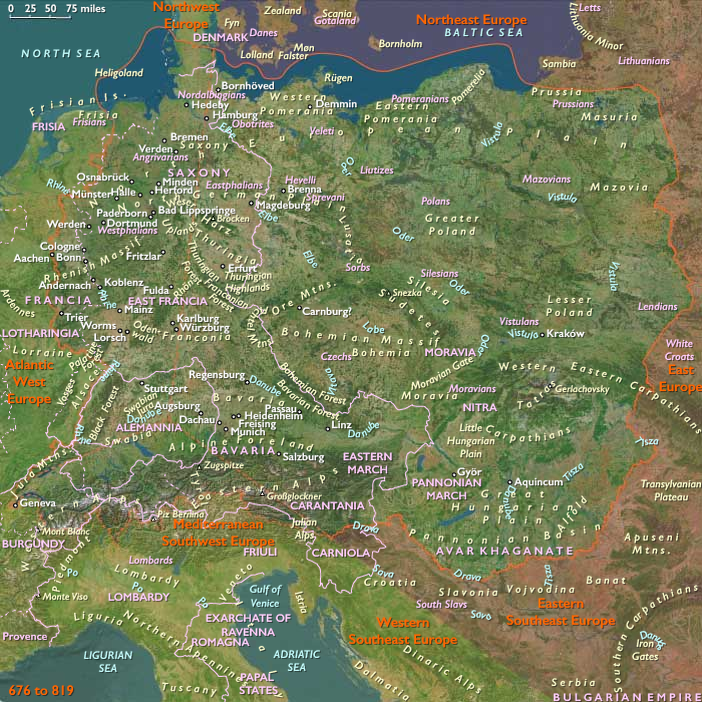
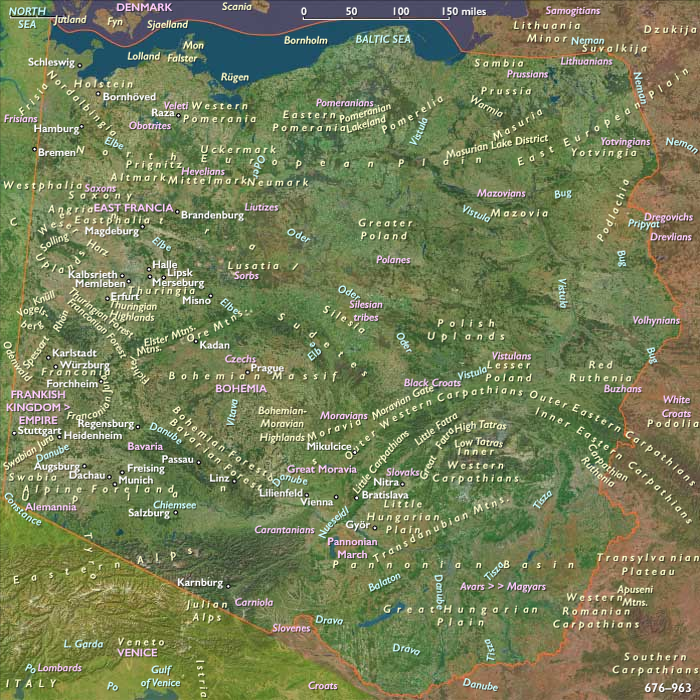
Between 700 and 711 CE, East Central Europe—encompassing Poland, Czechia, Slovakia, Hungary, and those portions of Germany and Austria lying east of 10°E and north of a line stretching from roughly 48.2°N at 10°E southeastward to the Austro-Slovenian border near 46.7°N, 15.4°E—entered a period marked by the rising prominence of the Saxons, continued consolidation of emerging Slavic principalities, and maintained stability within the Avar Khaganate. Saxon tribes expanded their territorial influence eastward, notably across eastern Germany, becoming significant players in regional geopolitics. Concurrently, Slavic political entities in Bohemia and Moravia further solidified their governance, while Thuringia sustained its autonomy from increasingly powerless Merovingian kings.
Political and Military Developments
Rise of Saxon Influence
-
Saxon tribes, previously centered in northern and western Germany, extended their reach eastward, asserting dominance over territories east of the Elbe River. Their expansion significantly impacted regional politics, trade routes, and cultural interactions across eastern Germany and parts of western Poland.
Consolidation of Slavic Principalities
-
Emerging Slavic political entities in Bohemia and Moravia continued their transition toward stable, early medieval state structures, strengthening local governance, defenses, and internal unity.
Continued Thuringian Autonomy
-
Thuringia, under powerful local dukes, maintained de facto independence from weakened Frankish central authority. Merovingian kings remained incapable of reclaiming effective control, exemplifying the ongoing fragmentation of their royal power.
Stability within the Avar Khaganate
-
The Avar Khaganate preserved political stability and territorial integrity within the Carpathian Basin, maintaining diplomatic relations with surrounding polities and carefully balancing interactions with increasingly influential Saxon and Slavic neighbors.
Economic and Technological Developments
Saxon Influence on Regional Trade
-
Saxon eastward expansion stimulated regional trade, facilitating greater economic interaction across eastern Germany, Bohemia, Moravia, and parts of Poland. Trade goods included ironwork, agricultural produce, livestock, textiles, and craft products.
Continued Development of Defensive Infrastructure
-
Saxons, Slavs, and Avars all continued developing fortified settlements, earthworks, and defensive systems, reflecting increased regional interaction and potential for military conflict.
Cultural and Artistic Developments
Saxon Cultural Expansion
-
Saxon expansion eastward disseminated distinct Germanic cultural influences into previously Slavic and mixed territories. Saxon artistry, notably in metalworking, jewelry, and weaponry, became regionally influential.
Distinct Slavic Identities in Bohemia and Moravia
-
Bohemian and Moravian communities further refined their distinctive regional cultural identities, evident in archaeological finds of pottery, jewelry styles, and settlement patterns.
Persistent Avar Cultural Influence
-
The Avar cultural legacy continued prominently within the Carpathian Basin, influencing artistic traditions, especially metalwork, decorative arts, and equestrian equipment, across neighboring communities.
Settlement and Urban Development
Saxon Territorial Expansion and Settlement
-
Saxon settlements proliferated eastward, establishing strategic strongholds, agricultural villages, and trading centers across eastern Germany and adjacent regions, notably impacting western Poland and northern Czechia.
Growth of Slavic Political Centers
-
Fortified settlements and early urban centers expanded within Bohemia and Moravia, signaling increased political stability, population growth, and economic prosperity.
Stability in Bavarian and Thuringian Settlements
-
Thuringian and Bavarian settlements, including significant towns such as Regensburg, remained prosperous and stable, benefiting from peaceful trade and reduced military threats.
Social and Religious Developments
Strengthened Saxon Tribal Hierarchy
-
Saxon society featured strong tribal hierarchies, with powerful warrior elites dominating social, military, and economic life, facilitating cohesive expansion into East Central Europe.
Slavic Hierarchical Consolidation
-
Slavic communities further centralized authority under increasingly powerful regional leaders, laying foundations for future state structures and organized defense.
Avar Sociopolitical Stability
-
Within their core territory, the Avars maintained cohesive sociopolitical structures based around nomadic elite leadership, supported by a stable tribute economy.
Long-Term Consequences and Historical Significance
The era 700–711 CE represented a crucial transition marked by the rise of Saxon political and cultural influence, sustained consolidation among Slavic principalities, ongoing autonomy in Thuringia, and continued Avar stability. These developments significantly shaped the medieval political landscape, establishing enduring territorial patterns, ethnic identities, and economic networks in East Central Europe.
Groups
- Polytheism (“paganism”)
- Franks
- Saxony, Old
- Saxons
- Germans
- Wends, or Sorbs (West Slavs)
- Christianity, Chalcedonian
- Avars, Eurasian
- Bavaria, Agilolfing Duchy of
- Avar Khaganate (Eurasian Avars)
- Thuringia, Duchy of
- Thuringia, (Frankish) Duchy of
- Roman Empire, Eastern: Non-dynastic
- Roman Empire, Eastern: Heraclian dynasty
- Roman Empire, Eastern: Non-dynastic
Topics
Commodoties
Subjects
Regions
Subregions
Years: 700 - 711
Groups
- Polytheism (“paganism”)
- Franks
- Saxony, Old
- Saxons
- Germans
- Wends, or Sorbs (West Slavs)
- Christianity, Chalcedonian
- Avars, Eurasian
- Bavaria, Agilolfing Duchy of
- Avar Khaganate (Eurasian Avars)
- Thuringia, Duchy of
- Thuringia, (Frankish) Duchy of
- Roman Empire, Eastern: Non-dynastic
- Roman Empire, Eastern: Heraclian dynasty
- Roman Empire, Eastern: Non-dynastic
Topics
Commodoties
Subjects
Regions
Subregions