
East Central Europe (688–699 CE): Strengthening Slavic …
Years: 688 - 699
East Central Europe (688–699 CE): Strengthening Slavic Principalities, Avar Stability, and Continuing Thuringian Independence
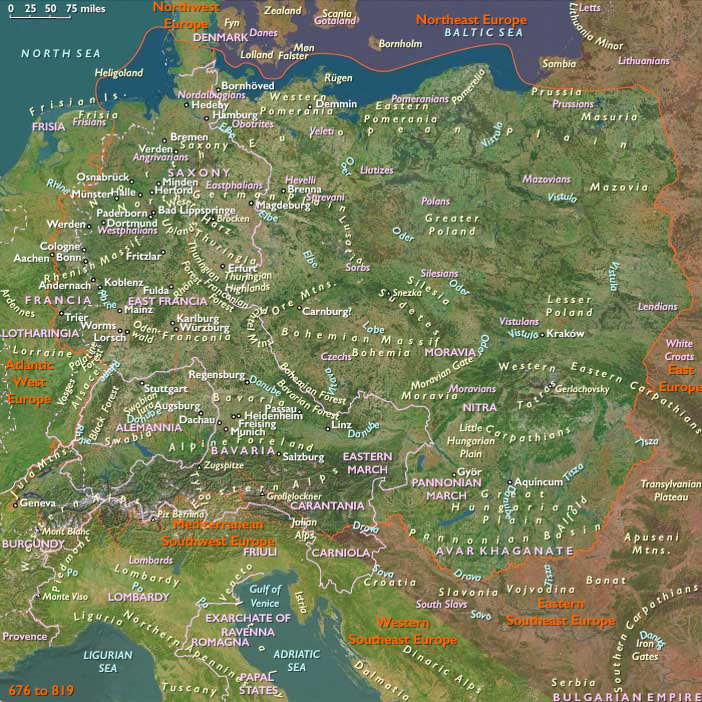
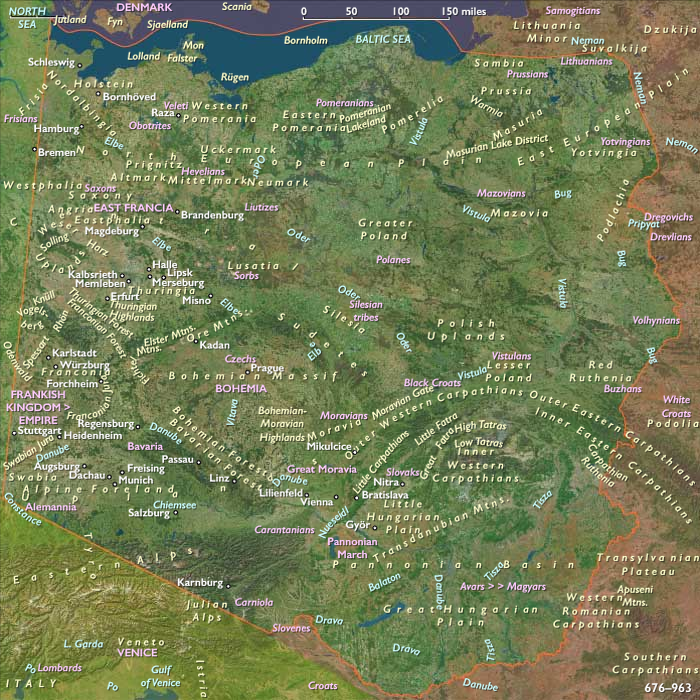
Between 688 and 699 CE, East Central Europe—encompassing Poland, Czechia, Slovakia, Hungary, and those portions of Germany and Austria lying east of 10°E and north of a line stretching from roughly 48.2°N at 10°E southeastward to the Austro-Slovenian border near 46.7°N, 15.4°E—experienced ongoing political stabilization and regional development. Slavic principalities, notably in Bohemia and Moravia, further solidified their political structures, laying foundations for medieval statehood. The Avar Khaganate maintained diplomatic stability within the Carpathian Basin, while Thuringia continued its practical independence from weakened Merovingian rule, emphasizing the fragmentation of central authority during this period.
Political and Military Developments
Firming of Slavic Principalities
-
Slavic political structures in Bohemia and Moravia continued to solidify into stable proto-states. Enhanced local governance systems facilitated stronger defenses and improved diplomatic relationships with neighboring Bavarians, Avars, and Frankish territories.
Avar Diplomatic Stabilization
-
The Avar Khaganate maintained diplomatic stability and internal cohesion. The Avars continued carefully managed interactions with surrounding polities, including Byzantine, Slavic, and Frankish entities, avoiding major military conflicts.
Ongoing Autonomy in Thuringia
-
Thuringian independence under strong local aristocratic leadership persisted, highlighting continued Merovingian royal impotence. Frankish rulers struggled to regain effective control over regional dukes, further exemplifying the era of the rois fainéants.
Bulgar Migration into the Balkans
-
Turkic-speaking Bulgar groups continued their settlement south of the Danube, progressively blending culturally and linguistically with surrounding Slavic populations. These migrations paved the way for the eventual creation of medieval Slavicized Bulgaria.
Economic and Technological Developments
Economic Stability and Trade Networks
-
Regional trade thrived despite political fragmentation. Economic links connecting Slavic principalities, Avars, Thuringians, Bavarians, Byzantines, and Frankish territories remained active, exchanging agricultural produce, iron goods, luxury textiles, and crafted items.
Continued Development of Fortified Settlements
-
Slavic principalities, Thuringia, and the Avar Khaganate continued developing advanced fortifications and defensive infrastructure, reflecting political stability, economic prosperity, and technological innovation.
Cultural and Artistic Developments
Emerging Distinctive Slavic Identities
-
Bohemian and Moravian communities further developed unique cultural identities, visible through distinct pottery, jewelry styles, and settlement patterns, laying the foundation for clearly defined medieval Slavic identities.
Bulgar–Slavic Cultural Integration
-
The Bulgar groups settling south of the Danube deepened their assimilation into predominantly Slavic cultural contexts, beginning the process that would define medieval Bulgaria’s unique Bulgar–Slavic hybrid identity.
Avar Cultural Continuity
-
Avar artistic influence persisted significantly across the region, especially in metallurgy and decorative arts, maintaining a lasting cultural legacy among neighboring Slavic and Bavarian populations.
Settlement and Urban Development
Growth of Slavic Fortified Centers
-
Fortified urban and rural centers expanded notably within Slavic principalities, especially in Bohemia and Moravia, reflecting increased political cohesion, population growth, and economic activity.
Thuringian and Bavarian Stability
-
Thuringian and Bavarian settlements maintained prosperity and stability, benefiting from peaceful trade and minimal military conflict, with urban centers like Regensburg continuing to thrive economically.
Social and Religious Developments
Increasingly Centralized Slavic Leadership
-
Slavic principalities further strengthened their hierarchical leadership structures under powerful warrior elites, improving military defense, political unity, and diplomatic capabilities.
Aristocratic Dominance in Thuringia
-
Thuringian society remained under powerful aristocratic governance, clearly independent of weakened Merovingian rulers, reflecting the persistent decentralization of Frankish royal power.
Long-Term Consequences and Historical Significance
The era 688–699 CE witnessed further political and cultural stabilization across East Central Europe. Continued Slavic state formation, Avar diplomatic stability, Bulgar migrations into the Balkans, and the persistence of Thuringian autonomy all significantly shaped the region’s subsequent medieval trajectory. These developments set clear historical patterns for the formation of lasting political entities, cultural identities, and demographic structures that would influence the region profoundly in the following centuries.
People
Groups
- Polytheism (“paganism”)
- Franks
- Germans
- Bulgars
- Wends, or Sorbs (West Slavs)
- Christianity, Chalcedonian
- Avars, Eurasian
- Bavaria, Agilolfing Duchy of
- Avar Khaganate (Eurasian Avars)
- Roman Empire, Eastern: Heraclian dynasty
- Thuringia, Duchy of
- Thuringia, (Frankish) Duchy of
- Bulgaria, “the Old Great “, (Onogur) Khaganate of
- Bulgar Principalities
- Volga Bulgaria, or Volga-Kama Bulgaria
Topics
Commodoties
Subjects
Regions
Subregions
Years: 688 - 699
People
Groups
- Polytheism (“paganism”)
- Franks
- Germans
- Bulgars
- Wends, or Sorbs (West Slavs)
- Christianity, Chalcedonian
- Avars, Eurasian
- Bavaria, Agilolfing Duchy of
- Avar Khaganate (Eurasian Avars)
- Roman Empire, Eastern: Heraclian dynasty
- Thuringia, Duchy of
- Thuringia, (Frankish) Duchy of
- Bulgaria, “the Old Great “, (Onogur) Khaganate of
- Bulgar Principalities
- Volga Bulgaria, or Volga-Kama Bulgaria
Topics
Commodoties
Subjects
Regions
Subregions