
East Central Europe (544–555 CE): Lombard Ascendancy, …
Years: 544 - 555
East Central Europe (544–555 CE): Lombard Ascendancy, Battle of Asfeld, Gepid Weakening, and Early Byzantine-Avar Diplomacy
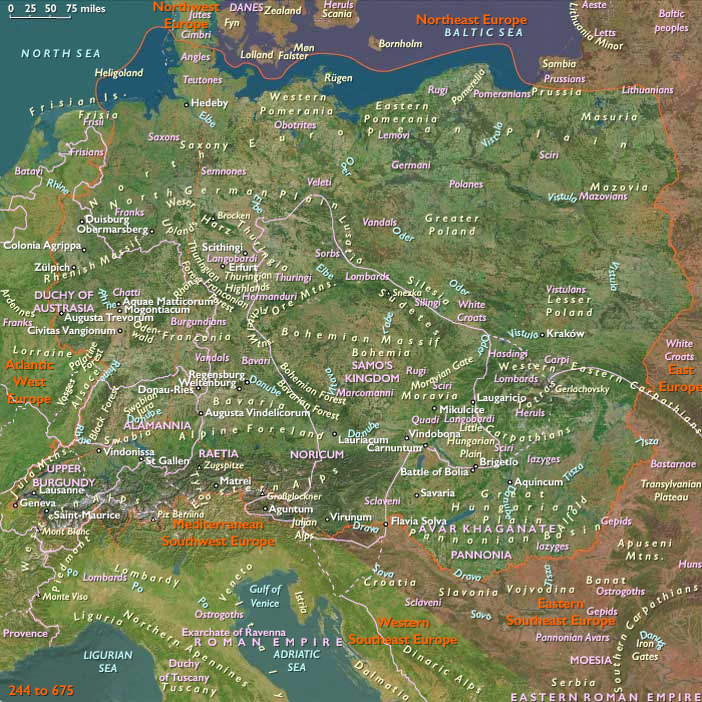
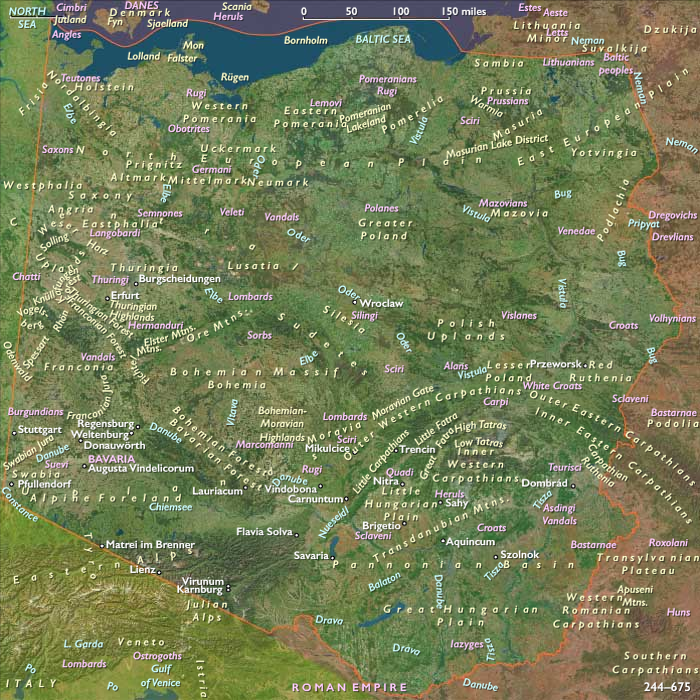
Between 544 and 555 CE, East Central Europe—encompassing Poland, Czechia, Slovakia, Hungary, and those portions of Germany and Austria lying east of 10°E and north of a line stretching from roughly 48.2°N at 10°E southeastward to the Austro-Slovenian border near 46.7°N, 15.4°E—underwent significant geopolitical shifts, primarily characterized by Lombard territorial expansion and the corresponding weakening of the Gepid kingdom. Under King Audoin (546–560 CE), the Lombards expanded their influence significantly, culminating in their decisive victory at the Battle of Asfeld (552 CE). This defeat severely weakened the Gepids under King Thurisind, although the Gepids retained limited control of their eastern territories, primarily in modern-day eastern Hungary and Transylvania. Concurrently, the Byzantine Empire actively engaged in diplomatic efforts, skillfully balancing regional rivalries to secure its northern frontier. Near the close of this era (around 558–562 CE), the first arrival of the Pannonian Avars from Central Asia near the Danube further complicated regional dynamics, as Byzantium began forming initial alliances with them.
Political and Military Developments
-
Lombard territorial expansion under King Audoin reached a peak in 552 CE with the Lombard victory at the Battle of Asfeld, significantly reducing Gepid military strength and territorial integrity.
-
Gepids, though greatly weakened, maintained limited regional authority eastward in Transylvania, under continued pressure from Lombard aggression.
-
Byzantine diplomacy actively balanced alliances, supporting the Lombards strategically to prevent Gepid resurgence while simultaneously preparing for the emergence of the newly arriving Avars.
Economic and Cultural Developments
-
Economic stability persisted across Lombard territories, characterized by vibrant agricultural communities, robust livestock economies, and stable trade routes linking settlements such as Augusta Vindelicorum (Augsburg), Vindobona, and Aquincum.
-
Lombard cultural expressions flourished, blending Germanic traditions with Byzantine influences in their metalwork, pottery, and decorative arts.
Slavic Expansion and Consolidation
-
The clearly differentiated Slavic groups (Sclaveni, Antes, and West Slavic tribes like Polanes, Sorbs, Obotrites, Veleti, and White Croats) rapidly expanded into territories progressively vacated or weakened by Gepid setbacks, significantly increasing their demographic and cultural presence.
Long-Term Consequences
This era marked a turning point, setting the stage for greater geopolitical upheavals. The severe weakening of the Gepids following Asfeld (552 CE) created power vacuums soon exploited by incoming Avars and rapidly expanding Slavic populations, fundamentally reshaping East Central Europe's demographic and cultural landscape.
People
Groups
- Polytheism (“paganism”)
- Slavs, Proto-
- Lombards (West Germanic tribe)
- Gepids (East Germanic tribe)
- Goths (East Germanic tribe)
- Germans
- Noricum (Roman province)
- Pannonia Prima (Roman province)
- Ostrogoths, Realms of the
- Wends, or Sorbs (West Slavs)
- Roman Empire, Western (Ravenna)
- Christianity, Chalcedonian
- Gepids, Kingdom of the
- Roman Empire, Eastern: Leonid dynasty
- Francia (Merovingians)
- Vistulans (West Slavic tribe)
- Veleti (West Slavic tribe)
- Antes (Slavic tribal confederation)
- Sclaveni (Slavic tribal confederation)
- Polans, Western (West Slavic tribe)
- Pomeranians (West Slavic tribe)
- Obotrites (Slavic tribal confederation)
- White Croats (East Slavic tribe)
Topics
Commodoties
Subjects
Regions
Subregions
Related Events
Showing 10 events out of 57704 total
Years: 544 - 555
People
Groups
- Polytheism (“paganism”)
- Slavs, Proto-
- Lombards (West Germanic tribe)
- Gepids (East Germanic tribe)
- Goths (East Germanic tribe)
- Germans
- Noricum (Roman province)
- Pannonia Prima (Roman province)
- Ostrogoths, Realms of the
- Wends, or Sorbs (West Slavs)
- Roman Empire, Western (Ravenna)
- Christianity, Chalcedonian
- Gepids, Kingdom of the
- Roman Empire, Eastern: Leonid dynasty
- Francia (Merovingians)
- Vistulans (West Slavic tribe)
- Veleti (West Slavic tribe)
- Antes (Slavic tribal confederation)
- Sclaveni (Slavic tribal confederation)
- Polans, Western (West Slavic tribe)
- Pomeranians (West Slavic tribe)
- Obotrites (Slavic tribal confederation)
- White Croats (East Slavic tribe)
Topics
Commodoties
Subjects
Regions
Subregions