
East Central Europe (520–531 CE): Gepid-Lombard Rivalry, …
Years: 520 - 531
East Central Europe (520–531 CE): Gepid-Lombard Rivalry, Frankish Influence, and Regional Realignments
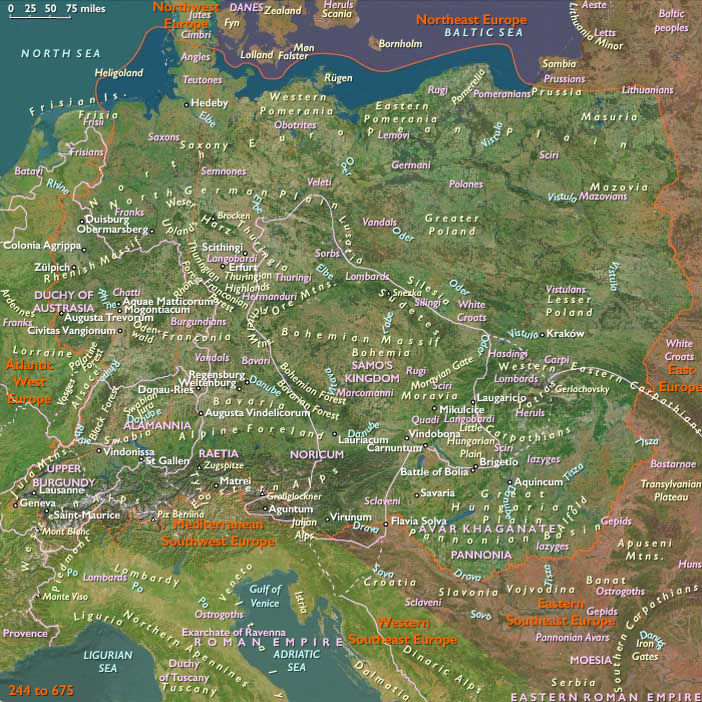
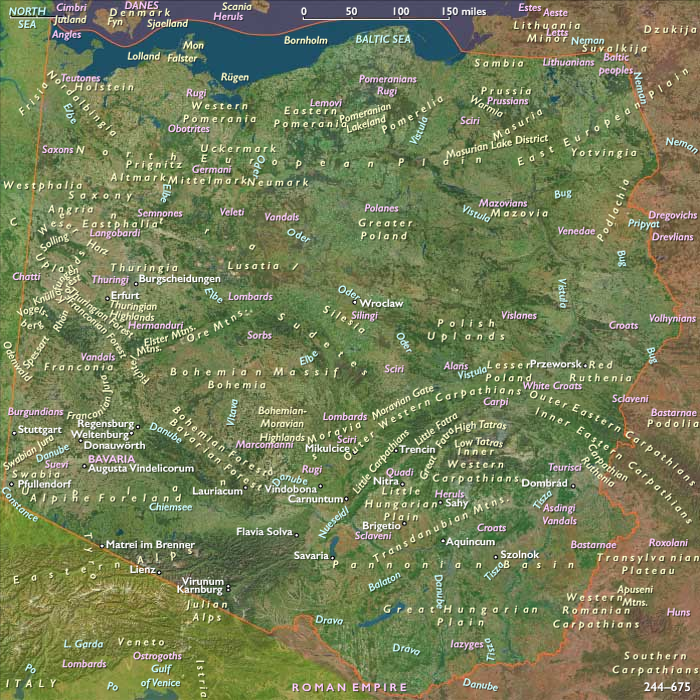
Between 520 and 531 CE, East Central Europe—including Poland, Czechia, Slovakia, Hungary, and those portions of Germany and Austria lying east of 10°E and north of a line stretching from roughly 48.2°N at 10°E southeastward to the Austro-Slovenian border near 46.7°N, 15.4°E—entered a period characterized by increasing rivalry and periodic conflict between the dominant Gepids and their expanding Lombard (Langobardi) neighbors. This era witnessed heightened external interest from the Frankish kingdom to the west and the Byzantine Empire to the southeast, influencing regional political dynamics. Amid these shifting alliances and rivalries, important regional settlements such as Augusta Vindelicorum (Augsburg) continued to grow, serving as strategic commercial and administrative centers. Concurrently, proto-Slavic communities maintained their cultural resilience and adaptive stability.
Political and Military Developments
Intensified Gepid-Lombard Rivalry
-
Rivalry between the Gepids and Lombards intensified notably during this period, frequently erupting into armed conflicts. This competition shaped territorial boundaries and influenced regional alliances, contributing to sustained geopolitical instability, especially around the central Carpathian Basin and adjacent regions.
Increasing Frankish and Byzantine Involvement
-
The growing strength of the Frankish kingdom to the west and strategic interests of the Byzantine Empire in the southeast became more prominent during this era, influencing the regional balance of power. Both powers sought diplomatic relationships with the Gepids and Lombards to advance their interests and counter each other's influence in East Central Europe.
Regional Realignments and Stabilization
-
Despite frequent conflicts, both Gepid and Lombard territories experienced internal consolidation, creating more clearly defined spheres of control. Territories such as modern eastern Austria, western Hungary, and Czechia came increasingly under Lombard influence, while central and eastern Hungary remained Gepid strongholds.
Economic and Technological Developments
Stability and Regional Trade Expansion
-
Increased political consolidation in both Gepid and Lombard territories allowed further expansion and stability of regional trade networks, notably linking centers such as Augusta Vindelicorum (Augsburg), Vindobona, Carnuntum, and Aquincum. Local economies experienced modest growth through stable agricultural production, livestock raising, and strengthened commercial exchanges.
Continued Infrastructure Maintenance
-
Infrastructure such as roads and fortifications continued receiving limited maintenance and improvements under Gepid and Lombard authority, primarily to ensure military mobility, communication, and regional trade.
Cultural and Artistic Developments
Gepid-Lombard Cultural Exchanges
-
Cultural and artistic expression reflected the intensified interactions between Gepid and Lombard communities. Material culture—particularly jewelry, weaponry, and pottery—showcased blended Germanic traditions, incorporating Gepid and Lombard styles along with subtle Frankish and Byzantine influences.
Proto-Slavic Cultural Resilience
-
Proto-Slavic communities maintained strong cultural continuity, carefully absorbing external influences while preserving traditional communal structures, religious practices, and craftsmanship.
Settlement and Urban Development
Growth of Augusta Vindelicorum (Augsburg)
-
Augusta Vindelicorum (Augsburg) continued thriving as a significant regional urban and commercial center, benefiting from increased stability, trade, and connectivity fostered by the region’s growing political coherence.
Continued Importance of Regional Settlements
-
Key settlements, including former Roman towns such as Carnuntum, Vindobona, and Aquincum, maintained their regional significance, providing vital administrative, military, and economic functions under stable Gepid and Lombard rule.
Social and Religious Developments
Strengthened Tribal Elites among Gepids and Lombards
-
Social structures among the Gepids and Lombards solidified further, revolving around powerful warrior elites whose legitimacy rested upon military success, effective diplomacy, and adherence to traditional Germanic religious and cultural practices.
Proto-Slavic Social Cohesion and Stability
-
Proto-Slavic societies maintained stable internal cohesion, emphasizing community solidarity and continuity in traditional social and religious practices, successfully navigating external geopolitical pressures and maintaining cultural identity.
Long-Term Consequences and Historical Significance
The era 520–531 CE marked an essential period of political competition and cultural interaction in East Central Europe. Intensified Gepid-Lombard rivalry and increased diplomatic involvement from the Franks and Byzantines contributed significantly to shaping the region's geopolitical landscape. Concurrently, the ongoing growth of urban centers, continued maintenance of regional infrastructure, and enduring resilience of proto-Slavic communities provided vital continuity, laying the foundations for the complex cultural and political dynamics characteristic of the region's early medieval period.
Groups
- Polytheism (“paganism”)
- Slavs, Proto-
- Lombards (West Germanic tribe)
- Gepids (East Germanic tribe)
- Goths (East Germanic tribe)
- Germans
- Ostrogoths, Realms of the
- Christianity, Chalcedonian
- Gepids, Kingdom of the
- Francia (Merovingians)
- Roman Empire, Eastern: Justinian dynasty
Topics
Commodoties
Subjects
Regions
Subregions
Related Events
Showing 3 events out of 3 total
Years: 520 - 531
Groups
- Polytheism (“paganism”)
- Slavs, Proto-
- Lombards (West Germanic tribe)
- Gepids (East Germanic tribe)
- Goths (East Germanic tribe)
- Germans
- Ostrogoths, Realms of the
- Christianity, Chalcedonian
- Gepids, Kingdom of the
- Francia (Merovingians)
- Roman Empire, Eastern: Justinian dynasty
Topics
Commodoties
Subjects
Regions
Subregions