
East Central Europe (472–483 CE): Theodoric the …
Years: 472 - 483
East Central Europe (472–483 CE): Theodoric the Great, Ostrogothic Consolidation, and Regional Stability
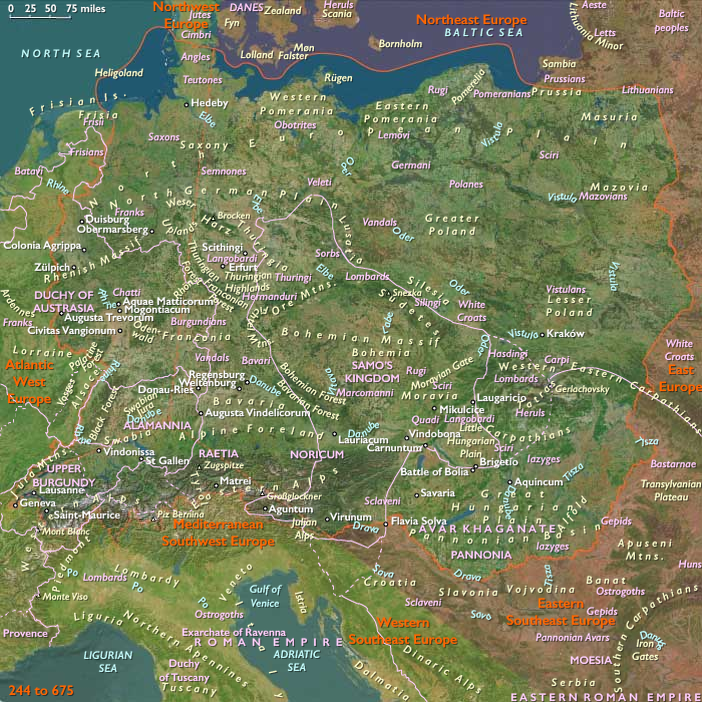
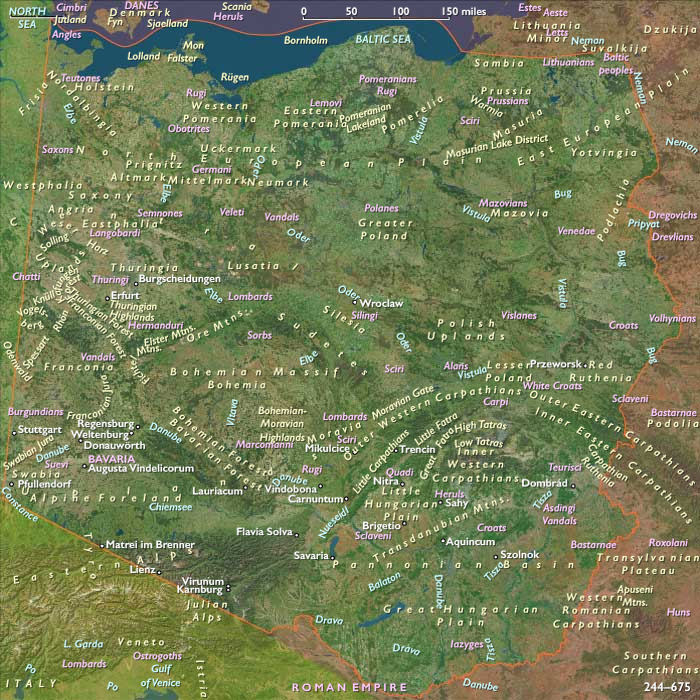
Between 472 and 483 CE, East Central Europe—including Poland, Czechia, Slovakia, Hungary, and those portions of Germany and Austria lying east of 10°E and north of a line stretching from roughly 48.2°N at 10°E southeastward to the Austro-Slovenian border near 46.7°N, 15.4°E—experienced the consolidation of Ostrogothic and Gepid power. This era was particularly marked by the rise and expanding influence of Theodoric the Great, who increasingly dominated Ostrogothic politics and asserted authority over broad territories formerly controlled by Rome and the Huns. Amid these developments, the Rugii retained their independence through skillful diplomacy, while proto-Slavic communities continued their enduring cultural resilience and steady adaptation.
Political and Military Developments
Rise of Theodoric the Great
-
Theodoric the Great emerged prominently during this period as the leading figure of the Ostrogoths following the death of his father, Theodemir (474 CE). His strong leadership swiftly strengthened Ostrogothic authority, notably in territories corresponding to modern-day Austria, eastern Germany, Czechia, and western Hungary.
-
Theodoric secured dominance by successfully negotiating alliances, confronting rival groups, and initiating military actions, thus significantly stabilizing Ostrogothic influence across the region.
Gepid Territorial Consolidation
-
Concurrently, the Gepids under their king continued to solidify their presence in the eastern parts of former Roman Pannonia, extending their control over central Hungary and adjacent territories, frequently interacting diplomatically and militarily with the Ostrogoths and Rugii.
Rugian Diplomatic Neutrality
-
The Rugii maintained their stable autonomy along the upper Tisza, carefully balancing diplomatic relationships with Theodoric’s Ostrogoths, the Gepids, and surrounding tribal factions, thereby ensuring their continued independence and regional significance.
Economic and Technological Developments
Stabilization of Localized Economies
-
Ostrogothic and Gepid dominance contributed to a measure of regional economic stability, allowing limited revival of trade networks, particularly along strategic routes connecting settlements such as Augusta Vindelicorum (Augsburg) and former Roman provincial centers.
-
Local economies remained primarily agricultural and pastoral but benefited from increased security and trade facilitated by stable tribal governance.
Infrastructure Adaptation
-
Although large-scale infrastructure improvements ceased, existing roads and fortifications were maintained to support regional governance and security, reflecting stable Ostrogothic and Gepid control.
Cultural and Artistic Developments
Ostrogothic and Gepid Cultural Expression
-
The period saw further refinement of Ostrogothic and Gepid material culture, with distinctive artistic styles emerging clearly in jewelry, weaponry, and decorative metalwork, blending Germanic traditions, residual Roman influences, and elements inherited from Hunnic styles.
Proto-Slavic Cultural Stability
-
Proto-Slavic populations maintained traditional customs and community cohesion, demonstrating cultural resilience and cautious integration of external influences within a context of regional stability under dominant Ostrogothic and Gepid influence.
Settlement and Urban Development
Strengthened Importance of Regional Urban Centers
-
Settlements such as Augusta Vindelicorum (Augsburg) continued as significant regional hubs, benefiting from increased political stability and revived regional trade.
-
Former Roman towns (Carnuntum, Vindobona, Aquincum) maintained their strategic significance, albeit in reduced forms, serving as military and administrative outposts for the ruling tribes.
Rugian Settlements as Anchors of Stability
-
Rugian communities along the upper Tisza continued thriving economically and politically, reinforcing their role as stable centers amidst broader regional realignments.
Social and Religious Developments
Ostrogothic and Gepid Leadership Structures
-
Tribal structures among Ostrogoths and Gepids further solidified around powerful warrior elites, emphasizing traditional Germanic cultural practices and reinforcing internal unity.
Rugian Diplomatic Adaptation
-
Rugian leaders continued their skilled diplomacy, adeptly managing alliances and neutrality with dominant regional powers, ensuring autonomy and preserving traditional cultural identities.
Proto-Slavic Social Cohesion
-
Proto-Slavic communities maintained their internal social structures, traditional religious practices, and communal resilience, facilitating continuity in cultural and social traditions despite ongoing geopolitical changes.
Long-Term Consequences and Historical Significance
The era 472–483 CE represented a key transitional phase in East Central Europe, characterized by the decisive consolidation of Ostrogothic power under Theodoric the Great and strengthened Gepid territorial control. The continued stability of Rugian autonomy, alongside the cultural resilience of proto-Slavic communities, provided a framework of enduring local continuity. These developments significantly shaped subsequent regional dynamics, laying essential foundations for the transition from late antiquity into the medieval societies that would define East Central Europe’s historical trajectory.
People
Groups
- Polytheism (“paganism”)
- Slavs, Proto-
- Rugii (East Germanic tribe )
- Gepids (East Germanic tribe)
- Goths (East Germanic tribe)
- Germans
- Christians, Early
- Noricum (Roman province)
- Pannonia Prima (Roman province)
- Pannonia Valeria (Roman province)
- Hunnic Empire
- Ostrogoths, Realms of the
- Gepids, Kingdom of the
- Roman Empire, Eastern: Leonid dynasty
Topics
Commodoties
Subjects
Regions
Subregions
Related Events
Showing 10 events out of 58557 total
Years: 472 - 483
People
Groups
- Polytheism (“paganism”)
- Slavs, Proto-
- Rugii (East Germanic tribe )
- Gepids (East Germanic tribe)
- Goths (East Germanic tribe)
- Germans
- Christians, Early
- Noricum (Roman province)
- Pannonia Prima (Roman province)
- Pannonia Valeria (Roman province)
- Hunnic Empire
- Ostrogoths, Realms of the
- Gepids, Kingdom of the
- Roman Empire, Eastern: Leonid dynasty
Topics
Commodoties
Subjects
Regions
Subregions