
East Central Europe (460–471 CE): Post-Hunnic Realignments, …
Years: 460 - 471
East Central Europe (460–471 CE): Post-Hunnic Realignments, Ostrogothic and Gepid Dominance, and Tribal Adaptations
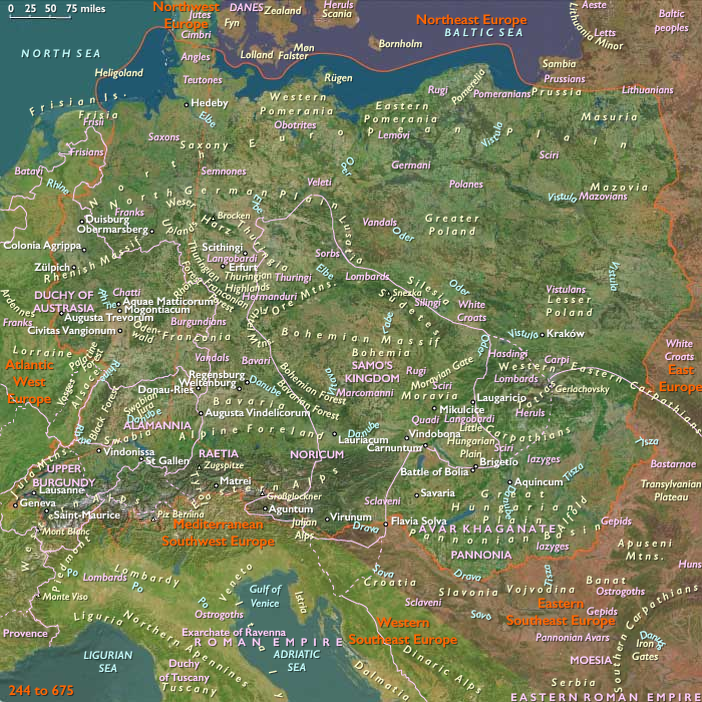
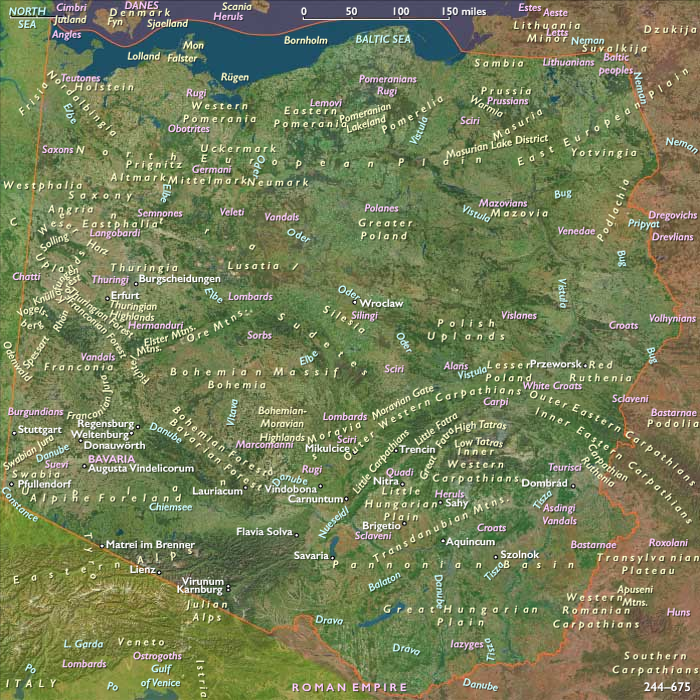
Between 460 and 471 CE, East Central Europe—including Poland, Czechia, Slovakia, Hungary, and those portions of Germany and Austria lying east of 10°E and north of a line stretching from roughly 48.2°N at 10°E southeastward to the Austro-Slovenian border near 46.7°N, 15.4°E—experienced a dynamic period of tribal realignment and regional restructuring following the collapse of the Hunnic Empire. The vacuum of power created after Attila’s death allowed prominent Germanic tribes, especially the Ostrogoths under leaders like Theodemir, and the Gepids under King Ardaric, to assert dominance, profoundly reshaping regional politics. Roman provincial administration in territories such as Pannonia Savia and Pannonia Secunda dissolved entirely, marking a definitive end to coherent Roman control in these areas. Amid these shifting conditions, the Rugii retained diplomatic autonomy along the upper Tisza, while the proto-Slavic communities continued their steady adaptation and cultural resilience.
Political and Military Developments
Ostrogothic and Gepid Ascendancy
-
Following the collapse of the Hunnic Empire, regional power coalesced around two primary Germanic tribal groups: the Ostrogoths (under chieftains including Theodemir and his son, Theodoric the Great) and the Gepids, led by King Ardaric, who established significant control over much of modern Hungary and surrounding territories.
-
These tribes became dominant political forces, reshaping the balance of power across former Roman frontier provinces and initiating new alliances and rivalries.
Final Dissolution of Roman Provincial Administration
-
By this period, Roman administrative structures along the Danube frontier, particularly in the provinces of Pannonia Savia and Pannonia Secunda, had completely collapsed. Former provincial territories came definitively under the control of Germanic tribes, notably the Gepids and Ostrogoths, fundamentally altering the region's governance.
Rugian Diplomatic Stability
-
The Rugii skillfully maintained diplomatic neutrality and autonomy along the upper Tisza, securing their position by carefully managing relations with Ostrogothic, Gepid, and residual Roman factions.
Economic and Technological Developments
Localized Economic Networks
-
Economic life further decentralized, with local communities relying increasingly on agriculture, livestock raising, and localized trade. Ostrogothic and Gepid dominance brought stability to certain regional markets, enabling gradual economic recovery in areas of sustained tribal control.
Diminished Infrastructure Maintenance
-
Roman-era infrastructure continued its steady decline, although existing fortified settlements and roads remained functional, minimally maintained by new tribal authorities to support governance and security needs.
Cultural and Artistic Developments
New Cultural Blending under Ostrogothic and Gepid Influence
-
Material culture, including jewelry, pottery, and metalwork, began reflecting Ostrogothic and Gepid cultural identities. Artistic styles demonstrated a distinctive fusion, combining previous Hunnic influences with renewed Germanic traditions and residual Roman aesthetics.
Proto-Slavic Cultural Stability
-
Proto-Slavic populations sustained traditional social practices and cultural traditions, cautiously incorporating external influences without losing core elements of their communal identities.
Settlement and Urban Development
Partial Stabilization and Revival of Settlements
-
Former Roman settlements such as Carnuntum, Vindobona, and Aquincum persisted as diminished yet functional military and administrative outposts, now under Ostrogothic and Gepid influence, providing limited regional stability.
Continued Importance of Augusta Vindelicorum (Augsburg)
-
Augusta Vindelicorum (modern Augsburg), originally the Roman-founded capital of the Celtic Vindelici in southwestern Bavaria, remained a strategically significant settlement. Its location on key communication and trade routes connecting former Roman provinces like Raetia and Noricum to the broader East Central European region sustained its importance during this transitional era.
Rugian Communities as Regional Anchors
-
Rugian settlements along the upper Tisza continued thriving, becoming dependable centers of local economic and political stability through their careful diplomatic policies.
Social and Religious Developments
Ostrogothic and Gepid Tribal Structures
-
Ostrogothic and Gepid leadership solidified hierarchical structures built around powerful warrior elites. These tribes reasserted traditional Germanic practices and rituals, strengthening internal cohesion and legitimacy.
Rugian Diplomatic Adaptation
-
Rugian leadership maintained stability by skillfully negotiating alliances and neutrality with powerful neighbors, preserving their autonomy and cultural traditions.
Proto-Slavic Social Cohesion
-
Proto-Slavic communities retained cohesive social hierarchies, community structures, and traditional religious practices, enabling cultural resilience amid ongoing geopolitical shifts.
Long-Term Consequences and Historical Significance
The era 460–471 CE marked a critical transitional phase in East Central Europe’s historical trajectory. The collapse of Hunnic authority facilitated the rise of powerful tribes like the Ostrogoths and Gepids, who decisively reshaped regional politics and culture. The complete dissolution of Roman provincial governance in Pannonia Savia and Pannonia Secunda underscored the finality of Rome's retreat from the region. At the same time, urban centers such as Augusta Vindelicorum maintained regional importance through strategic trade and connectivity. The diplomatic adaptability of groups like the Rugii and the resilience of proto-Slavic communities provided essential stability and continuity. These transformations laid important foundations for subsequent political and cultural developments, significantly influencing the region’s transition from late antiquity toward early medieval Europe.
People
Groups
- Polytheism (“paganism”)
- Slavs, Proto-
- Rugii (East Germanic tribe )
- Gepids (East Germanic tribe)
- Goths (East Germanic tribe)
- Germans
- Christians, Early
- Noricum (Roman province)
- Pannonia Prima (Roman province)
- Pannonia Valeria (Roman province)
- Hunnic Empire
- Ostrogoths, Realms of the
- Gepids, Kingdom of the
- Roman Empire, Eastern: Leonid dynasty
Topics
Commodoties
Subjects
Regions
Subregions
Years: 460 - 471
People
Groups
- Polytheism (“paganism”)
- Slavs, Proto-
- Rugii (East Germanic tribe )
- Gepids (East Germanic tribe)
- Goths (East Germanic tribe)
- Germans
- Christians, Early
- Noricum (Roman province)
- Pannonia Prima (Roman province)
- Pannonia Valeria (Roman province)
- Hunnic Empire
- Ostrogoths, Realms of the
- Gepids, Kingdom of the
- Roman Empire, Eastern: Leonid dynasty
Topics
Commodoties
Subjects
Regions
Subregions