
East Central Europe (436–447 CE): Attila’s Sole …
Years: 436 - 447
East Central Europe (436–447 CE): Attila’s Sole Leadership and Hunnic Empire at its Peak
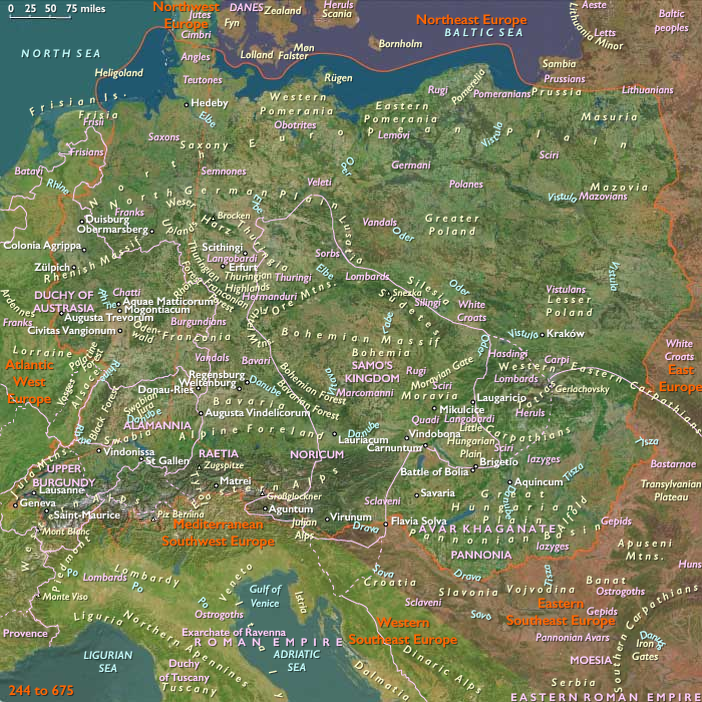
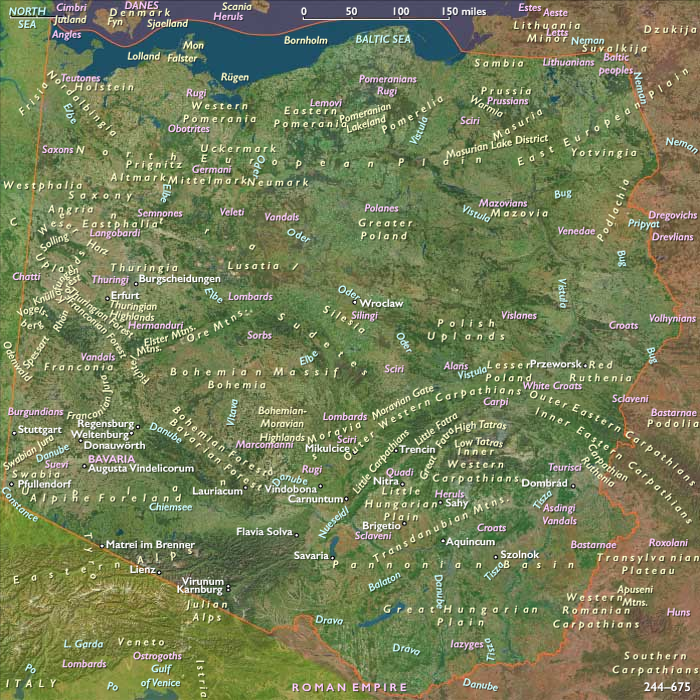
Between 436 and 447 CE, East Central Europe—including Poland, Czechia, Slovakia, Hungary, and those portions of Germany and Austria lying east of 10°E and north of a line stretching from roughly 48.2°N at 10°E southeastward to the Austro-Slovenian border near 46.7°N, 15.4°E—witnessed the apex of Hunnic power under the sole leadership of Attila the Hun, who assumed full control following his brother Bleda’s death around 445 CE. Attila’s reign represented the height of Hunnic influence, reshaping regional politics, intensifying pressure on the fragmented Roman frontier provinces, and solidifying Hunnic dominance. Amidst these profound shifts, the Rugii retained their diplomatic stability, while the proto-Slavic communities persisted in their resilience and cautious adaptation to these challenging conditions.
Political and Military Developments
Attila’s Consolidation of Power
-
Following the death of his brother Bleda (c. 445 CE), Attila became the uncontested leader of the Huns, swiftly consolidating power, significantly expanding the Hunnic Empire, and intensifying military pressure on neighboring territories, including Roman provinces along the Danube.
-
Attila’s dominance reshaped alliances and increased demands for tribute, effectively reducing Roman frontier authority to symbolic levels in provinces such as Pannonia Prima, Secunda, Savia, and Valeria.
Continued Decline of Roman Frontier Control
-
Roman administrative and military structures along the Danube weakened severely under sustained Hunnic pressures, losing effective control and increasingly relying on tribal diplomacy and fragile alliances with local leaders, including the Rugii and other regional groups.
Rugian Diplomatic Stability
-
Despite Attila’s overarching dominance, the Rugii adeptly navigated the political landscape, sustaining their settlements along the upper Tisza through skillful diplomatic engagement and strategic neutrality.
Economic and Technological Developments
Economic Adaptation to Hunnic Dominance
-
Under intense Hunnic pressure, regional economies adapted further, emphasizing local agricultural production, livestock raising, and community-scale trade networks resilient enough to endure regional instability.
Deterioration of Roman Infrastructure
-
Roman-built infrastructure and defensive fortifications continued to deteriorate due to reduced investment and the constant threat of Hunnic aggression, reflecting the collapse of centralized Roman administrative authority.
Cultural and Artistic Developments
Cultural Fusion under Hunnic Influence
-
Artistic and cultural production increasingly displayed a pronounced Hunnic influence, integrating Germanic, Roman, and local traditions into a unique regional hybrid style evident in decorative metalwork, jewelry, pottery, and weaponry.
Proto-Slavic Cultural Resilience
-
Proto-Slavic populations maintained their traditional cultural expressions and stable social organization, carefully adapting to intensified external pressures while preserving their distinctive communal identities.
Settlement and Urban Development
Decline of Roman Frontier Settlements
-
Former Roman urban centers (Carnuntum, Vindobona, Aquincum) continued to lose population and economic vitality, reduced to small-scale military garrisons and fortifications struggling to manage increasing regional instability.
Stability of Rugian Communities
-
Rugian settlements along the upper Tisza region sustained relative prosperity and stability, providing localized economic hubs and acting as diplomatic intermediaries within Attila’s sphere of influence.
Social and Religious Developments
Rugian Leadership Adaptation
-
Rugian tribal elites demonstrated continued diplomatic agility, effectively managing relations with Attila’s powerful empire and fragmented Roman remnants, maintaining their autonomy and internal cohesion.
Proto-Slavic Social Stability
-
Proto-Slavic communities persisted in their strong internal social structures and religious traditions, ensuring communal solidarity amid external instability and Hunnic dominance.
Long-Term Consequences and Historical Significance
The era 436–447 CE marked the zenith of Hunnic power under Attila’s sole leadership, reshaping East Central Europe’s geopolitical, social, and cultural landscape profoundly. The continued decline of Roman frontier control and the adaptive diplomatic strategies of groups like the Rugii, coupled with proto-Slavic resilience, underscored the region’s shifting power dynamics and cultural interactions. These developments set crucial precedents for subsequent transformations, profoundly influencing the historical trajectory of East Central Europe for generations.
People
Groups
- Polytheism (“paganism”)
- Slavs, Proto-
- Rugii (East Germanic tribe )
- Goths (East Germanic tribe)
- Germans
- Christians, Early
- Noricum (Roman province)
- Pannonia Savia (Roman province)
- Pannonia Prima (Roman province)
- Pannonia Secunda (Roman province)
- Pannonia Valeria (Roman province)
- Hunnic Empire
- Roman Empire: Theodosian dynasty (Constantinople)
Topics
Commodoties
Subjects
Regions
Subregions
Related Events
Showing 10 events out of 58872 total
Years: 436 - 447
People
Groups
- Polytheism (“paganism”)
- Slavs, Proto-
- Rugii (East Germanic tribe )
- Goths (East Germanic tribe)
- Germans
- Christians, Early
- Noricum (Roman province)
- Pannonia Savia (Roman province)
- Pannonia Prima (Roman province)
- Pannonia Secunda (Roman province)
- Pannonia Valeria (Roman province)
- Hunnic Empire
- Roman Empire: Theodosian dynasty (Constantinople)
Topics
Commodoties
Subjects
Regions
Subregions