
East Central Europe (400–411 CE): Hunnic Dominance, …
Years: 400 - 411
East Central Europe (400–411 CE): Hunnic Dominance, Roman Frontier Erosion, and Tribal Realignments
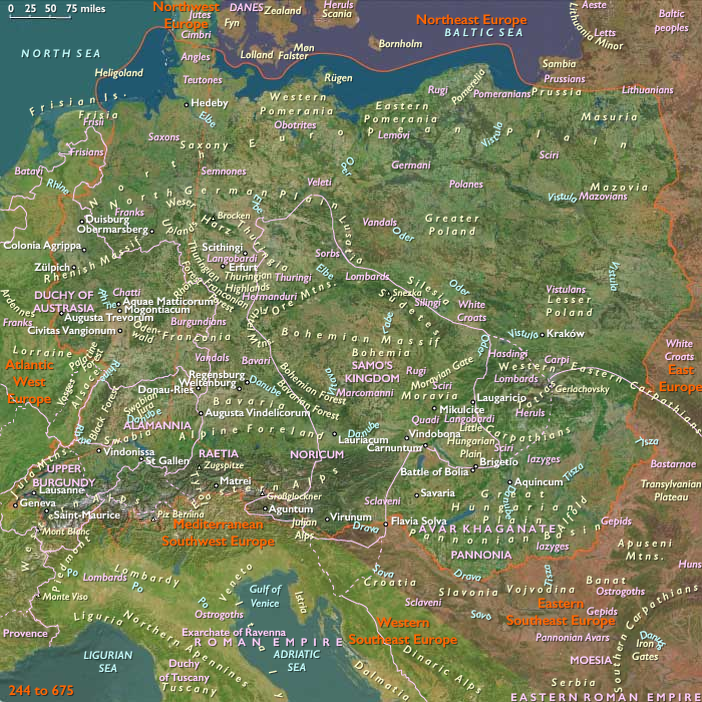
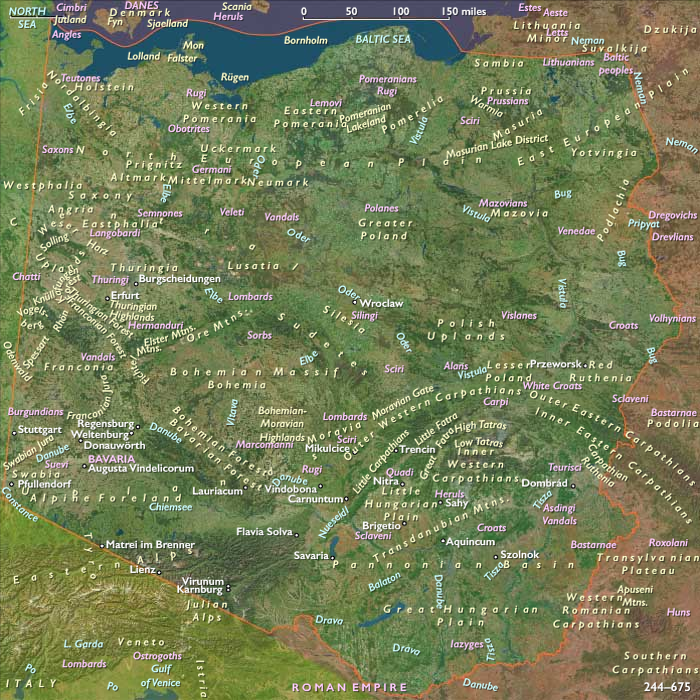
Between 400 and 411 CE, East Central Europe—covering Poland, Czechia, Slovakia, Hungary, and those portions of Germany and Austria lying east of 10°E and north of a line stretching from roughly 48.2°N at 10°E southeastward to the Austro-Slovenian border near 46.7°N, 15.4°E—faced accelerating geopolitical changes driven primarily by increasing Hunnic power under leaders such as Uldin. The Roman Danube frontier, already weakened, suffered further erosion as the Huns solidified control over vast regions. Nevertheless, established tribal communities, particularly the Rugii, maintained stability, adapting diplomatically to shifting power dynamics. Simultaneously, proto-Slavic communities continued their resilience amid regional turbulence.
Political and Military Developments
Hunnic Ascendancy and Regional Control
-
Hunnic dominance in East Central Europe intensified significantly during this era, as Huns under leaders like Uldin exerted growing political and military influence over neighboring tribes, reshaping local power structures.
-
The Huns directly pressured Roman frontier provinces (Pannonia Prima, Secunda, Savia, and Valeria), effectively undermining Roman authority and control along the Danube frontier.
Further Roman Frontier Weakness
-
Roman provinces along the Danube struggled to maintain their territorial integrity and military defenses in the face of relentless Hunnic threats. Resources were overstretched, resulting in weakened provincial governance and diminished security.
Continued Rugian Stability
-
The Rugii, established securely along the upper Tisza River in Roman-controlled Pannonia, adeptly navigated regional politics, maintaining their settlements and diplomatic ties with Roman authorities, Goths, and increasingly the Huns.
Economic and Technological Developments
Economic Disruption and Local Adaptation
-
The spread of Hunnic power caused disruptions to regional trade networks, particularly affecting Roman-controlled areas. Nonetheless, localized economic exchanges between tribal groups and Roman settlements continued, albeit cautiously.
Frontier Fortification Efforts
-
Despite limited resources, Roman authorities continued maintenance and limited reinforcement of essential frontier infrastructure, primarily defensive fortifications and communication routes critical for frontier security.
Cultural and Artistic Developments
Increased Cultural Hybridization
-
The Hunnic presence significantly influenced regional material culture, blending local Germanic and Roman artistic styles with Hunnic motifs. Practical and portable items such as weaponry, jewelry, and decorative metalwork increasingly reflected these hybrid aesthetics.
Proto-Slavic Cultural Continuity
-
Proto-Slavic communities sustained traditional cultural and social structures, demonstrating remarkable resilience amid shifting regional power dynamics and increased Hunnic influence.
Settlement and Urban Development
Strained Frontier Towns
-
Roman frontier settlements (Carnuntum, Vindobona, Aquincum) faced increased economic hardship and demographic decline. They persisted primarily as fortified military outposts responding to escalating threats.
Rugian Settlements as Centers of Stability
-
Rugian communities near the upper Tisza continued their relative prosperity, serving as regional centers of stability and maintaining economic vitality through strategic diplomatic interactions.
Social and Religious Developments
Adaptation of Tribal Leadership
-
Rugian tribal leadership effectively managed internal cohesion and external diplomacy, negotiating successfully with Romans, Goths, and the expanding Hun hegemony, thus preserving their autonomy and regional importance.
Proto-Slavic Social Resilience
-
Proto-Slavic populations maintained stable social hierarchies and religious practices, reinforcing community cohesion despite growing external threats and pressures.
Long-Term Consequences and Historical Significance
The era 400–411 CE represented a critical phase of intensified Hunnic dominance and the further erosion of Roman frontier authority in East Central Europe. The adept diplomatic adaptations of tribal communities, particularly the Rugii, and the enduring cultural resilience of proto-Slavic populations, highlighted regional capacity for adaptation. These transformations significantly reshaped local power dynamics and cultural landscapes, setting the stage for more dramatic migrations and geopolitical changes in the decades that followed.
People
Groups
- Polytheism (“paganism”)
- Slavs, Proto-
- Rugii (East Germanic tribe )
- Goths (East Germanic tribe)
- Germans
- Christians, Early
- Noricum (Roman province)
- Pannonia Savia (Roman province)
- Pannonia Prima (Roman province)
- Pannonia Secunda (Roman province)
- Pannonia Valeria (Roman province)
- Hunnic Empire
- Roman Empire: Theodosian dynasty (Constantinople)
Topics
Commodoties
Subjects
Regions
Subregions
Related Events
Showing 10 events out of 59279 total
Years: 400 - 411
People
Groups
- Polytheism (“paganism”)
- Slavs, Proto-
- Rugii (East Germanic tribe )
- Goths (East Germanic tribe)
- Germans
- Christians, Early
- Noricum (Roman province)
- Pannonia Savia (Roman province)
- Pannonia Prima (Roman province)
- Pannonia Secunda (Roman province)
- Pannonia Valeria (Roman province)
- Hunnic Empire
- Roman Empire: Theodosian dynasty (Constantinople)
Topics
Commodoties
Subjects
Regions
Subregions