
East Central Europe (328–339 CE): Constantine’s Consolidation …
Years: 328 - 339
East Central Europe (328–339 CE): Constantine’s Consolidation and Frontier Stability
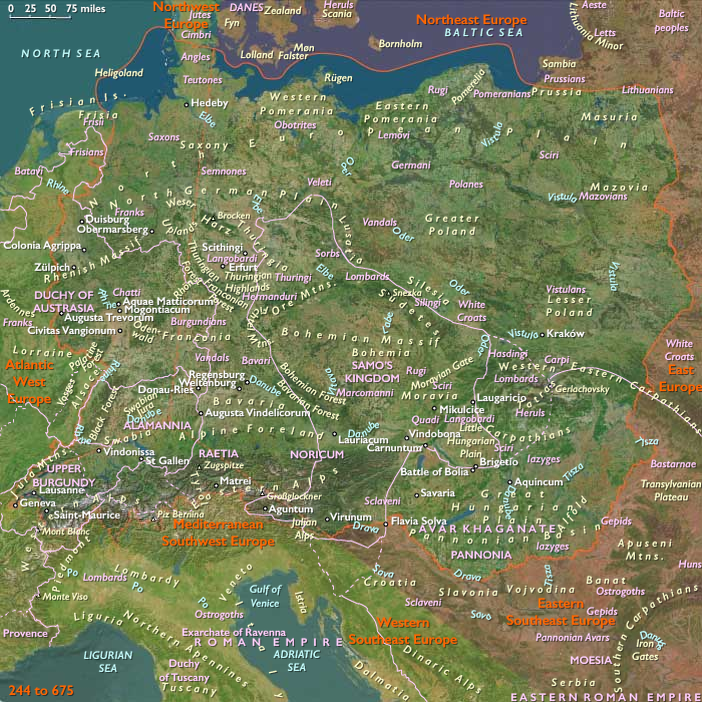
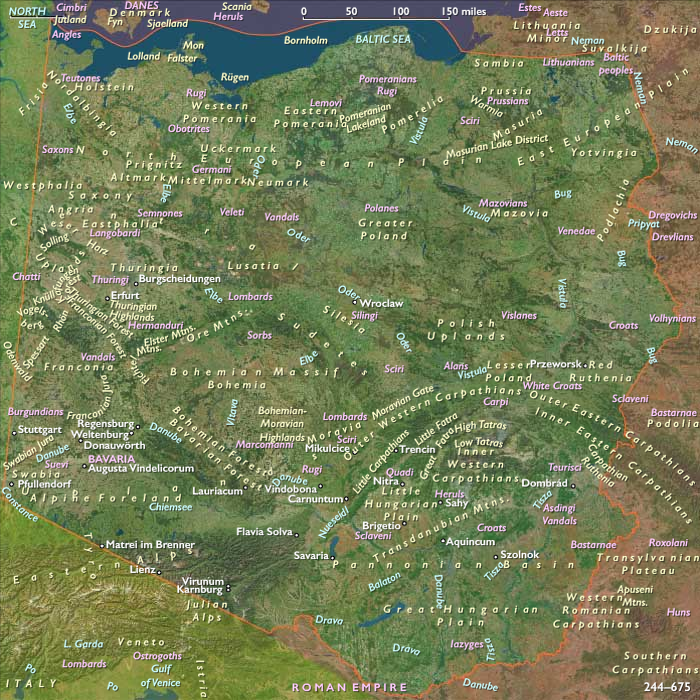
Between 328 and 339 CE, East Central Europe—encompassing Poland, Czechia, Slovakia, Hungary, and those portions of Germany and Austria lying east of 10°E and north of a line stretching from roughly 48.2°N at 10°E southeastward to the Austro-Slovenian border near 46.7°N, 15.4°E—experienced continued frontier stability under the strong rule of Emperor Constantine the Great (306–337 CE) and his immediate successors. Roman frontier provinces (Pannonia Prima, Pannonia Secunda, Pannonia Savia, Pannonia Valeria, and Noricum) maintained security through effective governance, diplomatic arrangements, and fortified defenses, while interactions with recently settled tribal groups, particularly the Rugii, deepened economically and culturally. At the same time, proto-Slavic communities remained largely settled in their original regions, adapting steadily to Gothic hegemony while preserving local identities.
Political and Military Developments
Constantine’s Frontier Consolidation
-
Under Constantine’s later reign and that of his sons after 337 CE, Roman authority along the Danube remained strong, with robust frontier defenses effectively maintained, and diplomatic ties carefully managed to prevent large-scale tribal incursions.
-
Fortifications were continuously improved, and provincial governance became increasingly efficient and responsive.
Stable Rugian Settlement in Roman Pannonia
-
The Rugian communities established along the upper Tisza River continued their integration within Roman provincial frameworks, maintaining stable diplomatic relations with local Roman authorities and neighboring tribes.
Gothic Dominance and Proto-Slavic Stability
-
Gothic hegemony in Eastern Europe persisted, shaping proto-Slavic settlements and regional power dynamics. However, most proto-Slavic populations remained firmly established in their traditional territories, preserving social cohesion and stability despite external political pressures.
Economic and Technological Developments
Flourishing Economic Exchange
-
Frontier economic activities flourished, benefiting from sustained peace and security. Trade involving Roman frontier towns and Rugian communities intensified, exchanging Roman goods such as ceramics, textiles, and metalwork for regional resources like grain, livestock, and amber.
Infrastructure and Defensive Innovations
-
Continued improvements in frontier infrastructure—including roads, bridges, and fortifications—further strengthened regional stability and economic connectivity, enabling secure, efficient exchanges along the Danube frontier.
Cultural and Artistic Developments
Cultural Integration and Artistic Flourishing
-
The cultural landscape benefited from continued stability, leading to vibrant cross-cultural exchanges. Roman-Rugian interactions produced distinctive artistic blends in pottery, metalwork, and decorative artifacts, enhancing regional cultural richness.
Proto-Slavic Cultural Continuity
-
Despite external pressures, proto-Slavic populations maintained their traditional cultural identities, adapting subtly to Gothic cultural influences without significant displacement or disruption.
Settlement and Urban Development
Frontier Town Development
-
Roman frontier settlements (Carnuntum, Vindobona, Aquincum) remained economically vibrant and well-fortified, expanding modestly as administrative, military, and commercial hubs.
Stable Rugian Settlements
-
Rugian settlements along the upper Tisza stabilized further, becoming established parts of the regional landscape, economically productive, and culturally integrated into frontier life.
Social and Religious Developments
Consolidation of Tribal Leadership
-
Rugian tribal leadership solidified their social and political structures in the new environment, blending diplomatic cooperation with Roman authorities and tribal autonomy.
Proto-Slavic Religious and Social Stability
-
Proto-Slavic communities maintained cohesive social and religious traditions, reflecting resilience despite external Gothic domination, thus preserving their distinctive identities.
Long-Term Consequences and Historical Significance
The era 328–339 CE was marked by sustained frontier stability and regional prosperity under Constantine’s strong governance and subsequent effective administration. The consolidation of Rugian settlements and stable proto-Slavic communities, alongside Roman diplomatic strategies, fostered enduring cultural interactions and economic integration. These developments laid essential groundwork for continued stability, significantly influencing the historical evolution of East Central Europe into subsequent eras.
People
Groups
- Polytheism (“paganism”)
- Slavs, Proto-
- Finns
- Iazyges, or Iazygians
- Vandals (East Germanic tribe)
- Marcomanni (Germanic tribe)
- Rugii (East Germanic tribe )
- Germans
- Quadi (Germanic tribe)
- Goths (East Germanic tribe)
- Christians, Early
- Noricum (Roman province)
- Pannonia Savia (Roman province)
- Pannonia Prima (Roman province)
- Pannonia Secunda (Roman province)
- Pannonia Valeria (Roman province)
- Roman Empire: Constantinian dynasty (Nicomedia)
- Roman Empire: Constantinian dynasty (Constantinople)
Topics
Commodoties
Subjects
Regions
Subregions
Related Events
Showing 10 events out of 59896 total
Years: 328 - 339
People
Groups
- Polytheism (“paganism”)
- Slavs, Proto-
- Finns
- Iazyges, or Iazygians
- Vandals (East Germanic tribe)
- Marcomanni (Germanic tribe)
- Rugii (East Germanic tribe )
- Germans
- Quadi (Germanic tribe)
- Goths (East Germanic tribe)
- Christians, Early
- Noricum (Roman province)
- Pannonia Savia (Roman province)
- Pannonia Prima (Roman province)
- Pannonia Secunda (Roman province)
- Pannonia Valeria (Roman province)
- Roman Empire: Constantinian dynasty (Nicomedia)
- Roman Empire: Constantinian dynasty (Constantinople)
Topics
Commodoties
Subjects
Regions
Subregions