
East Central Europe (280–291 CE): Frontier Consolidation …
Years: 280 - 291
East Central Europe (280–291 CE): Frontier Consolidation under Probus and Gradual Recovery
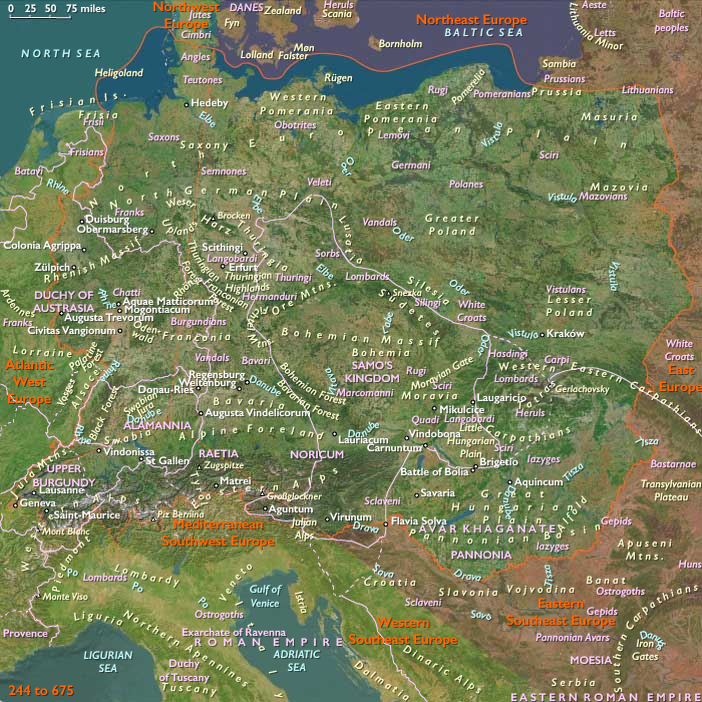
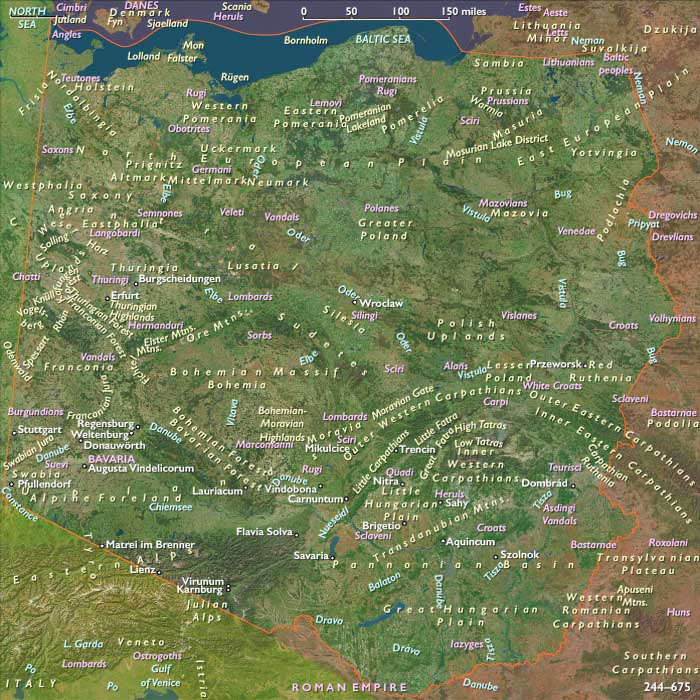
Between 280 and 291 CE, East Central Europe—including Poland, Czechia, Slovakia, Hungary, and those portions of Germany and Austria lying east of 10°E and north of a line stretching from roughly 48.2°N at 10°E southeastward to the Austro-Slovenian border near 46.7°N, 15.4°E—continued experiencing gradual stabilization following earlier frontier crises. Under Emperor Probus (276–282 CE) and his successors, Roman frontier provinces (Pannonia Superior, Pannonia Inferior, and Noricum) benefited from enhanced military fortifications, renewed economic activity, and strengthened diplomatic relations with neighboring tribes, including the Marcomanni, Quadi, Iazyges, Vandals, and Goths.
Political and Military Developments
Probus’s Frontier Policies and Military Strengthening
-
Emperor Probus significantly reinforced frontier defenses along the Danube, restoring military effectiveness by repairing and upgrading fortifications, improving infrastructure, and reorganizing frontier legions and auxiliaries.
-
His policies re-established a secure frontier presence, markedly reducing incursions by neighboring tribes.
Diplomatic Stabilization with Tribal Groups
-
Roman diplomacy maintained stable relations through alliances and treaties with major tribes such as the Marcomanni, Quadi, and Iazyges.
-
The Goths and Vandals, while still active, were restrained through strategic diplomacy and occasional military responses, easing frontier tensions.
Economic and Technological Developments
Continued Economic Recovery
-
Economic conditions improved steadily, supported by stabilized frontier defenses and gradually restored trade routes. Cross-border commerce resumed with increased frequency and security, benefiting both Roman provinces and neighboring tribal groups.
Renewed Infrastructure Investment
-
Infrastructure investments along the frontier expanded moderately. Improved roads, fortresses, and communications networks facilitated regional economic revival and enhanced Roman military logistics.
Cultural and Artistic Developments
Renewed Cultural Interaction
-
Cultural exchanges increased, reflecting improved stability. Artifacts from this era—ceramics, jewelry, metalwork—again showed creative integration of Roman and tribal elements.
Revival of Artistic Production
-
With frontier conditions stabilized, artisans resumed production of higher-quality objects, blending traditional tribal motifs and Roman artistic traditions, signaling gradual restoration of cultural vitality.
Settlement and Urban Development
Urban Revitalization
-
Roman towns along the Danube frontier, including Carnuntum, Vindobona, and Aquincum, experienced steady demographic and economic growth, though they remained fortified defensive strongholds.
Tribal Settlement Consolidation
-
Neighboring tribal settlements stabilized further, becoming more permanent and economically vibrant, benefiting from improved relations and renewed trade interactions with Roman provinces.
Social and Religious Developments
Tribal Leadership and Social Stability
-
Tribal societies enjoyed relative stability, with leadership focused less on immediate military survival and more on managing diplomatic and economic interactions with Rome.
Religious Continuity and Cultural Identity
-
Tribal religious practices continued, emphasizing traditional rites supporting community solidarity and protection, reflecting cautious optimism and stability.
Long-Term Consequences and Historical Significance
The era 280–291 CE represented a critical phase of continued stabilization and recovery in East Central Europe following decades of frontier crises. Roman frontier policies under Probus and his successors provided regional security, allowing economic revival and stable tribal-Roman relations. These developments contributed significantly to regional recovery, reestablishing a foundation for longer-term stability and setting conditions for subsequent historical developments.
People
Groups
- Iazyges, or Iazygians
- Vandals (East Germanic tribe)
- Marcomanni (Germanic tribe)
- Lombards (West Germanic tribe)
- Germans
- Quadi (Germanic tribe)
- Goths (East Germanic tribe)
- Noricum (Roman province)
- Carpi (people)
- Pannonia Superior (Roman province)
- Pannonia Inferior (Roman province)
- Roman Empire (Rome): Non-dynastic
Topics
Commodoties
Subjects
Regions
Subregions
Related Events
Showing 10 events out of 60185 total
Years: 280 - 291
People
Groups
- Iazyges, or Iazygians
- Vandals (East Germanic tribe)
- Marcomanni (Germanic tribe)
- Lombards (West Germanic tribe)
- Germans
- Quadi (Germanic tribe)
- Goths (East Germanic tribe)
- Noricum (Roman province)
- Carpi (people)
- Pannonia Superior (Roman province)
- Pannonia Inferior (Roman province)
- Roman Empire (Rome): Non-dynastic
Topics
Commodoties
Subjects
Regions
Subregions