
East Central Europe (268–279 CE): Aurelian and …
Years: 268 - 279
East Central Europe (268–279 CE): Aurelian and Partial Frontier Restoration
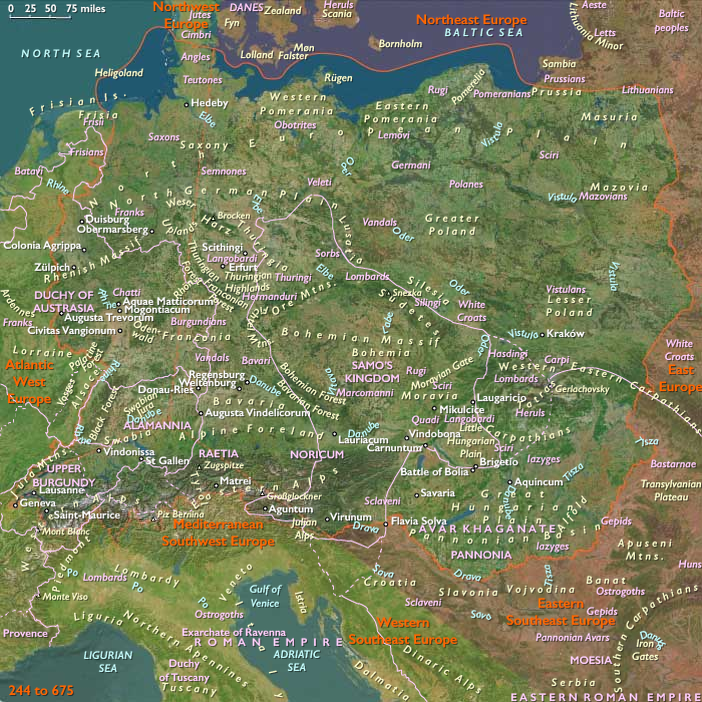
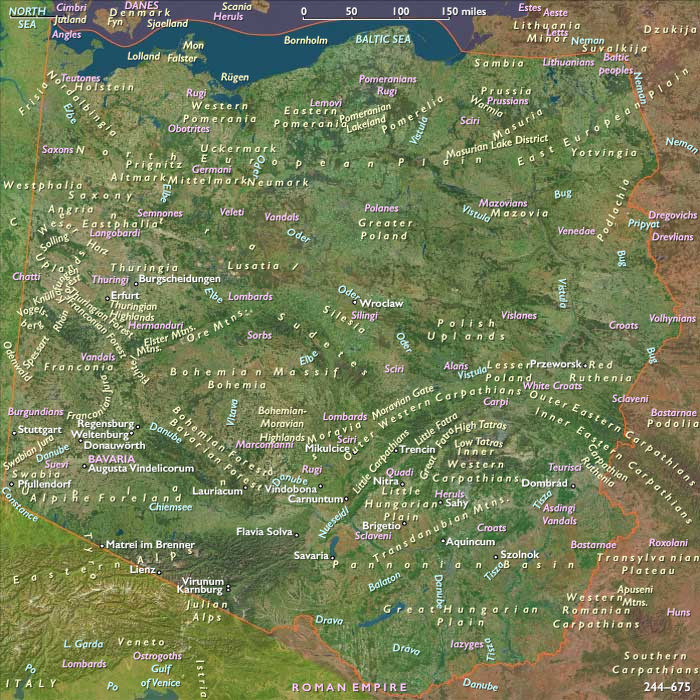
Between 268 and 279 CE, East Central Europe—including Poland, Czechia, Slovakia, Hungary, and those portions of Germany and Austria lying east of 10°E and north of a line stretching from roughly 48.2°N at 10°E southeastward to the Austro-Slovenian border near 46.7°N, 15.4°E—experienced the initial stages of frontier restoration following the severe disruptions of the preceding decades. Under Emperor Aurelian (270–275 CE) and his successors, Roman frontier provinces (Pannonia Superior, Pannonia Inferior, and Noricum) saw cautious military recovery, modest administrative restructuring, and the renewal of defensive efforts against persistent tribal pressures from the Goths, Marcomanni, Quadi, Iazyges, and Vandals.
Political and Military Developments
Aurelian’s Frontier Reforms and Military Recovery
-
Emperor Aurelian (270–275 CE) initiated substantial frontier reforms, reorganizing military units and strengthening defensive positions along the Danube.
-
Defensive fortifications were partially restored, and the Roman military presence was increased, allowing for the temporary stabilization of frontier regions.
Diplomatic Engagement with Tribes
-
Roman diplomatic efforts intensified, aimed at managing relations with Germanic and Sarmatian tribes, particularly the Marcomanni, Quadi, and Iazyges, through negotiated agreements and occasional military demonstrations of strength.
-
While the Goths and Vandals continued sporadic incursions, Roman efforts temporarily curbed the frequency and intensity of these invasions.
Economic and Technological Developments
Modest Economic Recovery
-
The cautious stabilization efforts allowed limited revival of economic activity along the frontier. Cross-border trade gradually resumed, though still vulnerable to disruption and restricted compared to earlier periods.
Resumption of Frontier Infrastructure Work
-
Limited infrastructure repairs and improvements to roads, fortifications, and military installations took place, reflecting Roman attempts to reassert control and ensure frontier security.
Cultural and Artistic Developments
Gradual Cultural Stabilization
-
Cultural and artistic activity began a modest recovery, reflecting stabilization efforts and resumed interactions between Romans and neighboring tribes. However, cultural expressions continued to emphasize practicality, military preparedness, and frontier resilience.
Increased Cultural Synthesis
-
Cultural exchanges between Roman and tribal communities became somewhat more active, albeit still cautious, creating modest renewal of hybrid artistic and material culture.
Settlement and Urban Development
Roman Frontier Settlements Rebuilding
-
Frontier towns such as Carnuntum, Vindobona, and Aquincum witnessed cautious rebuilding efforts and modest demographic recovery, remaining heavily fortified but beginning to regain some of their administrative and economic functions.
Stabilization of Tribal Settlements
-
Tribal communities slightly stabilized, becoming less transient than during the previous decades, but continued adopting defensive settlement patterns in response to persistent regional uncertainty.
Social and Religious Developments
Re-stabilization of Tribal Social Hierarchies
-
Germanic and Sarmatian tribal societies maintained strong military hierarchies, though with less frantic urgency, reflecting the temporary stabilization and diplomatic engagements with Rome.
Religious Adaptation and Community Consolidation
-
Traditional tribal religious practices remained active, emphasizing community solidarity, protection, and warrior virtues, reflecting continued uncertainty tempered by cautious optimism from partial frontier stabilization.
Long-Term Consequences and Historical Significance
The era 268–279 CE marked a significant turning point in East Central Europe, characterized by tentative frontier recovery and modest re-stabilization under Emperor Aurelian’s reforms and those of his immediate successors. Although partial and fragile, this restoration effort provided critical breathing space, allowing Roman provinces and neighboring tribes to reorganize, thus temporarily halting the chaotic decline and reshaping frontier relations for subsequent decades.
People
Groups
- Iazyges, or Iazygians
- Vandals (East Germanic tribe)
- Marcomanni (Germanic tribe)
- Lombards (West Germanic tribe)
- Germans
- Quadi (Germanic tribe)
- Goths (East Germanic tribe)
- Noricum (Roman province)
- Carpi (people)
- Pannonia Superior (Roman province)
- Pannonia Inferior (Roman province)
- Roman Empire (Rome): Non-dynastic
Topics
Commodoties
Subjects
Regions
Subregions
Years: 268 - 279
People
Groups
- Iazyges, or Iazygians
- Vandals (East Germanic tribe)
- Marcomanni (Germanic tribe)
- Lombards (West Germanic tribe)
- Germans
- Quadi (Germanic tribe)
- Goths (East Germanic tribe)
- Noricum (Roman province)
- Carpi (people)
- Pannonia Superior (Roman province)
- Pannonia Inferior (Roman province)
- Roman Empire (Rome): Non-dynastic
Topics
Commodoties
Subjects
Regions
Subregions