
East Central Europe (256–267 CE): Peak Tribal …
Years: 256 - 267
East Central Europe (256–267 CE): Peak Tribal Invasions and Roman Frontier Fragmentation
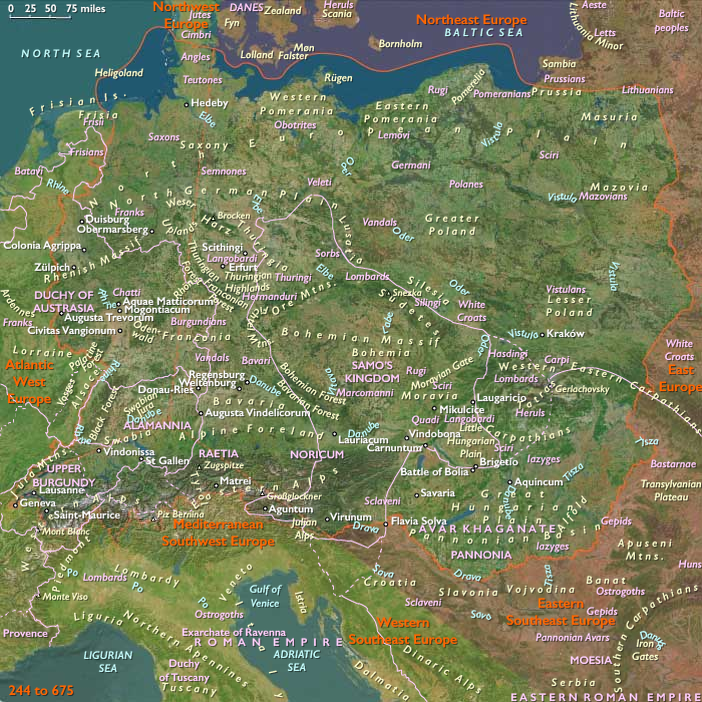
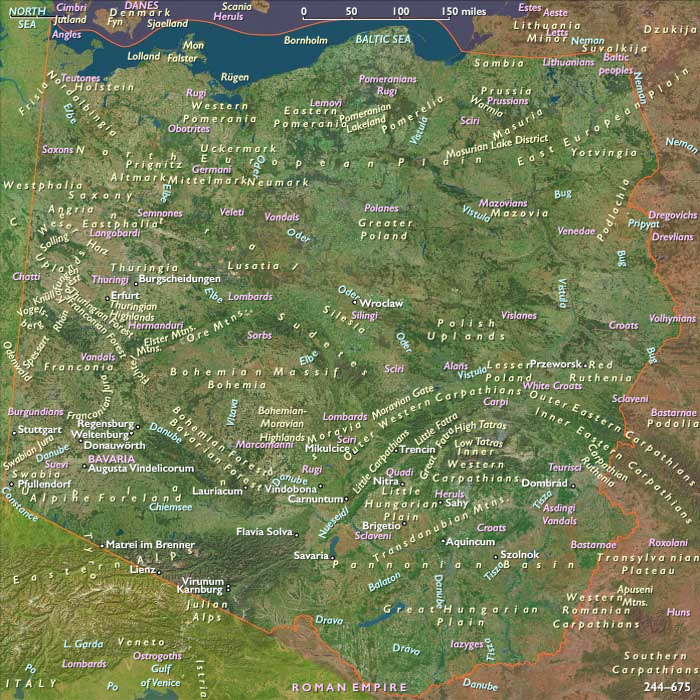
Between 256 and 267 CE, East Central Europe—covering Poland, Czechia, Slovakia, Hungary, and those portions of Germany and Austria lying east of 10°E and north of a line stretching from roughly 48.2°N at 10°E southeastward to the Austro-Slovenian border near 46.7°N, 15.4°E—experienced intense regional upheaval, marked by large-scale invasions, tribal migrations, and collapsing Roman provincial control during the continuing Crisis of the Third Century (235–284 CE). Roman frontier provinces (Pannonia Superior, Pannonia Inferior, Noricum) faced repeated invasions by the increasingly powerful Goths from the east and north, as well as intensified pressures from established groups such as the Marcomanni, Quadi, Vandals, and Sarmatian Iazyges, leading to widespread instability and reshaped regional dynamics.
Political and Military Developments
Escalation of Tribal Incursions
-
The Roman frontier defenses along the Danube experienced relentless incursions, especially by newly powerful Gothic tribes, who penetrated deeply into Roman territory, threatening key settlements and provincial stability.
-
The Vandals, Marcomanni, and Quadi increased their raids significantly, capitalizing on Roman internal disorder and weakening frontier defenses.
-
The Sarmatian Iazyges intensified cross-border raids into Roman Pannonia, further straining defensive capacities.
Imperial Fragmentation and Frontier Vulnerability
-
Roman imperial authority fragmented further amid rapid turnover of emperors and ongoing internal strife, severely weakening frontier administration and defense capabilities.
-
The political chaos within the Roman Empire left frontier provinces vulnerable, resulting in considerable territorial losses and military setbacks.
Economic and Technological Developments
Widespread Economic Breakdown
-
Severe disruptions in trade and commerce occurred due to persistent insecurity, repeated tribal incursions, and breakdowns in infrastructure. Frontier markets collapsed or diminished significantly, severely affecting local and regional economies.
Decline in Infrastructure Maintenance
-
Infrastructure development, maintenance of fortifications, roads, and bridges nearly halted, contributing further to regional economic and defensive deterioration.
Cultural and Artistic Developments
Cultural Decline and Survival Strategies
-
Cultural production along the Roman frontier decreased markedly, shifting overwhelmingly toward defensive strategies and practical military needs. Material culture focused heavily on survival, security, and resilience.
Restricted Cultural Exchange
-
Cultural exchanges continued at significantly reduced levels, constrained by insecurity, instability, and frequent conflict.
Settlement and Urban Development
Diminished and Fortified Roman Towns
-
Roman frontier settlements (Carnuntum, Vindobona, Aquincum) became smaller, heavily fortified, and primarily defensive in nature. Populations declined due to warfare, migration, and economic hardship.
Tribal Settlement Instability
-
Tribal communities adapted through greater mobility and frequent relocations, reflecting the chaotic nature of the period and increased threats from larger tribal confederations and regional migrations.
Social and Religious Developments
Militarization of Tribal Society
-
Tribal societies intensified their militarization, as warrior elites and chieftains increased their dominance. Leadership increasingly centered around success in warfare, survival strategies, and territorial defense.
Intensified Religious and Protective Rituals
-
Religious practices intensified significantly, focusing on rituals emphasizing martial prowess, protection, and community solidarity amid ongoing conflict and instability.
Long-Term Consequences and Historical Significance
The era from 256 to 267 CE represented the peak of frontier disruptions in East Central Europe during the Crisis of the Third Century. It decisively reshaped regional power dynamics, eroded Roman authority along the Danube, and laid the groundwork for major demographic shifts and tribal migrations that profoundly impacted the region’s subsequent historical development. This period’s events became pivotal in shaping the cultural, political, and ethnic composition of East Central Europe in the centuries that followed.
Groups
- Iazyges, or Iazygians
- Vandals (East Germanic tribe)
- Marcomanni (Germanic tribe)
- Lombards (West Germanic tribe)
- Germans
- Quadi (Germanic tribe)
- Goths (East Germanic tribe)
- Noricum (Roman province)
- Carpi (people)
- Pannonia Superior (Roman province)
- Pannonia Inferior (Roman province)
- Roman Empire (Rome): Non-dynastic
Topics
Commodoties
Subjects
Regions
Subregions
Related Events
Showing 10 events out of 60348 total
Years: 256 - 267
Groups
- Iazyges, or Iazygians
- Vandals (East Germanic tribe)
- Marcomanni (Germanic tribe)
- Lombards (West Germanic tribe)
- Germans
- Quadi (Germanic tribe)
- Goths (East Germanic tribe)
- Noricum (Roman province)
- Carpi (people)
- Pannonia Superior (Roman province)
- Pannonia Inferior (Roman province)
- Roman Empire (Rome): Non-dynastic
Topics
Commodoties
Subjects
Regions
Subregions