
East Central Europe (232–243 CE): Frontier Tensions …
Years: 232 - 243
East Central Europe (232–243 CE): Frontier Tensions and Growing Regional Instability
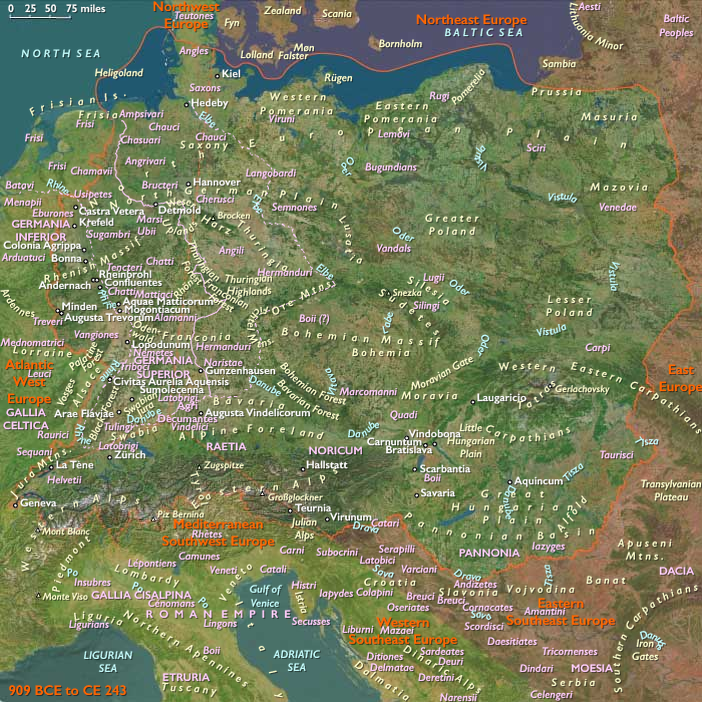
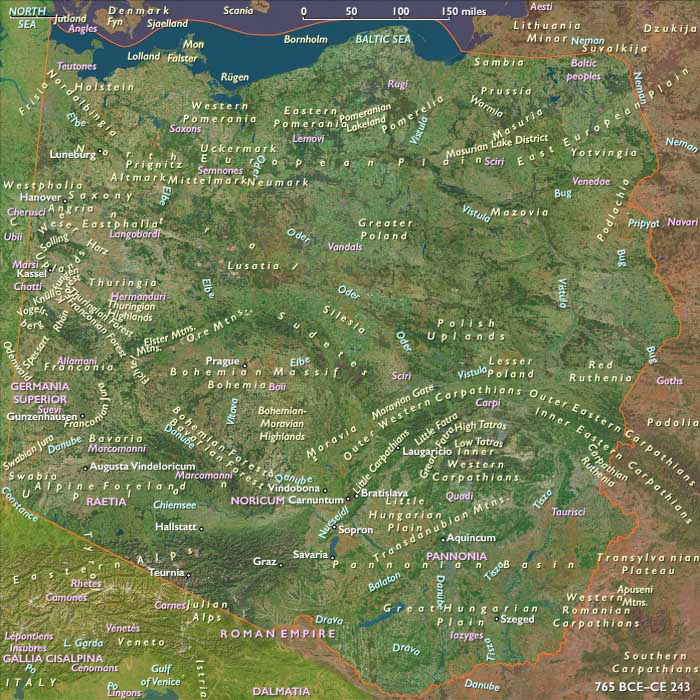
Between 232 and 243 CE, East Central Europe—encompassing Poland, Czechia, Slovakia, Hungary, and those portions of Germany and Austria lying east of 10°E and north of a line stretching from roughly 48.2°N at 10°E southeastward to the Austro-Slovenian border near 46.7°N, 15.4°E—faced heightened instability due to mounting internal Roman challenges and intensified external pressure from neighboring tribal confederations. During this period, the Roman frontier provinces (Pannonia Superior, Pannonia Inferior, and Noricum) increasingly struggled to manage rising threats posed by Germanic and Sarmatian tribes, signaling a transition toward regional unrest.
Political and Military Developments
Internal Roman Instability
-
The Roman Empire, under the final Severan emperor, Severus Alexander (222–235 CE), and subsequently during the chaotic period following his assassination (235 CE, marking the start of the Crisis of the Third Century), experienced significant political turmoil.
-
Frontier provinces began to suffer administrative neglect, resource limitations, and diminished military effectiveness due to internal power struggles within the empire.
Increasing Frontier Challenges
-
Tribal groups—particularly the Marcomanni, Quadi, and Iazyges—recognized Roman vulnerabilities and increased pressures along the Danube, testing defenses, and initiating more frequent small-scale incursions.
-
Other tribes, including the Vandals, Carpi, and groups within northern and eastern boundaries, became more assertive, further straining Roman frontier management.
Economic and Technological Developments
Economic Disruptions Intensify
-
Economic prosperity diminished due to increased military and political uncertainties, affecting trade routes and interactions between Roman frontier provinces and tribal communities. Cross-border trade became riskier and more expensive to manage.
Slowing Infrastructure Development
-
Infrastructure projects—roads, bridges, fortifications—slowed significantly, as Roman attention and resources were redirected toward immediate military and defensive needs.
Cultural and Artistic Developments
Shift toward Defensive and Military Themes
-
Artistic and material culture increasingly reflected defensive priorities, producing fortified goods, military equipment, and artifacts emphasizing protection and security.
Reduced but Continued Cultural Integration
-
Cultural interactions persisted despite difficulties, though exchanges were more cautious and influenced by military concerns and the broader uncertainty of the period.
Settlement and Urban Development
Increased Defensive Measures
-
Roman frontier towns (Carnuntum, Vindobona, Aquincum) further intensified defensive structures, reinforcing walls, towers, and garrisons to meet growing external threats.
Tribal Adaptation to Instability
-
Germanic and Sarmatian settlements increasingly adopted defensive and mobile strategies, adjusting settlement locations and fortifications to respond effectively to instability.
Social and Religious Developments
Military Elites Dominating Tribal Leadership
-
Warrior elites and chieftains increasingly dominated tribal hierarchies, emphasizing military strength, strategic alliances, and preparedness for possible conflict as regional stability deteriorated.
Religious Intensification amid Instability
-
Traditional religious rituals among tribes intensified, particularly those emphasizing communal solidarity, protection, and warrior identity in response to increased regional uncertainty and threats.
Long-Term Consequences and Historical Significance
The era 232–243 CE was a crucial turning point in East Central Europe, marking the beginning of significant regional instability driven by internal Roman weaknesses and external tribal assertiveness. These developments anticipated the broader regional transformations and disruptions associated with the subsequent Crisis of the Third Century (235–284 CE), setting conditions for profound historical changes, migrations, and shifting power structures in the ensuing decades.
People
Groups
- Iazyges, or Iazygians
- Vandals (East Germanic tribe)
- Marcomanni (Germanic tribe)
- Lombards (West Germanic tribe)
- Germans
- Quadi (Germanic tribe)
- Noricum (Roman province)
- Roman Empire (Rome): Nerva-Antonine dynasty
- Carpi (people)
- Pannonia Superior (Roman province)
- Pannonia Inferior (Roman province)
Topics
Commodoties
Subjects
Regions
Subregions
Related Events
Showing 4 events out of 4 total
Years: 232 - 243
People
Groups
- Iazyges, or Iazygians
- Vandals (East Germanic tribe)
- Marcomanni (Germanic tribe)
- Lombards (West Germanic tribe)
- Germans
- Quadi (Germanic tribe)
- Noricum (Roman province)
- Roman Empire (Rome): Nerva-Antonine dynasty
- Carpi (people)
- Pannonia Superior (Roman province)
- Pannonia Inferior (Roman province)
Topics
Commodoties
Subjects
Regions
Subregions