
East Central Europe (208–219 CE): Late Severan …
Years: 208 - 219
East Central Europe (208–219 CE): Late Severan Stability and Frontier Prosperity
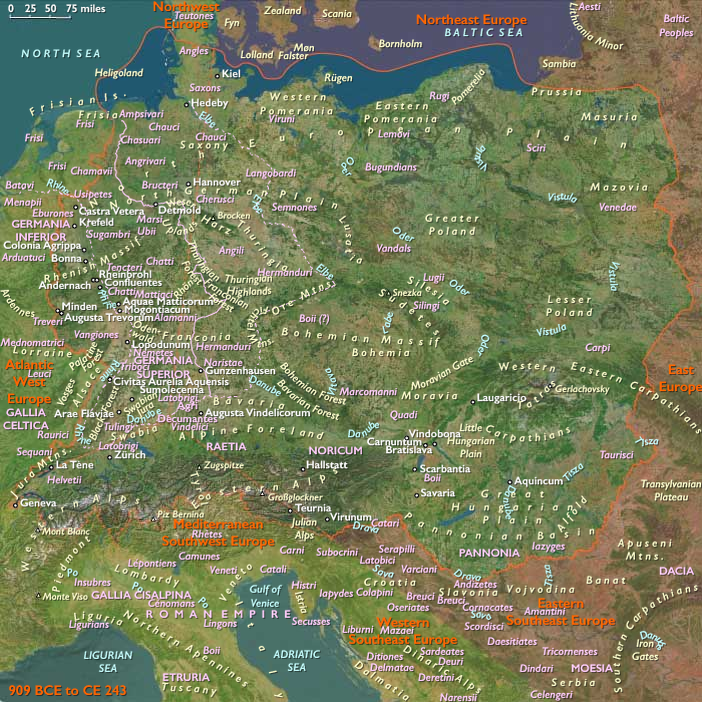
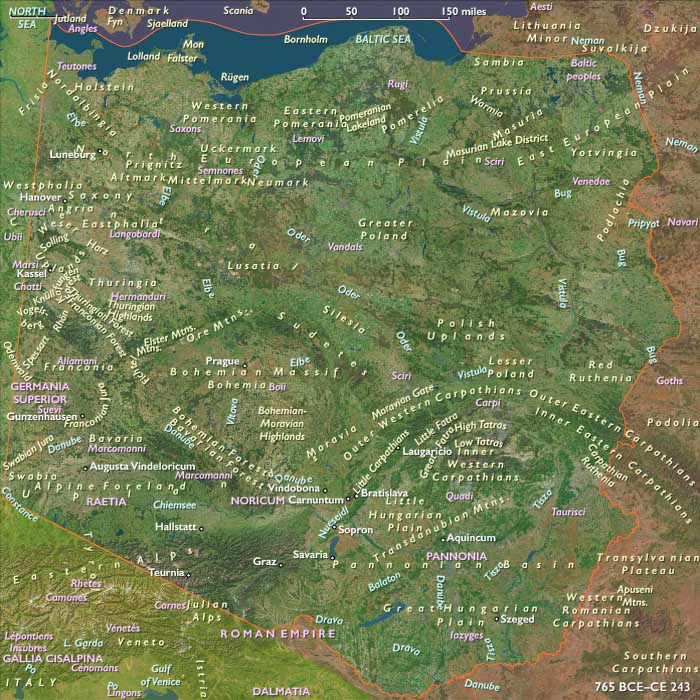
Between 208 and 219 CE, East Central Europe—encompassing Poland, Czechia, Slovakia, Hungary, and those portions of Germany and Austria lying east of 10°E and north of a line stretching from roughly 48.2°N at 10°E southeastward to the Austro-Slovenian border near 46.7°N, 15.4°E—experienced sustained frontier stability, economic prosperity, and diplomatic continuity. Under the later reign of Emperor Septimius Severus and his successor Caracalla, the region saw significant reinforcement of Roman frontier defenses, prosperous trade relationships, and stable interactions with neighboring Germanic and Sarmatian tribes.
Political and Military Developments
Continuation of Severan Frontier Policies
-
Under Emperor Septimius Severus (193–211 CE), Roman frontier defenses along the Danube remained robust, characterized by extensive fortification networks and increased troop deployments in the provinces of Pannonia Superior, Pannonia Inferior, and Noricum.
-
His successor, Emperor Caracalla (211–217 CE), maintained this strong defensive stance, ensuring ongoing frontier security and political stability throughout the region.
Peaceful Diplomatic Relations
-
Stable diplomatic relations persisted between Roman authorities and major tribal groups—particularly the Marcomanni, Quadi, and Iazyges.
-
Agreements established in previous decades remained largely intact, promoting peaceful coexistence and continued cross-border trade and cooperation.
Internal Consolidation of Tribal Groups
-
Germanic and Sarmatian tribal confederations north and east of the Roman frontier continued internal consolidation, with stable tribal leadership and clearly delineated territories contributing to enduring regional stability.
Economic and Technological Developments
Economic Prosperity and Expanded Trade
-
Economic conditions along the frontier thrived, driven by stable Roman administration and robust trade networks. Frontier towns and tribal communities actively exchanged Roman manufactured goods (ceramics, metalwork, textiles, glassware) for regional resources (amber, iron goods, livestock, agricultural products).
-
Monetary transactions flourished due to the reliable circulation of Roman coinage.
Continued Technological Advancements
-
Military infrastructure improvements and frontier fortifications continued to stimulate local technological innovations. Enhanced roads, bridges, fortresses, and civilian infrastructure projects improved regional productivity and communication.
Cultural and Artistic Developments
Vibrant Cultural Exchange
-
Sustained peaceful conditions fostered vibrant cultural interactions between Roman and tribal communities. Artifacts, including pottery, jewelry, and metalwork, exhibited increasingly sophisticated blends of Roman technical excellence and Germanic artistic traditions.
Artistic Production and Synthesis
-
Local artisans, benefiting from prosperous economic conditions, produced refined artistic objects, demonstrating a continued synthesis of Roman styles and traditional tribal motifs.
Settlement and Urban Development
Reinforcement and Prosperity of Frontier Towns
-
Major Roman frontier settlements, notably Carnuntum, Vindobona, and Aquincum, continued to prosper and expand. These towns strengthened fortifications, enhanced administrative structures, and grew commercially vibrant, serving as central hubs of trade and governance.
Stable Tribal Settlements
-
Germanic and Sarmatian tribal settlements maintained stability, adopting increasingly permanent settlement patterns and fortification practices reflecting peaceful coexistence and stable economic interactions.
Social and Religious Developments
Stable Tribal Leadership and Social Hierarchies
-
Tribal societies maintained stable hierarchical structures dominated by warrior elites and tribal chieftains. Stable conditions allowed for the continued strengthening of social cohesion and clear leadership structures.
Continued Religious Practices and Cultural Identity
-
Traditional tribal religious practices remained robust, emphasizing rituals supporting peace, prosperity, and community solidarity, while still incorporating subtle Roman influences due to ongoing cultural exchanges.
Long-Term Consequences and Historical Significance
The era 208–219 CE under late Severan rulers marked a period of sustained stability, frontier security, and economic prosperity for East Central Europe. Successful frontier management, strengthened diplomatic ties, and vibrant economic and cultural exchanges significantly influenced regional development, setting essential foundations for long-term stability and shaping the region’s historical trajectory into subsequent eras.
People
Groups
- Iazyges, or Iazygians
- Marcomanni (Germanic tribe)
- Lombards (West Germanic tribe)
- Germans
- Quadi (Germanic tribe)
- Noricum (Roman province)
- Roman Empire (Rome): Nerva-Antonine dynasty
- Pannonia Superior (Roman province)
- Pannonia Inferior (Roman province)
Topics
Commodoties
Subjects
Regions
Subregions
Years: 208 - 219
People
Groups
- Iazyges, or Iazygians
- Marcomanni (Germanic tribe)
- Lombards (West Germanic tribe)
- Germans
- Quadi (Germanic tribe)
- Noricum (Roman province)
- Roman Empire (Rome): Nerva-Antonine dynasty
- Pannonia Superior (Roman province)
- Pannonia Inferior (Roman province)
Topics
Commodoties
Subjects
Regions
Subregions