
East Central Europe (1948–1959 CE): Communist Consolidation, …
Years: 1948 - 1959
East Central Europe (1948–1959 CE): Communist Consolidation, Stalinist Repression, and Early Cold War Realities
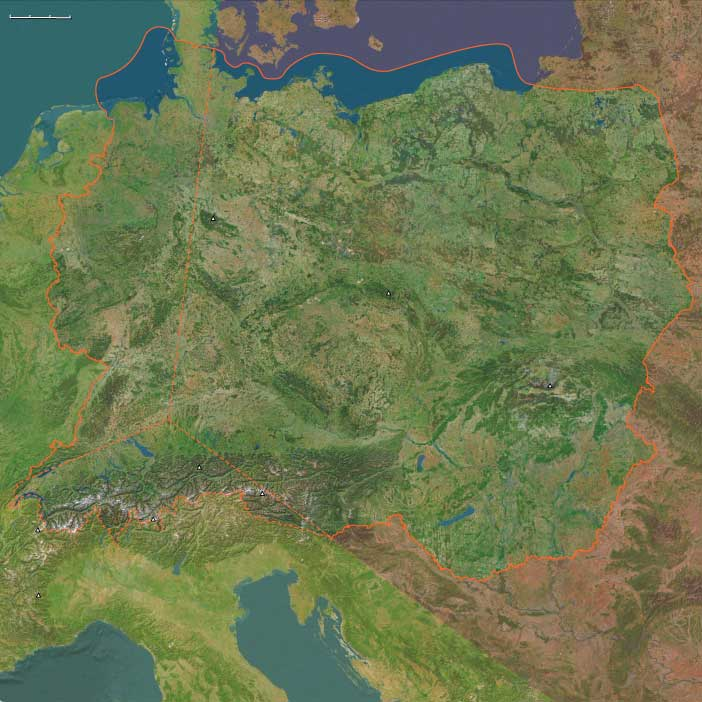
Between 1948 and 1959 CE, East Central Europe—encompassing modern-day Poland, Czechia, Slovakia, Hungary, and those portions of eastern Germany and Austria east of 10°E and north of the line running from roughly 48.2°N at 10°E southeastward to the Austro-Slovenian border near 46.7°N, 15.4°E—was firmly integrated into the Soviet sphere of influence, marking the early stages of the Cold War. This era was defined by the entrenchment of communist rule, widespread Stalinist political repression, forced economic collectivization, and sporadic resistance efforts culminating in dramatic uprisings.
Political and Military Developments
Soviet Satellite States and Stalinization (1948–1953)
By 1948, Soviet-backed communist parties firmly controlled Poland, Hungary, and Czechoslovakia, imposing Stalinist regimes characterized by centralized economic planning, secret police terror, show trials, and suppression of political opposition.
-
In February 1948, the Czechoslovak Communist Party, led by Klement Gottwald, seized total power in the so-called Prague Coup, ending Czechoslovak democracy and establishing a Soviet-style dictatorship.
-
Poland and Hungary similarly experienced intense Stalinist consolidation, with leaders like Bolesław Bierut in Poland and Mátyás Rákosi in Hungary imposing severe repression.
East Germany and the Formation of the GDR (1949)
In October 1949, the Soviet-occupied zone of Germany officially became the German Democratic Republic (GDR), governed by the Socialist Unity Party (SED). Under leader Walter Ulbricht, the GDR aligned firmly with Soviet policies, initiating harsh political repression and strict border controls.
Austrian Neutrality (1955)
In 1955, Austria secured independence and neutrality with the signing of the Austrian State Treaty, resulting in the withdrawal of occupying Allied and Soviet forces. Austria thereby emerged as a neutral buffer state between East and West.
Uprisings and Resistance (1953–1956)
Growing dissatisfaction with Soviet-imposed regimes triggered significant popular resistance:
-
The East German Uprising (June 1953) erupted with mass protests against harsh working conditions and political oppression, violently suppressed by Soviet tanks.
-
The Hungarian Revolution (October–November 1956) represented the most significant rebellion, briefly toppling communist rule and installing reformist leader Imre Nagy, before being crushed by Soviet military intervention, resulting in thousands of casualties and mass emigration.
Economic and Technological Developments
-
Soviet-style central planning imposed extensive industrialization, heavy industry growth, and agricultural collectivization.
-
Economic policies caused severe disruptions, shortages, declining living standards, and widespread dissatisfaction, exacerbating social tensions.
Cultural and Social Developments
-
Communist authorities enforced strict censorship, promoting Soviet-style socialist realism in arts and education.
-
Religious institutions, notably the Catholic Church in Poland and Hungary, became focal points of passive resistance, despite severe restrictions and persecutions.
Settlement and Urban Development
-
Large-scale industrial projects transformed urban landscapes, creating industrial towns and emphasizing socialist-style housing and architecture.
Long-Term Consequences and Historical Significance
This era, defined by Stalinist repression, mass political trials, popular uprisings, and the hardening of Cold War divisions, decisively shaped the trajectory of East Central Europe. It entrenched Soviet control and ideological conformity, but also highlighted the region’s persistent resistance and aspiration for greater political and cultural autonomy, foreshadowing future conflicts and reforms.
People
Groups
- Christians, Roman Catholic
- Czechoslovakia
- Saxony, German State of
- Bavaria, Free State of
- Union of Soviet Socialist Republics (USSR), or Soviet Union
- Austria, Allied-occupied
- Czechoslovakia (restored)
- Bavaria, U.S.-occupied
- Saxony-Anhalt, German State of
- Hungary, Republic of
- Poland, Republic of
- Germany, East (German Democratic Republic)
- Germany, West (Federal Republic of Germany)
- Hungary, Republic of
- Poland, People's Republic of Poland, or Polish People's Republic
- Austria, (Second) Republic of
Topics
Subjects
Regions
Subregions
Related Events
Showing 1 events out of 1 total
Years: 1948 - 1959
People
Groups
- Christians, Roman Catholic
- Czechoslovakia
- Saxony, German State of
- Bavaria, Free State of
- Union of Soviet Socialist Republics (USSR), or Soviet Union
- Austria, Allied-occupied
- Czechoslovakia (restored)
- Bavaria, U.S.-occupied
- Saxony-Anhalt, German State of
- Hungary, Republic of
- Poland, Republic of
- Germany, East (German Democratic Republic)
- Germany, West (Federal Republic of Germany)
- Hungary, Republic of
- Poland, People's Republic of Poland, or Polish People's Republic
- Austria, (Second) Republic of
Topics
Subjects
Regions
Subregions