
East Central Europe (1924–1935 CE): Economic Recovery, …
Years: 1924 - 1935
East Central Europe (1924–1935 CE): Economic Recovery, Democratic Challenges, and Rising Authoritarianism
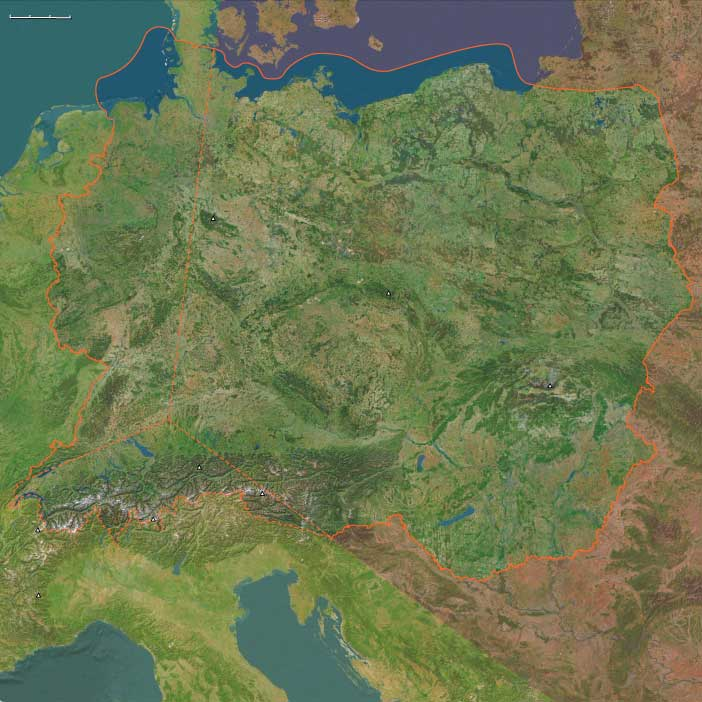
Between 1924 and 1935, East Central Europe—encompassing modern-day Poland, Czechia, Slovakia, Hungary, and eastern Germany and Austria east of 10°E and northeast of the defined boundary—experienced a complex interplay of economic recovery, fragile democratic governance, escalating nationalist tensions, and rising authoritarian movements. Although this era began with relative stability and optimism following post-war reconstruction, it ultimately witnessed growing polarization and instability, laying the foundation for future upheavals.
Political and Military Developments
Stabilization and Democratic Fragility
-
Czechoslovakia, under President Tomáš Masaryk (1918–1935), remained the region's most stable democracy, though ethnic tensions, especially between Czechs and Germans, persisted.
-
Poland, initially democratic, moved toward authoritarianism under Józef Piłsudski after his May Coup in 1926, establishing a more centralized, semi-authoritarian regime known as "Sanacja."
Weimar Republic and East Central Germany
-
Eastern German regions experienced economic and political fluctuations, with the democratic Weimar Republic facing instability, hyperinflation, and rising extremist movements. By the early 1930s, East Germany became increasingly vulnerable to right-wing nationalism and Nazi ideology.
Austria’s Interwar Turmoil
-
The First Austrian Republic struggled politically, economically, and socially, witnessing polarization between socialist (Red Vienna) and conservative-nationalist factions. In 1934, Chancellor Engelbert Dollfuss established the authoritarian Austrofascist regime, suppressing socialist and democratic opposition.
Hungarian Authoritarian Consolidation
-
Hungary, deeply impacted by the Treaty of Trianon, gravitated toward conservative authoritarianism under Miklós Horthy, reinforcing nationalist resentment over territorial losses and cultivating revisionist ambitions
Rise of Hitler and Establishment of the Third Reich (1933)
In January 1933, Adolf Hitler was appointed Chancellor of Germany, marking the swift collapse of the Weimar Republic and the establishment of the authoritarian, totalitarian Nazi regime known as the Third Reich. This seismic political shift dramatically reshaped East Central Europe, fueling ultranationalist and fascist movements in neighboring Austria, Hungary, Czechoslovakia, and Poland, while intensifying fears of territorial revisionism, ethnic nationalism, and future military conflict.
Germany rapidly militarized under Nazi control, openly challenging post-World War I boundaries and treaties
Economic and Technological Developments
Economic Stabilization and Growth (1924–1929)
-
The period from 1924 to 1929 witnessed considerable economic stabilization across the region, driven by increased industrial output, improved infrastructure, and agricultural reforms.
-
East Central Europe benefited from international loans (notably the Dawes Plan, 1924, and the Young Plan, 1929), facilitating economic recovery and integration into broader European markets.
Great Depression and Economic Crisis (1929–1935)
-
The global economic crisis of 1929 severely impacted East Central Europe, causing widespread unemployment, industrial decline, and social unrest. Germany, Austria, and Hungary faced economic collapse, fueling political extremism.
-
Poland and Czechoslovakia also suffered significant downturns, exacerbating social inequalities and political tensions.
Cultural and Artistic Developments
Flourishing Interwar Culture
-
Despite political uncertainties, the region experienced a vibrant cultural renaissance. Major urban centers—Berlin, Vienna, Prague, Budapest, Kraków, and Warsaw—thrived as cultural hubs, producing influential literary, artistic, musical, and theatrical movements.
-
Modernist and avant-garde trends, including Expressionism, Surrealism, and Bauhaus architecture, continued to influence regional art and culture profoundly.
Settlement and Urban Development
Urban Modernization and Infrastructure Expansion
-
Cities across East Central Europe expanded and modernized significantly. Urban planning initiatives introduced modern housing, transportation networks, public amenities, and cultural facilities, notably in Prague, Warsaw, and Vienna.
-
Major infrastructure projects improved connectivity, facilitating economic integration and urban growth, despite later setbacks due to the Great Depression.
Social and Religious Developments
Social Polarization and Radicalization
-
The economic hardships intensified social polarization, with working-class and peasant populations increasingly embracing radical leftist or right-wing nationalist ideologies. Communist and socialist movements gained ground but faced fierce opposition and repression.
-
In Germany, Austria, and Hungary, right-wing nationalist, fascist, and antisemitic movements found growing support amid social frustration.
Religious Institutions and National Identity
-
Religious institutions—particularly the Catholic Church—played critical roles in shaping national and social identities, often aligning with conservative and nationalist forces. Religious communities provided significant social services amid the economic crisis but sometimes reinforced ethnic and religious divides.
Long-Term Consequences and Historical Significance
The era from 1924 to 1935 marked East Central Europe's crucial transitional period from relative post-war stabilization to escalating instability and radicalization. Economic growth and cultural vibrancy initially promised regional prosperity but were sharply curtailed by the Great Depression, accelerating the region's slide toward political extremism and authoritarianism. Fragile democracies in Poland, Germany, Austria, and Hungary increasingly succumbed to authoritarian regimes or extremist movements. Czechoslovakia remained a precarious democratic holdout. These complex transformations set the stage for profound crises, nationalism, and conflict in the subsequent era, ultimately leading to catastrophic outcomes in World War II.
People
Groups
- Hungarian people
- Slavs, South
- Poles (West Slavs)
- Czechs [formerly Bohemians] (West Slavs)
- Slovaks (West Slavs)
- Christians, Roman Catholic
- Austria, Archduchy of
- Protestantism
- Hungary, Kingdom of
- Bohemia, Kingdom of
- Moravian Margravate
- Prussia, Kingdom of
- Russian Empire
- Galicia and Lodomeria, Kingdom of
- Austrian Empire
- Saxony, Kingdom of
- Bavaria, Kingdom of
- Poland, Congress Kingdom of
- Zollverein (German Customs Union)
- Austria-Hungary
- Poland, (Regency) Kingdom of
- Hungary, Democratic Republic of
- Czechoslovakia
- Germany, Weimar Republic of
- Poland, Second Republic of
- Hungary, Kingdom of
- Germany, Third Reich
Topics
Subjects
Regions
Subregions
Years: 1924 - 1935
People
Groups
- Hungarian people
- Slavs, South
- Poles (West Slavs)
- Czechs [formerly Bohemians] (West Slavs)
- Slovaks (West Slavs)
- Christians, Roman Catholic
- Austria, Archduchy of
- Protestantism
- Hungary, Kingdom of
- Bohemia, Kingdom of
- Moravian Margravate
- Prussia, Kingdom of
- Russian Empire
- Galicia and Lodomeria, Kingdom of
- Austrian Empire
- Saxony, Kingdom of
- Bavaria, Kingdom of
- Poland, Congress Kingdom of
- Zollverein (German Customs Union)
- Austria-Hungary
- Poland, (Regency) Kingdom of
- Hungary, Democratic Republic of
- Czechoslovakia
- Germany, Weimar Republic of
- Poland, Second Republic of
- Hungary, Kingdom of
- Germany, Third Reich
Topics
Subjects
Regions
Subregions