
East Central Europe (1888–1899 CE): Imperial Ambitions, …
Years: 1888 - 1899
East Central Europe (1888–1899 CE): Imperial Ambitions, National Rivalries, Accelerated Industrialization, and Rising Social Tensions
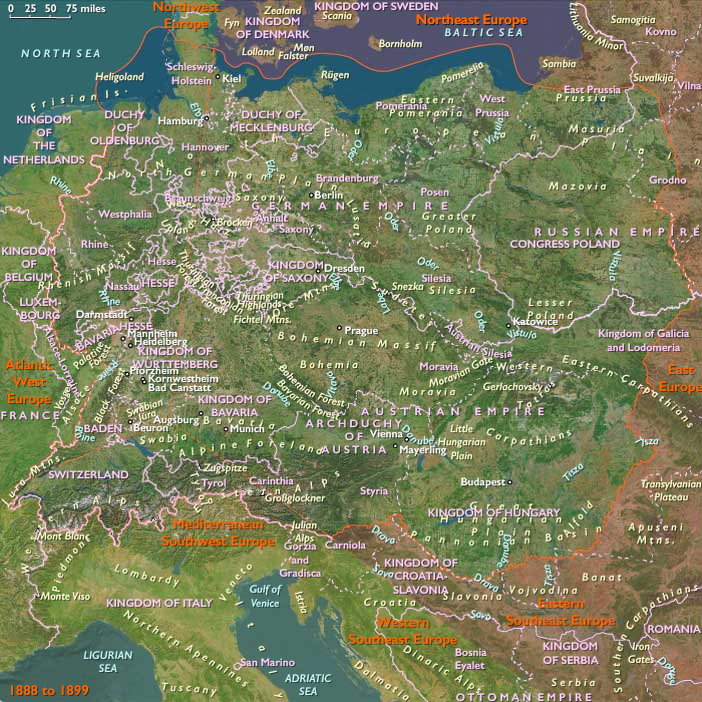
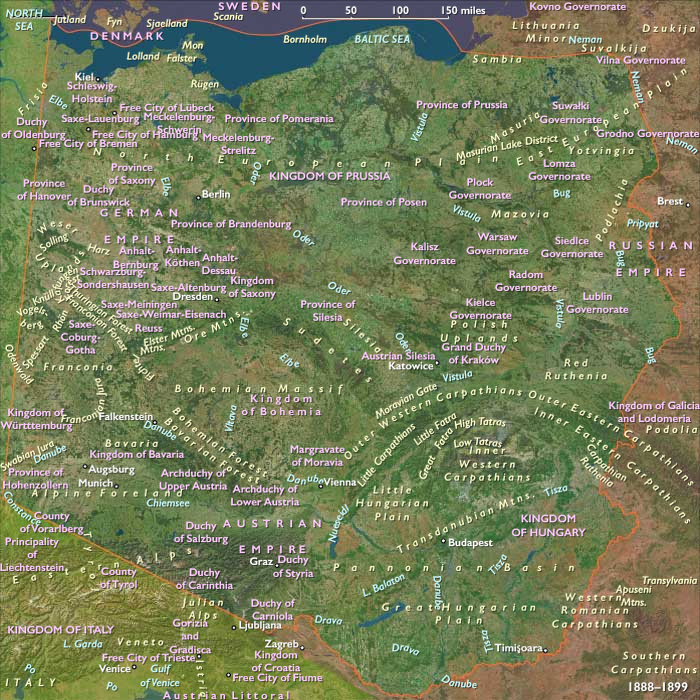
Between 1888 and 1899, East Central Europe—including modern-day Poland, Czechia, Slovakia, Hungary, and eastern Germany and Austria east of 10°E and northeast of the defined boundary—entered a critical period marked by heightened imperial ambitions, intensified nationalist rivalries, rapid economic growth, and increasingly pronounced social and political tensions. Underlying ethnic and national divisions deepened, while major powers—particularly the German Empire and the Austro-Hungarian Dual Monarchy—grappled with internal pressures and external rivalries.
Political and Military Developments
Kaiser Wilhelm II and German Aggression
In 1888, Kaiser Wilhelm II ascended the throne of the German Empire, ushering in a more assertive and aggressive foreign policy. The dismissal of Chancellor Otto von Bismarck in 1890 further destabilized Germany's political landscape, creating uncertainty and shifting alliances. Wilhelm II’s ambitions for military and colonial expansion began straining relations with neighboring powers, especially Austria-Hungary, Russia, and France.
Austro-Hungarian Stability and Nationalist Challenges
Emperor Franz Joseph I maintained the Austro-Hungarian Empire’s fragile unity, but nationalist tensions escalated significantly. Czechs in Bohemia and Moravia, Poles in Galicia, Slovaks, and various South Slavic groups intensified demands for greater autonomy. The 1897 "Badeni crisis," involving language rights for Czechs, vividly highlighted ethnic and political tensions within Austria, setting precedents for future internal struggles.
Polish National Movement and Ethnic Solidarity
In partitioned Poland (under Prussian/German, Austrian, and Russian rule), nationalist activism intensified. Cultural revival, underground education, and political organization accelerated, laying critical foundations for future Polish independence aspirations. Austrian Galicia remained relatively tolerant, allowing Polish cultural institutions to flourish more freely than in the Prussian or Russian partitions.
Economic and Technological Developments
Accelerated Industrialization and Economic Expansion
Industrialization accelerated dramatically, especially in Silesia (German-controlled), Bohemia, Moravia, Saxony, and the industrial regions surrounding Budapest and Vienna. Key industries such as steel, machinery, chemical manufacturing, coal mining, and textiles grew rapidly, making East Central Europe an essential industrial and economic powerhouse within Europe.
Railway Expansion and Technological Innovation
Railway construction expanded rapidly, enhancing connectivity across the region. Railroads stimulated trade, internal migration, and urbanization, linking major urban-industrial hubs—Berlin, Dresden, Leipzig, Prague, Vienna, Budapest, Kraków, Wrocław (Breslau)—and transforming regional economies. Technological innovations, such as electrification, telephone networks, and improved agricultural machinery, further boosted productivity and modernized infrastructure.
Cultural and Artistic Developments
National Cultural Renaissance
The late 19th century saw vibrant cultural nationalism flourish, especially among Czechs, Poles, Hungarians, and Slovaks. Czech composer Antonín Dvořák achieved international fame, while in Poland, the modernist literary movement "Young Poland" (Młoda Polska) emerged, featuring prominent figures like Stanisław Wyspiański and Stefan Żeromski. Hungarian culture experienced a renaissance marked by renewed interest in folk traditions, music, and literature.
Urban Cultural Life and Architectural Splendor
Urban centers—especially Vienna, Prague, Budapest, Dresden, Leipzig, Kraków, and Wrocław—witnessed dynamic cultural life and architectural innovation. The Viennese Secession art movement (founded in 1897) influenced modernist aesthetics, while Prague and Budapest similarly displayed remarkable architectural growth with public buildings, museums, theaters, and galleries showcasing national prestige.
Settlement and Urban Development
Continued Rapid Urbanization
Cities expanded rapidly, drawing rural populations into urban industrial economies. Vienna, Prague, Budapest, Leipzig, Dresden, and Kraków grew significantly, developing extensive public infrastructure—transportation networks, sanitation, housing, hospitals—and becoming vibrant industrial, commercial, and cultural centers.
Social and Religious Developments
Working-Class Movements and Socialist Politics
Socialist and labor movements grew substantially amid industrial expansion. Working conditions and labor rights increasingly dominated political debates, especially in Germany, Austria, Bohemia, and Hungary. Social Democratic parties, trade unions, and strikes became common, underscoring deepening class tensions and political activism.
Religious Institutions and Social Reform
The Catholic Church, despite ongoing tensions (particularly the legacy of Germany’s Kulturkampf), remained influential, contributing significantly to education, social welfare, and community cohesion across Polish, Czech, Slovak, and Hungarian communities. Protestant churches maintained significant influence in German regions, actively participating in social welfare and educational initiatives.
Long-Term Consequences and Historical Significance
The period 1888–1899 significantly influenced East Central Europe's trajectory toward the tumultuous early 20th century. Intensified nationalist movements, the assertive imperial ambitions of Germany under Wilhelm II, and increasingly strained Austro-Hungarian internal politics set critical foundations for future conflicts. Economic expansion and rapid industrialization reshaped regional social structures, intensifying class tensions and labor movements. Cultural flourishing, urban growth, and heightened ethnic consciousness further defined regional identities. These complex and intertwined developments profoundly shaped East Central Europe's subsequent historical evolution toward the crises preceding World War I.
People
- Antonín Dvořák
- Franz Joseph I of Austria
- Otto von Bismarck
- Stanisław Wyspiański
- Stefan Żeromski
- Wilhelm II
Groups
- Hungarian people
- Slavs, South
- Poles (West Slavs)
- Czechs [formerly Bohemians] (West Slavs)
- Slovaks (West Slavs)
- Christians, Roman Catholic
- Austria, Archduchy of
- Protestantism
- Hungary, Kingdom of
- Bohemia, Kingdom of
- Moravian Margravate
- Prussia, Kingdom of
- Russian Empire
- Galicia and Lodomeria, Kingdom of
- Austrian Empire
- Saxony, Kingdom of
- Bavaria, Kingdom of
- Poland, Congress Kingdom of
- Zollverein (German Customs Union)
- Austria-Hungary
- German Empire (“Second Reich”)
Topics
- January Uprising, or Polish Rebellion of 1863-64
- Austro-Prussian War (Seven Weeks War)
- Königgrätz, Battle of
Subjects
Regions
Subregions
Related Events
Showing 10 events out of 10660 total
Years: 1888 - 1899
People
- Antonín Dvořák
- Franz Joseph I of Austria
- Otto von Bismarck
- Stanisław Wyspiański
- Stefan Żeromski
- Wilhelm II
Groups
- Hungarian people
- Slavs, South
- Poles (West Slavs)
- Czechs [formerly Bohemians] (West Slavs)
- Slovaks (West Slavs)
- Christians, Roman Catholic
- Austria, Archduchy of
- Protestantism
- Hungary, Kingdom of
- Bohemia, Kingdom of
- Moravian Margravate
- Prussia, Kingdom of
- Russian Empire
- Galicia and Lodomeria, Kingdom of
- Austrian Empire
- Saxony, Kingdom of
- Bavaria, Kingdom of
- Poland, Congress Kingdom of
- Zollverein (German Customs Union)
- Austria-Hungary
- German Empire (“Second Reich”)
Topics
- January Uprising, or Polish Rebellion of 1863-64
- Austro-Prussian War (Seven Weeks War)
- Königgrätz, Battle of
Subjects
Regions
Subregions