
East Central Europe (1768–1779 CE): First Partition …
Years: 1768 - 1779
East Central Europe (1768–1779 CE): First Partition of Poland, Enlightened Absolutism, and Habsburg-Prussian Rivalry Intensified
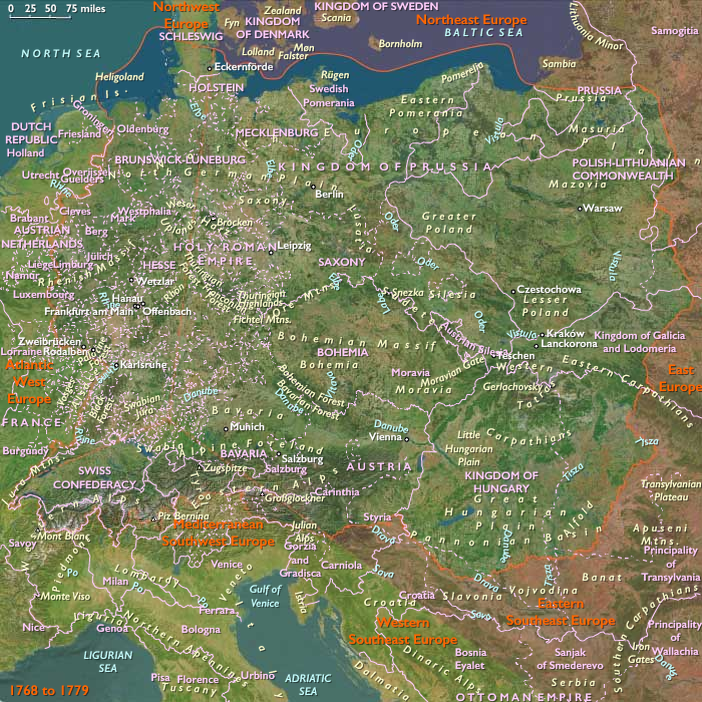
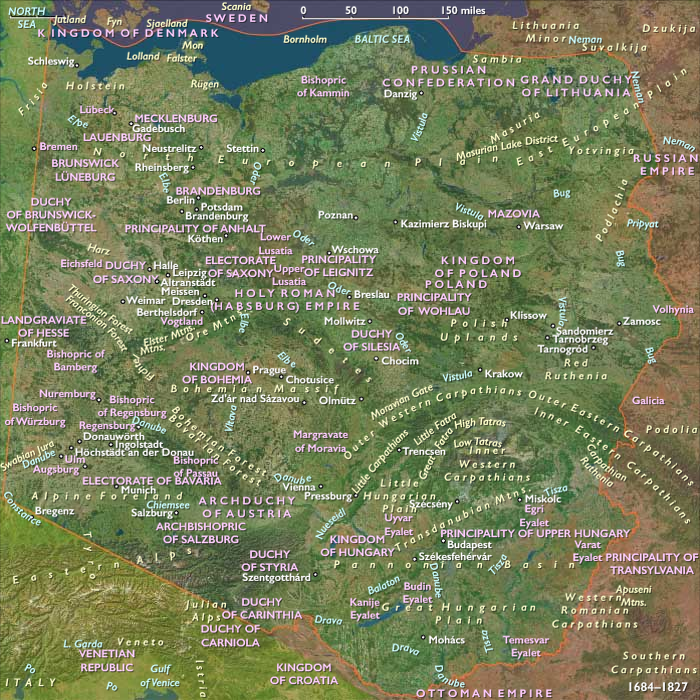
Between 1768 and 1779 CE, East Central Europe—encompassing modern-day Poland, Czechia, Slovakia, Hungary, and the regions of eastern Germany and Austria east of 10°E and north of the defined boundary—experienced significant geopolitical realignments, highlighted by the First Partition of Poland (1772), intensified rivalry between Habsburg Austria and Prussia, and continuing Enlightenment-inspired reforms. These events reshaped political boundaries, social structures, and cultural dynamics, leaving enduring impacts on the region's historical trajectory.
Political and Military Developments
First Partition of Poland (1772)
-
In 1772, the First Partition of Poland profoundly altered regional politics, significantly reducing Polish sovereignty. Initiated by Prussia, Austria, and Russia, this partition divided substantial portions of Polish territory among these powers:
-
Prussia acquired West Prussia, establishing a direct territorial link between Brandenburg and East Prussia, significantly enhancing Prussian economic strength.
-
Austria annexed southern territories including parts of Galicia and Lodomeria, expanding its northeastern frontier and incorporating the important city of Lemberg (Lviv) into its domains.
-
Russia absorbed extensive eastern territories, greatly enhancing its western borderlands.
-
-
Poland’s territorial integrity was irreparably damaged, and the Polish-Lithuanian Commonwealth began a steady decline in autonomy and international standing.
War of the Bavarian Succession (1778–1779)
-
Following the death of Elector Maximilian Joseph III of Bavaria in 1777, Joseph II of Austria sought territorial expansion in Bavaria, sparking the War of the Bavarian Succession (1778–1779), also known as the Potato War.
-
Frederick the Great of Prussia swiftly opposed Austrian ambitions, reinforcing Prussian strength and challenging Habsburg influence in southern Germany.
-
Diplomatic interventions by France and Russia resulted in the Treaty of Teschen (1779), forcing Austria to abandon its ambitious territorial claims while retaining minor concessions, demonstrating the ongoing Austro-Prussian rivalry.
Economic and Technological Developments
Economic Gains from Partition
-
The First Partition of Poland substantially benefited Prussian and Austrian economies:
-
Prussia’s acquisition of West Prussia provided vital Baltic ports and fertile agricultural lands, significantly enhancing trade and agricultural production.
-
Austria’s new Galician territories provided productive agricultural resources, particularly grain and livestock, which strengthened the empire’s economic base.
-
Agricultural and Industrial Innovations
-
Enlightenment-influenced reforms continued, emphasizing agricultural modernization, industrial development, and infrastructure improvements in Austria and Prussia, including innovations in farming techniques, crop rotations, and livestock breeding.
Cultural and Artistic Developments
Enlightenment and Reforms in Austria and Prussia
-
Under Maria Theresa (1740–1780) and her son Joseph II (co-ruler from 1765), Austria pursued extensive Enlightenment-inspired reforms promoting centralized governance, educational enhancements, judicial improvements, and limited religious toleration.
-
Frederick the Great intensified Enlightenment-influenced governance, emphasizing education, scientific advancement, and cultural patronage, reinforcing Prussia’s intellectual prominence.
Cultural Flourishing and Artistic Patronage
-
Cultural vibrancy continued in key cities, including Vienna, Prague, and Berlin, marked by architectural developments, music, literature, and philosophical discourse. Notable figures like composer Christoph Willibald Gluck and dramatist Gotthold Ephraim Lessing enhanced regional cultural vitality.
Settlement and Urban Development
Urban and Infrastructural Expansion
-
Urban growth accelerated notably in Prussian-controlled West Prussia (notably Danzig/Gdańsk), Austrian Galicia (Lemberg/Lviv), and major cities such as Vienna, Prague, and Berlin, reflecting heightened administrative and economic integration of new territories.
-
Infrastructure improvements, including roads, canals, and civic architecture, accompanied this urban growth, boosting regional trade and connectivity.
Social and Religious Developments
Continued Enlightenment Reforms
-
Enlightenment-influenced monarchs implemented social reforms promoting centralized bureaucracy, meritocratic administration, legal rationalization, and educational advancement, profoundly reshaping social structures.
Religious Toleration and Diversity
-
Policies promoting religious tolerance persisted, notably under Frederick II in Prussia and Joseph II in Austria, fostering improved religious coexistence and integration within the increasingly diverse populations of their territories.
Long-Term Consequences and Historical Significance
The era 1768–1779 CE was critical for East Central Europe, significantly shaped by the First Partition of Poland and the intensified Habsburg-Prussian rivalry as exemplified by the War of the Bavarian Succession. The territorial division of Poland decisively altered regional geopolitical dynamics, strengthening Prussia and Austria economically and strategically while severely weakening Polish sovereignty. Enlightenment-inspired reforms and cultural flourishing continued to reshape governance, societal structures, and intellectual life across the region. These developments set crucial foundations for the further partitions of Poland, intensified Austro-Prussian competition, and transformative societal and political shifts into the late 18th and early 19th centuries.
People
- Augustus III of Poland
- Christoph Willibald Gluck
- Frederick the Great
- Gotthold Ephraim Lessing
- Joseph II, Holy Roman Emperor
- Maria Theresa
- Maximilian III Joseph
Groups
- Jews
- Holy Roman Empire
- Germany, Kingdom of (within the Holy Roman Empire)
- Christians, Roman Catholic
- Austria, Archduchy of
- Holy Roman Empire
- Saxony, Electorate of
- Protestantism
- Hungary, Kingdom of
- Polish-Lithuanian Commonwealth (Commonwealth of the Two Nations)
- Habsburg Monarchy, or Empire
- Bavaria, Electorate of
- Prussia, Kingdom of
- Russian Empire
- Galicia and Lodomeria, Kingdom of
Topics
Commodoties
Subjects
- Commerce
- Architecture
- Painting and Drawing
- Decorative arts
- Conflict
- Faith
- Government
- Scholarship
- Custom and Law
Regions
Subregions
Related Events
Showing 10 events out of 26116 total
Years: 1768 - 1779
People
- Augustus III of Poland
- Christoph Willibald Gluck
- Frederick the Great
- Gotthold Ephraim Lessing
- Joseph II, Holy Roman Emperor
- Maria Theresa
- Maximilian III Joseph
Groups
- Jews
- Holy Roman Empire
- Germany, Kingdom of (within the Holy Roman Empire)
- Christians, Roman Catholic
- Austria, Archduchy of
- Holy Roman Empire
- Saxony, Electorate of
- Protestantism
- Hungary, Kingdom of
- Polish-Lithuanian Commonwealth (Commonwealth of the Two Nations)
- Habsburg Monarchy, or Empire
- Bavaria, Electorate of
- Prussia, Kingdom of
- Russian Empire
- Galicia and Lodomeria, Kingdom of
Topics
Commodoties
Subjects
- Commerce
- Architecture
- Painting and Drawing
- Decorative arts
- Conflict
- Faith
- Government
- Scholarship
- Custom and Law
Regions
Subregions