
East Central Europe (1672–1683 CE): Ottoman Wars, …
Years: 1672 - 1683
East Central Europe (1672–1683 CE): Ottoman Wars, Polish-Lithuanian Struggles, and Prelude to Vienna
Between 1672 and 1683 CE, East Central Europe—covering modern-day Poland, Czechia, Slovakia, Hungary, and eastern Germany and Austria east of 10°E and north of the defined boundary—faced intensified Ottoman expansion, deepening political instability in the Polish-Lithuanian Commonwealth, and a critical period of preparation culminating in the decisive Battle of Vienna (1683). This era was marked by significant military confrontations, shifting alliances, and intensified defense efforts that profoundly shaped regional stability and geopolitical alignments.
Political and Military Developments
Ottoman Invasions and Polish-Lithuanian Decline
-
The Ottoman Empire, under Sultan Mehmed IV, launched a significant invasion of the Polish-Lithuanian Commonwealth in 1672, capturing the strategic fortress-city of Kamianets-Podilskyi.
-
Poland-Lithuania, weakened by internal divisions, signed the unfavorable Treaty of Buchach (1672), ceding Podolia and agreeing to pay tribute to the Ottoman Empire. King Michał Korybut Wiśniowiecki’s reign (1669–1673) witnessed severe internal strife and declining royal authority.
-
King John III Sobieski (r. 1674–1696) ascended the throne in 1674, gradually stabilizing Poland’s military and political situation, most notably achieving victory against Ottoman forces at the Battle of Chocim (Khotyn, 1673), restoring some regional authority.
Rising Ottoman Pressure on Habsburg Hungary
-
The Ottomans intensified their incursions into Habsburg-controlled Royal Hungary, capturing key fortresses and borderlands.
-
Habsburg Emperor Leopold I (r. 1658–1705) responded by forming defensive alliances, notably with Poland-Lithuania, preparing military fortifications, and strengthening Habsburg defensive strategies along Hungary’s vulnerable border.
Brandenburg-Prussian Diplomatic Realignment
-
Brandenburg-Prussia, under Frederick William, the Great Elector, pursued strategic diplomatic neutrality and careful positioning between the Ottoman Empire, Poland-Lithuania, and Habsburg Austria. His policy reinforced Brandenburg’s growing military strength and diplomatic influence.
Economic and Technological Developments
Economic Strain from Warfare
-
Continuous warfare disrupted trade networks, particularly affecting Hungary, southern Poland, and the Carpathian regions, although German states further west (such as Saxony and Brandenburg) managed modest economic stability and growth.
-
Agricultural productivity and artisanal production were negatively impacted in areas directly affected by Ottoman invasions, particularly southern Poland and Hungary, where rural devastation was substantial.
Cultural and Artistic Developments
Baroque Cultural Resilience
-
Despite disruptions, cultural patronage persisted, particularly in less-affected areas like Bohemia and Austria, where Baroque architecture, religious artwork, and music thrived in major centers such as Prague and Vienna.
-
Ecclesiastical institutions continued promoting religious education, artistic patronage, and literary production, contributing to cultural resilience amidst regional instability.
Settlement and Urban Development
Defensive Urbanization and Fortifications
-
Significant investments in fortifications occurred in cities such as Vienna, Pressburg (Bratislava), Győr, Kraków, and Wrocław, reflecting intensified military preparations against Ottoman invasions.
-
Urban centers away from conflict zones, particularly in Brandenburg-Prussia and Bohemia, continued expanding economically, benefiting from comparative stability.
Social and Religious Developments
Religious Mobilization and Unity
-
Ottoman threats galvanized Catholic religious mobilization, significantly strengthening ecclesiastical influence in Habsburg territories and Poland-Lithuania, reinforcing Catholic cultural and social cohesion.
-
Protestant populations within Brandenburg-Prussia and Saxony maintained relative religious stability, protected under the Westphalian settlement, facilitating regional coexistence.
Prelude to the Battle of Vienna
-
By 1682–1683, Ottoman forces under Grand Vizier Kara Mustafa Pasha mobilized a massive army targeting Vienna, directly threatening Habsburg heartlands.
-
Emperor Leopold I sought alliances, notably with King John III Sobieski of Poland and various German princes, leading to a significant European coalition preparing for the coming decisive confrontation at Vienna.
Long-Term Consequences and Historical Significance
The period 1672–1683 CE represented a critical juncture in East Central European history, characterized by intensified Ottoman aggression, Polish-Lithuanian internal struggles, and extensive military preparations culminating in the 1683 Siege of Vienna. This era's diplomatic realignments, economic disruptions, and defensive strategies significantly reshaped regional alliances and geopolitical dynamics. The preparations and alliances formed in response to the Ottoman threat set the stage for the decisive Christian coalition victory at Vienna, profoundly influencing subsequent European history and halting Ottoman expansion into Central Europe.
People
- Frederick William, Elector of Brandenburg
- John III Sobieski
- Kara Mustafa
- Leopold I
- Mehmed IV Acvi
- Michael Korybut Wiśniowiecki
Groups
- Polytheism (“paganism”)
- Saxons
- Germans
- Hungarian people
- Wends, or Sorbs (West Slavs)
- Christianity, Chalcedonian
- Bavarians (West Germanic tribe)
- Thuringia, Duchy of
- Passau, Bishopric of
- Saxony, Duchy of
- Germany, Kingdom of (within the Holy Roman Empire)
- Holy Roman Empire
- Slovaks (West Slavs)
- Carinthia, Duchy of
- Czechs [formerly Bohemians] (West Slavs)
- Austria, Margravate of
- Hanseatic league (informally organized)
- Hungary, Kingdom of
- Bamberg, Prince-Bishopric of
- Mazovia, Duchy of
- Poland, Greater
- Austria, Archduchy of
- Bohemia, Kingdom of
- Styria, Duchy of
- Lübeck, Free City of
- Brunswick-Lüneburg, Duchy of
- Regensburg (Ratisbon), Imperial Free City of
- Cammin, Prince-Bishopric of
- Regensburg, Prince-Bishopric of
- Anhalt-Bernburg, Principality of
- Anhalt-Zerbst, Principality of
- Holy Roman Empire
- Brunswick-Wolfenbüttel, Duchy of
- Salzburg, Archbishopric of
- Poland of the later Piasts, Kingdom of
- Lithuania, Grand Duchy of
- Mecklenburg, Duchy of
- Ottoman Empire
- Palatinate, Electoral (Wittelsbach)
- Saxony, Electorate of
- Poland of the Jagiellonians, Kingdom of
- Crown of the Kingdom of Poland
- Lithuania, Grand Duchy of
- Saxe-Lauenburg, Duchy of
- Prussian Confederation
- Crimean Khanate
- Transylvania (Hungarian governate)
- Ottoman Empire
- Prussia, Royal (autonomous subject of the Polish Crown)
- Bavaria, Wittelsbach Duchy of
- Lutheranism
- Sweden, (second) Kingdom of
- Hungary, Royal
- Calvinists
- Jesuits, or Order of the Society of Jesus
- Hungary, Ottoman
- Hungary (Transylvania), Ottoman vassal Kingdom of
- Russia, Tsardom of
- Swedish Empire
- Anhalt-Köthen, Principality of
- Saxe-Weimar, Duchy of
- Saxe-Coburg, Duchy of
- Saxe-Eisenach, Duchy of
- France, (Bourbon) Kingdom of
- Mecklenburg-Güstrow, Duchy of
- Mecklenburg-Schwerin, Duchy of
- Anhalt-Plotzkau, Principality of
- Anhalt-Dessau
- Anhalt-Dessau, Principality of
- Brandenburg-Prussia
Topics
Commodoties
Subjects
Regions
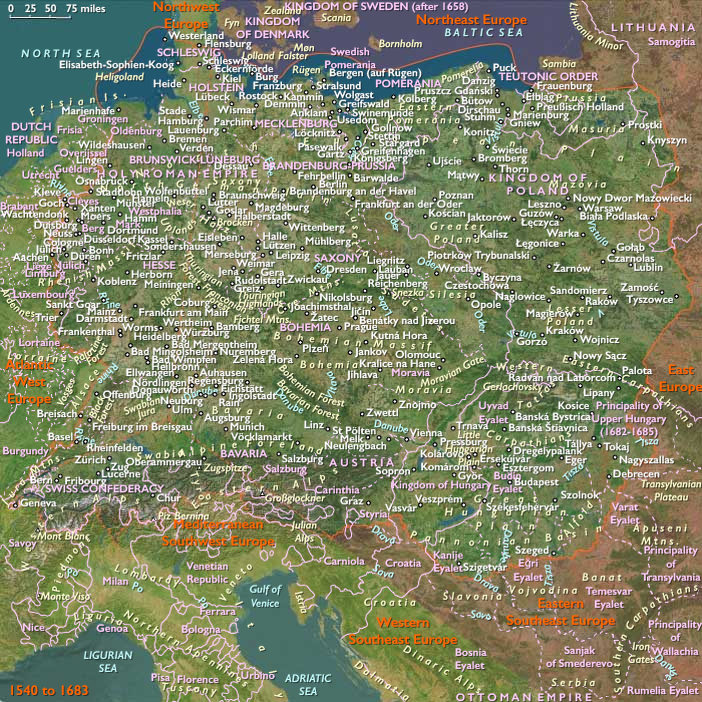
Subregions
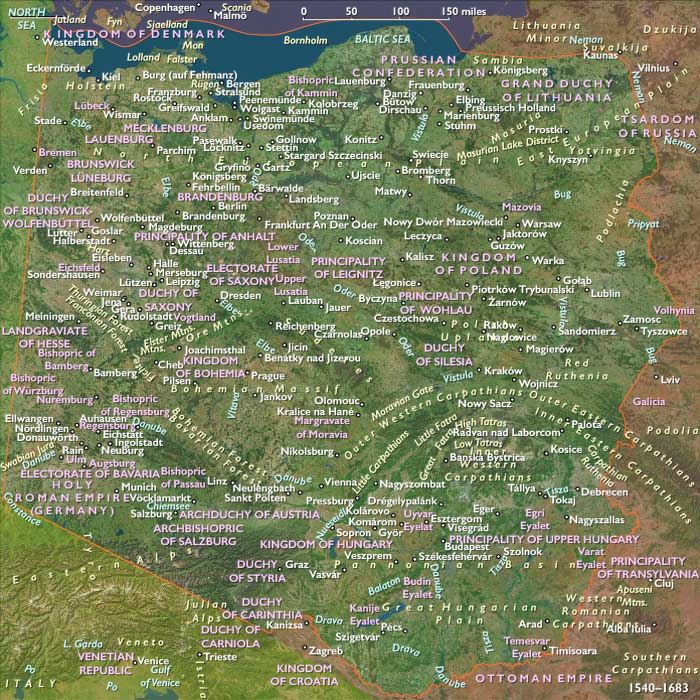
Years: 1672 - 1683
People
- Frederick William, Elector of Brandenburg
- John III Sobieski
- Kara Mustafa
- Leopold I
- Mehmed IV Acvi
- Michael Korybut Wiśniowiecki
Groups
- Polytheism (“paganism”)
- Saxons
- Germans
- Hungarian people
- Wends, or Sorbs (West Slavs)
- Christianity, Chalcedonian
- Bavarians (West Germanic tribe)
- Thuringia, Duchy of
- Passau, Bishopric of
- Saxony, Duchy of
- Germany, Kingdom of (within the Holy Roman Empire)
- Holy Roman Empire
- Slovaks (West Slavs)
- Carinthia, Duchy of
- Czechs [formerly Bohemians] (West Slavs)
- Austria, Margravate of
- Hanseatic league (informally organized)
- Hungary, Kingdom of
- Bamberg, Prince-Bishopric of
- Mazovia, Duchy of
- Poland, Greater
- Austria, Archduchy of
- Bohemia, Kingdom of
- Styria, Duchy of
- Lübeck, Free City of
- Brunswick-Lüneburg, Duchy of
- Regensburg (Ratisbon), Imperial Free City of
- Cammin, Prince-Bishopric of
- Regensburg, Prince-Bishopric of
- Anhalt-Bernburg, Principality of
- Anhalt-Zerbst, Principality of
- Holy Roman Empire
- Brunswick-Wolfenbüttel, Duchy of
- Salzburg, Archbishopric of
- Poland of the later Piasts, Kingdom of
- Lithuania, Grand Duchy of
- Mecklenburg, Duchy of
- Ottoman Empire
- Palatinate, Electoral (Wittelsbach)
- Saxony, Electorate of
- Poland of the Jagiellonians, Kingdom of
- Crown of the Kingdom of Poland
- Lithuania, Grand Duchy of
- Saxe-Lauenburg, Duchy of
- Prussian Confederation
- Crimean Khanate
- Transylvania (Hungarian governate)
- Ottoman Empire
- Prussia, Royal (autonomous subject of the Polish Crown)
- Bavaria, Wittelsbach Duchy of
- Lutheranism
- Sweden, (second) Kingdom of
- Hungary, Royal
- Calvinists
- Jesuits, or Order of the Society of Jesus
- Hungary, Ottoman
- Hungary (Transylvania), Ottoman vassal Kingdom of
- Russia, Tsardom of
- Swedish Empire
- Anhalt-Köthen, Principality of
- Saxe-Weimar, Duchy of
- Saxe-Coburg, Duchy of
- Saxe-Eisenach, Duchy of
- France, (Bourbon) Kingdom of
- Mecklenburg-Güstrow, Duchy of
- Mecklenburg-Schwerin, Duchy of
- Anhalt-Plotzkau, Principality of
- Anhalt-Dessau
- Anhalt-Dessau, Principality of
- Brandenburg-Prussia
Topics
Commodoties
Subjects
Regions
Subregions