
East Central Europe (1660–1671 CE): Stabilization, Reconstruction, …
Years: 1660 - 1671
East Central Europe (1660–1671 CE): Stabilization, Reconstruction, and Ottoman Pressures
Between 1660 and 1671 CE, East Central Europe—covering modern-day Poland, Czechia, Slovakia, Hungary, and eastern Germany and Austria east of 10°E and north of the defined boundary—experienced gradual stabilization following decades of warfare, though new challenges arose, particularly from Ottoman expansion. The region undertook significant political consolidation, economic recovery, and cultural revitalization, even as the Ottoman Empire intensified its pressure on Hungary and Habsburg territories, setting the stage for future conflicts.
Political and Military Developments
Ottoman Pressure and Hungarian Instability
-
The Ottoman Empire intensified military pressure on Habsburg-controlled Royal Hungary, initiating campaigns that led to territorial shifts, notably the capture of Nagyvárad (Oradea) in 1660.
-
Ottoman advances prompted defensive alliances and intensified fortifications in Hungary, Austria, and Croatia, as Emperor Leopold I (r. 1658–1705) sought to stabilize his frontier.
Polish-Lithuanian Commonwealth: Recovery and Struggles
-
Poland-Lithuania, severely weakened by earlier Swedish and Russian invasions, entered a fragile recovery under King John II Casimir (r. 1648–1668). Internal conflicts, magnate feuds, and the debilitating liberum veto weakened central authority, leaving Poland vulnerable to future crises.
Brandenburg-Prussian Consolidation
-
Under Frederick William, the "Great Elector" (r. 1640–1688), Brandenburg-Prussia strengthened its administrative centralization, military modernization, and diplomatic stature, increasingly becoming a significant regional power.
Economic and Technological Developments
Economic Recovery and Revitalization
-
The region gradually recovered economically, especially in agriculture and trade. Bohemia, Moravia, and Silesia saw improvements in agricultural productivity, manufacturing, and mining activities, aided by restored trade networks and stabilized population growth.
-
Brandenburg-Prussia actively fostered economic development, improving infrastructure, promoting immigration of skilled workers, and boosting urban economies.
Technological and Agricultural Innovations
-
Adoption of advanced agricultural techniques, including crop rotation and more efficient farming equipment, improved yields across Austria, Bohemia, and Saxony, facilitating demographic recovery and economic revitalization.
Cultural and Artistic Developments
Flourishing Baroque Culture
-
Baroque artistic and architectural patronage flourished, symbolizing renewed confidence, Catholic Counter-Reformation vigor, and princely power. Major projects included palaces, churches, and public buildings in Vienna, Prague, and Warsaw.
-
Literature, theater, and music experienced renewed vitality, reflecting stabilizing social conditions and elite patronage.
Settlement and Urban Development
Continued Urban Reconstruction and Expansion
-
Urban recovery accelerated, with significant reconstruction efforts enhancing cities such as Vienna, Dresden, Prague, Kraków, and Leipzig, restoring their roles as commercial and administrative centers.
-
Strategic fortification of frontier cities, particularly in Hungary and along the Habsburg-Ottoman border, intensified in response to Ottoman threats.
Social and Religious Developments
Religious Consolidation and Sectarian Stability
-
Religious life stabilized along the lines drawn by the Treaty of Westphalia, solidifying Protestant and Catholic regions.
-
The Catholic Church, particularly within Habsburg territories, expanded educational and missionary activities, strengthening religious uniformity in Austria, Bohemia, and Hungary.
Social Recovery and Aristocratic Dominance
-
Aristocratic power consolidated further, particularly in Poland and Hungary, reinforcing noble privileges and weakening central royal authority. The nobility maintained significant control over land and economic resources.
Long-Term Consequences and Historical Significance
The era from 1660 to 1671 CE marked East Central Europe’s tentative recovery from decades of devastating conflict, fostering economic revival and cultural rejuvenation. However, persistent Ottoman pressure, internal Polish-Lithuanian fragility, and rising Brandenburg-Prussian ambitions foreshadowed future geopolitical conflicts. These developments solidified social and religious structures, laid essential foundations for later absolutist governance, and significantly shaped the region’s political and cultural trajectory into the late 17th century.
People
Groups
- Polytheism (“paganism”)
- Saxons
- Germans
- Hungarian people
- Wends, or Sorbs (West Slavs)
- Christianity, Chalcedonian
- Bavarians (West Germanic tribe)
- Thuringia, Duchy of
- Passau, Bishopric of
- Saxony, Duchy of
- Germany, Kingdom of (within the Holy Roman Empire)
- Holy Roman Empire
- Slovaks (West Slavs)
- Carinthia, Duchy of
- Czechs [formerly Bohemians] (West Slavs)
- Austria, Margravate of
- Hanseatic league (informally organized)
- Hungary, Kingdom of
- Bamberg, Prince-Bishopric of
- Mazovia, Duchy of
- Poland, Greater
- Austria, Archduchy of
- Bohemia, Kingdom of
- Styria, Duchy of
- Lübeck, Free City of
- Brunswick-Lüneburg, Duchy of
- Regensburg (Ratisbon), Imperial Free City of
- Cammin, Prince-Bishopric of
- Regensburg, Prince-Bishopric of
- Anhalt-Bernburg, Principality of
- Anhalt-Zerbst, Principality of
- Holy Roman Empire
- Brunswick-Wolfenbüttel, Duchy of
- Salzburg, Archbishopric of
- Poland of the later Piasts, Kingdom of
- Lithuania, Grand Duchy of
- Mecklenburg, Duchy of
- Ottoman Empire
- Palatinate, Electoral (Wittelsbach)
- Saxony, Electorate of
- Poland of the Jagiellonians, Kingdom of
- Crown of the Kingdom of Poland
- Lithuania, Grand Duchy of
- Saxe-Lauenburg, Duchy of
- Prussian Confederation
- Crimean Khanate
- Transylvania (Hungarian governate)
- Ottoman Empire
- Prussia, Royal (autonomous subject of the Polish Crown)
- Bavaria, Wittelsbach Duchy of
- Lutheranism
- Sweden, (second) Kingdom of
- Hungary, Royal
- Calvinists
- Jesuits, or Order of the Society of Jesus
- Hungary, Ottoman
- Hungary (Transylvania), Ottoman vassal Kingdom of
- Russia, Tsardom of
- Swedish Empire
- Anhalt-Köthen, Principality of
- Saxe-Weimar, Duchy of
- Saxe-Coburg, Duchy of
- Saxe-Eisenach, Duchy of
- France, (Bourbon) Kingdom of
- Mecklenburg-Güstrow, Duchy of
- Mecklenburg-Schwerin, Duchy of
- Anhalt-Plotzkau, Principality of
- Anhalt-Dessau
- Anhalt-Dessau, Principality of
- Brandenburg-Prussia
Topics
Commodoties
Subjects
Regions
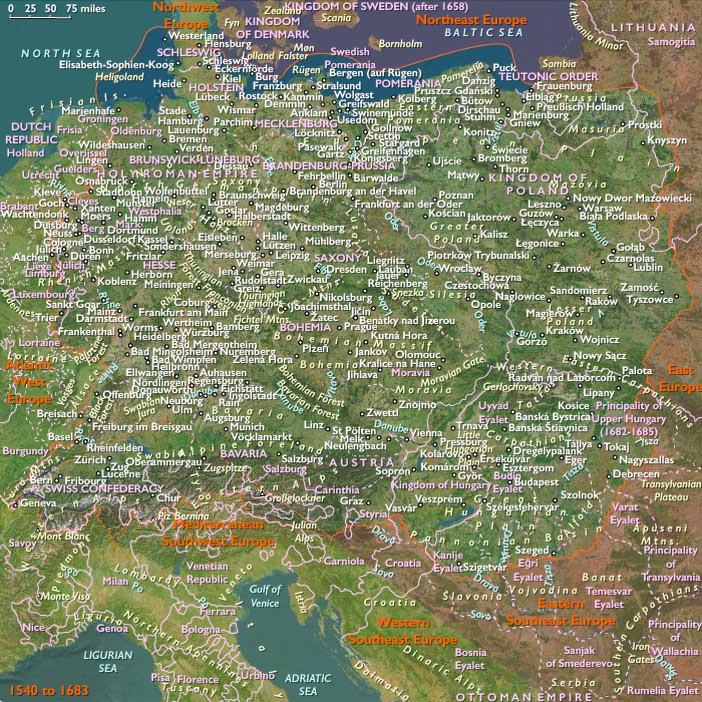
Subregions
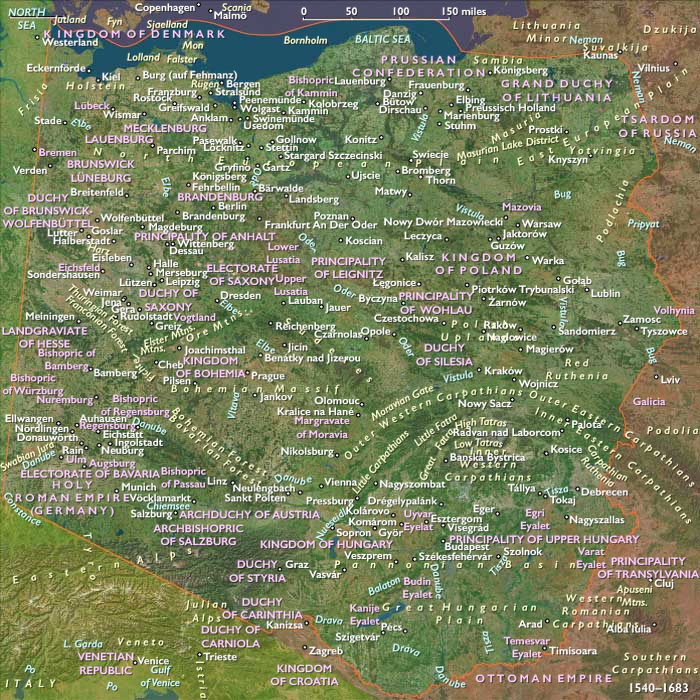
Related Events
Showing 10 events out of 31243 total
Years: 1660 - 1671
People
Groups
- Polytheism (“paganism”)
- Saxons
- Germans
- Hungarian people
- Wends, or Sorbs (West Slavs)
- Christianity, Chalcedonian
- Bavarians (West Germanic tribe)
- Thuringia, Duchy of
- Passau, Bishopric of
- Saxony, Duchy of
- Germany, Kingdom of (within the Holy Roman Empire)
- Holy Roman Empire
- Slovaks (West Slavs)
- Carinthia, Duchy of
- Czechs [formerly Bohemians] (West Slavs)
- Austria, Margravate of
- Hanseatic league (informally organized)
- Hungary, Kingdom of
- Bamberg, Prince-Bishopric of
- Mazovia, Duchy of
- Poland, Greater
- Austria, Archduchy of
- Bohemia, Kingdom of
- Styria, Duchy of
- Lübeck, Free City of
- Brunswick-Lüneburg, Duchy of
- Regensburg (Ratisbon), Imperial Free City of
- Cammin, Prince-Bishopric of
- Regensburg, Prince-Bishopric of
- Anhalt-Bernburg, Principality of
- Anhalt-Zerbst, Principality of
- Holy Roman Empire
- Brunswick-Wolfenbüttel, Duchy of
- Salzburg, Archbishopric of
- Poland of the later Piasts, Kingdom of
- Lithuania, Grand Duchy of
- Mecklenburg, Duchy of
- Ottoman Empire
- Palatinate, Electoral (Wittelsbach)
- Saxony, Electorate of
- Poland of the Jagiellonians, Kingdom of
- Crown of the Kingdom of Poland
- Lithuania, Grand Duchy of
- Saxe-Lauenburg, Duchy of
- Prussian Confederation
- Crimean Khanate
- Transylvania (Hungarian governate)
- Ottoman Empire
- Prussia, Royal (autonomous subject of the Polish Crown)
- Bavaria, Wittelsbach Duchy of
- Lutheranism
- Sweden, (second) Kingdom of
- Hungary, Royal
- Calvinists
- Jesuits, or Order of the Society of Jesus
- Hungary, Ottoman
- Hungary (Transylvania), Ottoman vassal Kingdom of
- Russia, Tsardom of
- Swedish Empire
- Anhalt-Köthen, Principality of
- Saxe-Weimar, Duchy of
- Saxe-Coburg, Duchy of
- Saxe-Eisenach, Duchy of
- France, (Bourbon) Kingdom of
- Mecklenburg-Güstrow, Duchy of
- Mecklenburg-Schwerin, Duchy of
- Anhalt-Plotzkau, Principality of
- Anhalt-Dessau
- Anhalt-Dessau, Principality of
- Brandenburg-Prussia
Topics
Commodoties
Subjects
Regions
Subregions