
East Central Europe (1612–1623 CE): Bohemian Revolt, …
Years: 1612 - 1623
East Central Europe (1612–1623 CE): Bohemian Revolt, Thirty Years' War Outbreak, and Intensifying Religious Conflict
Between 1612 and 1623 CE, East Central Europe—encompassing modern-day Poland, Czechia, Slovakia, Hungary, and the eastern territories of Germany and Austria—became the epicenter of profound turmoil marked by the outbreak of the Thirty Years' War, intense religious polarization, and widespread political instability. Triggered by the Bohemian Revolt against Habsburg rule, the period dramatically reshaped the region’s political landscape, escalating from regional dissent into a destructive pan-European conflict.
Political and Military Developments
Matthias’s Ascension and Imperial Crisis
-
Following Emperor Rudolf II’s death in 1612, his brother Matthias (1612–1619) inherited an empire already fraught with internal divisions. Matthias struggled to assert centralized authority over increasingly defiant Protestant nobles in Bohemia, Moravia, and Austria, who demanded religious liberties and political autonomy.
Bohemian Revolt and Defenestration of Prague (1618)
-
In 1618, Protestant nobles in Bohemia violently rejected Habsburg Catholic governance in the Defenestration of Prague, throwing imperial officials from Prague Castle’s windows. This dramatic rebellion marked the official outbreak of the Thirty Years' War.
-
Bohemian nobles elected the Calvinist Elector Palatine, Frederick V, as their new king in 1619, directly challenging Habsburg authority and escalating the conflict regionally.
Ferdinand II and Habsburg Counteroffensive
-
Ferdinand II (1619–1637) succeeded Matthias as Holy Roman Emperor and king of Bohemia and Hungary. Deeply committed to Catholicism, Ferdinand refused compromise, launching an aggressive military campaign to reclaim Bohemia and punish rebels.
-
At the pivotal Battle of White Mountain (1620) near Prague, Ferdinand’s imperial forces decisively crushed the Protestant alliance, forcing Frederick V to flee and ending Protestant rule in Bohemia.
Expanding Conflict into Germany
-
The Bohemian conflict rapidly escalated into broader German territories, drawing numerous Protestant and Catholic states into direct military confrontation. The Palatinate, Saxony, Brandenburg, and Bavaria soon became heavily involved, significantly widening the war’s geographic and political scope.
Economic and Technological Developments
Devastating Economic Impact of War
-
The outbreak and intensification of the Thirty Years' War severely disrupted regional economies. Agricultural productivity collapsed, trade routes fractured, and widespread destruction crippled urban centers, notably Prague and its surrounding regions following the Battle of White Mountain.
-
Despite wartime destruction, military-related industries—especially armaments, metallurgy, and fortification-building—briefly thrived, driven by growing demand for weaponry and defensive infrastructure.
Cultural and Artistic Developments
Cultural Disruption and Artistic Decline
-
While artistic and cultural activities initially continued in Prague under early Habsburg rule, the Battle of White Mountain (1620) severely disrupted cultural patronage and intellectual life. Many Protestant intellectuals, artists, and craftsmen fled Bohemia, significantly impacting Prague’s renowned Renaissance cultural heritage.
Catholic Cultural Resurgence
-
Habsburg victory bolstered Catholic cultural resurgence across East Central Europe, prominently promoting Baroque artistic expression as a statement of Catholic triumph. Ecclesiastical patronage significantly expanded, supporting elaborate church construction and religious artworks designed to reaffirm Catholic authority.
Settlement and Urban Development
Widespread Urban Destruction
-
Numerous towns, cities, and villages across Bohemia, Moravia, and eastern Germany suffered severe damage during the war’s early years. Prague, previously prosperous and culturally dynamic, experienced significant depopulation, economic decline, and physical destruction, requiring decades of recovery.
-
Frontier fortifications and defensive constructions expanded significantly across strategic border regions, reflecting heightened military tensions and regional instability.
Social and Religious Developments
Deepening Religious Polarization and Catholic Restoration
-
The Bohemian Revolt intensified religious polarization throughout East Central Europe. After the Battle of White Mountain, Ferdinand II imposed harsh re-Catholicization policies across Bohemia and Moravia, forcibly suppressing Protestantism and driving large-scale emigration.
-
Protestant communities across Germany, Poland, and Hungary increasingly faced restrictions and persecution, further polarizing society and setting the stage for decades of religious conflict.
Aristocratic Repression and Social Upheaval
-
Ferdinand’s crackdown severely diminished noble autonomy in Bohemia, Moravia, and Austria, confiscating lands and redistributing properties to loyal Catholic aristocrats. This reshaped regional aristocratic structures, deepening social divisions and displacing traditional elites.
Long-Term Consequences and Historical Significance
The era 1612 to 1623 CE profoundly transformed East Central Europe, marking the explosive outbreak of the Thirty Years' War, dramatically reshaping political alliances, religious identities, and social structures. The decisive Catholic victory at White Mountain profoundly impacted Bohemian and regional histories, imposing Catholic dominance, widespread cultural repression, and economic devastation. The resultant political and religious polarization irrevocably shaped the trajectory of Central European history, setting a volatile foundation for decades of continued warfare and social upheaval across the continent.
People
Groups
- Polytheism (“paganism”)
- Saxons
- Germans
- Hungarian people
- Wends, or Sorbs (West Slavs)
- Christianity, Chalcedonian
- Bavarians (West Germanic tribe)
- Thuringia, Duchy of
- Passau, Bishopric of
- Saxony, Duchy of
- Germany, Kingdom of (within the Holy Roman Empire)
- Holy Roman Empire
- Slovaks (West Slavs)
- Carinthia, Duchy of
- Austria, Margravate of
- Czechs [formerly Bohemians] (West Slavs)
- Hanseatic league (informally organized)
- Hungary, Kingdom of
- Bamberg, Prince-Bishopric of
- Poland, Greater
- Mazovia, Duchy of
- Austria, Archduchy of
- Bohemia, Kingdom of
- Styria, Duchy of
- Lübeck, Free City of
- Brunswick-Lüneburg, Duchy of
- Regensburg (Ratisbon), Imperial Free City of
- Cammin, Prince-Bishopric of
- Anhalt-Bernburg, Principality of
- Anhalt-Zerbst, Principality of
- Regensburg, Prince-Bishopric of
- Holy Roman Empire
- Brunswick-Wolfenbüttel, Duchy of
- Salzburg, Archbishopric of
- Poland of the later Piasts, Kingdom of
- Lithuania, Grand Duchy of
- Mecklenburg, Duchy of
- Ottoman Empire
- Saxony, Electorate of
- Palatinate, Electoral (Wittelsbach)
- Poland of the Jagiellonians, Kingdom of
- Crown of the Kingdom of Poland
- Lithuania, Grand Duchy of
- Saxe-Lauenburg, Duchy of
- Brandenburg, (Hohenzollern) Margravate of
- Prussian Confederation
- Transylvania (Hungarian governate)
- Ottoman Empire
- Teutonic Knights of Prussia, or Monastic state of the Teutonic Knights (House of the Hospitalers of Saint Mary of the Teutons in Jerusalem)
- Prussia, Royal (autonomous subject of the Polish Crown)
- Bavaria, Wittelsbach Duchy of
- Lutheranism
- Sweden, (second) Kingdom of
- Hungary, Royal
- Jesuits, or Order of the Society of Jesus
- Hungary, Ottoman
- Hungary (Transylvania), Ottoman vassal Kingdom of
- Swedish Empire
- Anhalt-Köthen, Principality of
- Saxe-Weimar, Duchy of
- Saxe-Coburg, Duchy of
- Saxe-Eisenach, Duchy of
- Mecklenburg-Schwerin, Duchy of
- Mecklenburg-Güstrow, Duchy of
- Anhalt-Plotzkau, Principality of
- Anhalt-Dessau, Principality of
- Anhalt-Dessau
Topics
- Humanism, Renaissance
- Renaissance Architecture
- Protestant Reformation
- Counter-Reformation (also Catholic Reformation or Catholic Revival)
- Thirty Years' War
- White Mountain, Battle of
Commodoties
Subjects
Regions
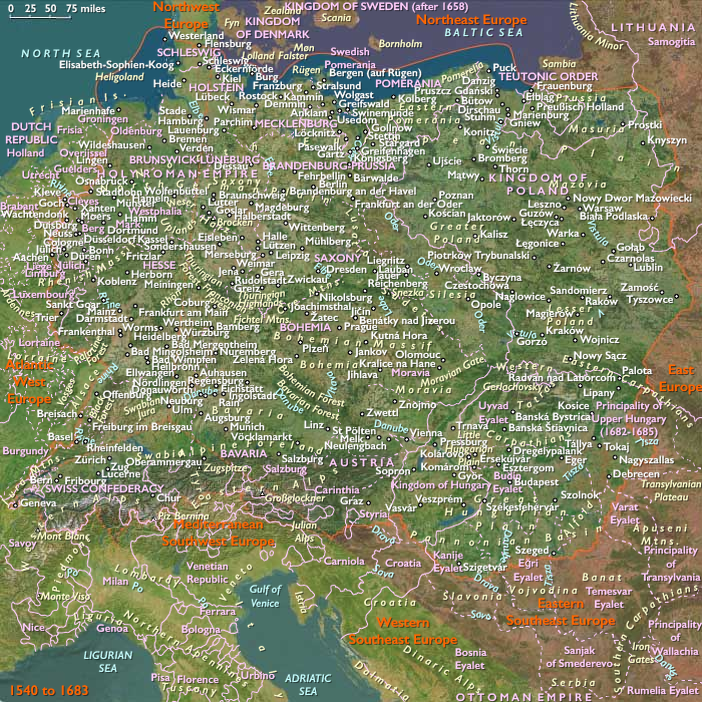
Subregions
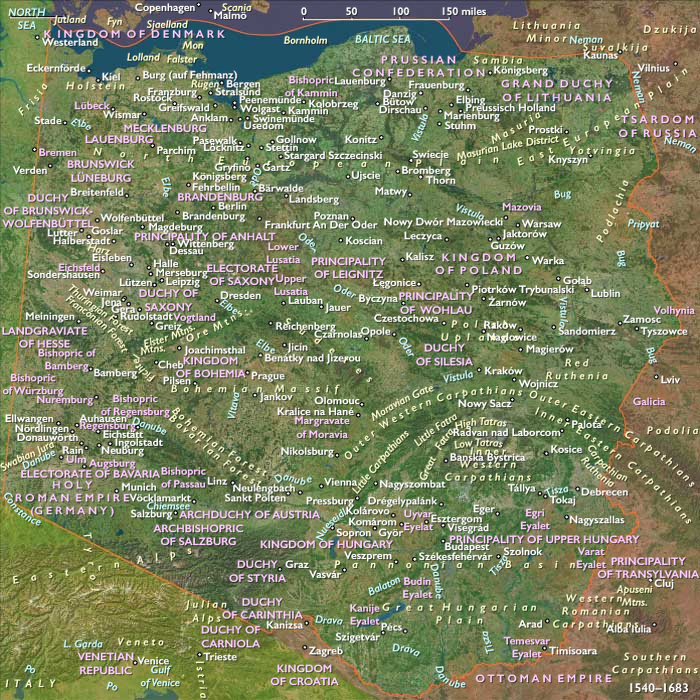
Related Events
Showing 10 events out of 33331 total
Years: 1612 - 1623
People
Groups
- Polytheism (“paganism”)
- Saxons
- Germans
- Hungarian people
- Wends, or Sorbs (West Slavs)
- Christianity, Chalcedonian
- Bavarians (West Germanic tribe)
- Thuringia, Duchy of
- Passau, Bishopric of
- Saxony, Duchy of
- Germany, Kingdom of (within the Holy Roman Empire)
- Holy Roman Empire
- Slovaks (West Slavs)
- Carinthia, Duchy of
- Austria, Margravate of
- Czechs [formerly Bohemians] (West Slavs)
- Hanseatic league (informally organized)
- Hungary, Kingdom of
- Bamberg, Prince-Bishopric of
- Poland, Greater
- Mazovia, Duchy of
- Austria, Archduchy of
- Bohemia, Kingdom of
- Styria, Duchy of
- Lübeck, Free City of
- Brunswick-Lüneburg, Duchy of
- Regensburg (Ratisbon), Imperial Free City of
- Cammin, Prince-Bishopric of
- Anhalt-Bernburg, Principality of
- Anhalt-Zerbst, Principality of
- Regensburg, Prince-Bishopric of
- Holy Roman Empire
- Brunswick-Wolfenbüttel, Duchy of
- Salzburg, Archbishopric of
- Poland of the later Piasts, Kingdom of
- Lithuania, Grand Duchy of
- Mecklenburg, Duchy of
- Ottoman Empire
- Saxony, Electorate of
- Palatinate, Electoral (Wittelsbach)
- Poland of the Jagiellonians, Kingdom of
- Crown of the Kingdom of Poland
- Lithuania, Grand Duchy of
- Saxe-Lauenburg, Duchy of
- Brandenburg, (Hohenzollern) Margravate of
- Prussian Confederation
- Transylvania (Hungarian governate)
- Ottoman Empire
- Teutonic Knights of Prussia, or Monastic state of the Teutonic Knights (House of the Hospitalers of Saint Mary of the Teutons in Jerusalem)
- Prussia, Royal (autonomous subject of the Polish Crown)
- Bavaria, Wittelsbach Duchy of
- Lutheranism
- Sweden, (second) Kingdom of
- Hungary, Royal
- Jesuits, or Order of the Society of Jesus
- Hungary, Ottoman
- Hungary (Transylvania), Ottoman vassal Kingdom of
- Swedish Empire
- Anhalt-Köthen, Principality of
- Saxe-Weimar, Duchy of
- Saxe-Coburg, Duchy of
- Saxe-Eisenach, Duchy of
- Mecklenburg-Schwerin, Duchy of
- Mecklenburg-Güstrow, Duchy of
- Anhalt-Plotzkau, Principality of
- Anhalt-Dessau, Principality of
- Anhalt-Dessau
Topics
- Humanism, Renaissance
- Renaissance Architecture
- Protestant Reformation
- Counter-Reformation (also Catholic Reformation or Catholic Revival)
- Thirty Years' War
- White Mountain, Battle of
Commodoties
Subjects
Regions
Subregions