
East Central Europe (1576–1587 CE): Rudolf II's …
Years: 1576 - 1587
East Central Europe (1576–1587 CE): Rudolf II's Ascension, Polish-Lithuanian Elective Monarchy, Religious and Political Tensions, and Habsburg-Ottoman Rivalries
Between 1576 and 1587 CE, East Central Europe—comprising modern-day Poland, Czechia, Slovakia, Hungary, and eastern parts of Germany and Austria—entered a phase marked by deepening religious conflicts, dynastic challenges, and intensified Habsburg-Ottoman rivalries. Emperor Rudolf II's ascension to power brought Prague into prominence as an imperial and cultural center, while the newly elective Polish-Lithuanian Commonwealth faced significant political transformations. Religious tensions within the Holy Roman Empire escalated, setting the stage for future conflicts, and Transylvania continued balancing between Ottoman suzerainty and Habsburg interests.
Political and Military Developments
Rudolf II's Rule and Imperial Capital in Prague
-
In 1576, Rudolf II succeeded Maximilian II as Holy Roman Emperor and established Prague as his imperial residence. His reign brought cultural flourishing but was characterized by political indecisiveness, contributing to instability within the Empire.
-
Rudolf’s patronage transformed Prague into a major European cultural and scientific center, attracting scholars, artists, and intellectuals, but his withdrawn and eccentric personality weakened imperial governance, exacerbating regional tensions.
Polish-Lithuanian Elective Monarchy: Stephen Báthory
-
After the brief and contested reign of Henry of Valois (1573–1574), the Transylvanian prince Stephen Báthory (r. 1576–1586) became King of Poland and Grand Duke of Lithuania, reinforcing the Commonwealth’s military and political strength.
-
Báthory successfully stabilized Polish-Lithuanian governance, implementing judicial reforms, strengthening the monarchy, and conducting successful military campaigns against Muscovy, notably the Livonian War (1577–1582).
Habsburg-Ottoman Rivalry and Frontier Conflicts
-
Habsburg-Ottoman tensions persisted, notably through ongoing border skirmishes, raids, and periodic negotiations. Rudolf II’s limited active leadership resulted in fluctuating effectiveness of frontier defenses, although the Empire maintained a defensive stance along its Hungarian frontier.
Transylvania’s Strategic Position under Ottoman Influence
-
Under Ottoman suzerainty, Transylvania preserved its semi-autonomous status, strategically navigating between Habsburg and Ottoman pressures. Stephen Báthory’s move to Poland shifted regional power balances, while his successor, Sigismund Báthory, struggled to maintain political independence and internal stability.
Economic and Technological Developments
Continued Economic Prosperity and Regional Trade
-
Major trading cities within the Holy Roman Empire—particularly Prague, Vienna, Augsburg, and Nuremberg—remained economically vibrant, benefiting from stable trade routes connecting Baltic, central European, and Ottoman markets.
-
Agricultural advancements and artisanal production further supported regional economic stability, even amid intermittent military tensions.
Enhanced Frontier Fortifications
-
Continuous Habsburg-Ottoman rivalry fostered further advances in fortification technologies, particularly along the strategic borderlands of Hungary, Austria, and Transylvania, exemplified by significant fortress improvements in cities such as Győr, Eger, and Komárom.
Cultural and Artistic Developments
Rudolf II’s Patronage of Arts and Sciences
-
Rudolf II’s court at Prague became one of Europe’s most significant cultural hubs, exemplifying Mannerist art, alchemical studies, astronomical research (including the work of Tycho Brahe and Johannes Kepler), and Renaissance intellectual inquiry.
Polish-Lithuanian Cultural Flourishing
-
Under Stephen Báthory, Poland-Lithuania experienced sustained cultural development, marked by flourishing Renaissance architecture, increased literary and scholarly activity, and notable patronage of educational institutions like the University of Vilnius (1579).
Settlement and Urban Development
Expansion and Cultural Prestige of Prague
-
Prague’s establishment as Rudolf II’s imperial capital spurred rapid urban expansion, architectural innovation, and infrastructural improvements, solidifying its cultural, political, and economic prominence in Central Europe.
Growth and Strengthening of Major Cities
-
Other key urban centers—Kraków, Vienna, Wrocław, and Bratislava—continued to grow in importance, with improved fortifications, public buildings, and trade infrastructure enhancing their regional influence and stability.
Social and Religious Developments
Deepening Religious Divisions and Conflicts
-
The relative religious moderation under Maximilian II gave way to intensified religious tensions during Rudolf II’s reign. Protestant-Catholic divisions deepened, particularly in Bohemia, Moravia, and Silesia, laying the groundwork for future conflicts like the Thirty Years' War.
-
In Transylvania, religious pluralism persisted under Ottoman oversight, maintaining the principality’s unique position as a haven of relative tolerance in an increasingly polarized Europe.
Strengthened Aristocratic Governance in Poland-Lithuania
-
Polish-Lithuanian nobility (szlachta) consolidated their influence through elective monarchy structures, increasingly constraining royal power while reinforcing aristocratic dominance and local governance autonomy.
Long-Term Consequences and Historical Significance
The period 1576–1587 CE significantly shaped East Central Europe’s historical trajectory through intensified religious tensions, shifting dynastic alliances, and continued Habsburg-Ottoman rivalries. Rudolf II’s rule strengthened Prague’s cultural and intellectual prestige but undermined political stability. Stephen Báthory stabilized and strengthened Poland-Lithuania, but his death reopened political uncertainty. Religious and political dynamics intensified, establishing the conditions for the destructive religious wars of the early 17th century. Collectively, these developments profoundly influenced East Central Europe’s political, cultural, and social landscape, laying critical foundations for future regional transformations.
People
Groups
- Polytheism (“paganism”)
- Saxons
- Germans
- Hungarian people
- Wends, or Sorbs (West Slavs)
- Christianity, Chalcedonian
- Bavarians (West Germanic tribe)
- Thuringia, Duchy of
- Passau, Bishopric of
- Saxony, Duchy of
- Holy Roman Empire
- Germany, Kingdom of (within the Holy Roman Empire)
- Slovaks (West Slavs)
- Carinthia, Duchy of
- Czechs [formerly Bohemians] (West Slavs)
- Austria, Margravate of
- Hanseatic league (informally organized)
- Hungary, Kingdom of
- Bamberg, Prince-Bishopric of
- Mazovia, Duchy of
- Poland, Greater
- Austria, Archduchy of
- Brandenburg (Ascanian) Margravate of
- Bohemia, Kingdom of
- Styria, Duchy of
- Lübeck, Free City of
- Brunswick-Lüneburg, Duchy of
- Regensburg (Ratisbon), Imperial Free City of
- Cammin, Prince-Bishopric of
- Anhalt-Zerbst, Principality of
- Regensburg, Prince-Bishopric of
- Anhalt-Bernburg, Principality of
- Holy Roman Empire
- Galicia–Volhynia, Kingdom of
- Brunswick-Wolfenbüttel, Duchy of
- Salzburg, Archbishopric of
- Saxe-Mölln-Bergedorf, Duchy of
- Saxe-Ratzeburg-Lauenburg, Duchy of
- Poland of the later Piasts, Kingdom of
- Lithuania, Grand Duchy of
- Mecklenburg, Duchy of
- Bavaria-Straubing, Wittelsbach Duchy of
- Ottoman Empire
- Bavaria-Landshut, Wittelsbach Duchy of
- Saxony, Electorate of
- Crown of the Kingdom of Poland
- Poland of the Jagiellonians, Kingdom of
- Lithuania, Grand Duchy of
- Bavaria-Munich, Wittelsbach Duchy of
- Bavaria-Ingolstadt, Wittelsbach Duchy of
- Saxe-Lauenburg, Duchy of
- Prussian Confederation
- Transylvania (Hungarian governate)
- Ottoman Empire
- Teutonic Knights of Prussia, or Monastic state of the Teutonic Knights (House of the Hospitalers of Saint Mary of the Teutons in Jerusalem)
- Prussia, Royal (autonomous subject of the Polish Crown)
- Hesse, Landgraviate of
- Lutheranism
- Hungary, Royal
- Jesuits, or Order of the Society of Jesus
- Hungary, Ottoman
- Hungary (Transylvania), Ottoman vassal Kingdom of
Topics
- Humanism, Renaissance
- Renaissance Architecture
- Protestant Reformation
- Counter-Reformation (also Catholic Reformation or Catholic Revival)
- Livonian War
Commodoties
Subjects
Regions
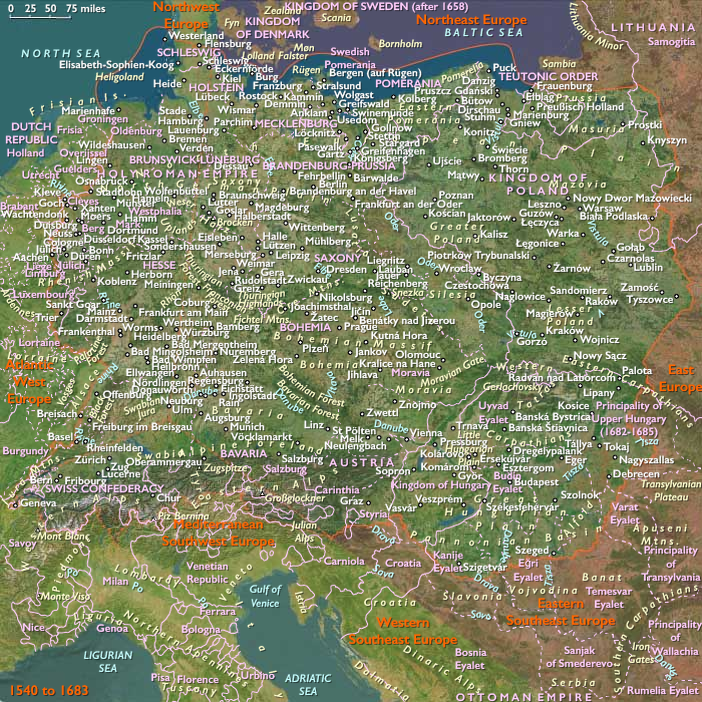
Subregions
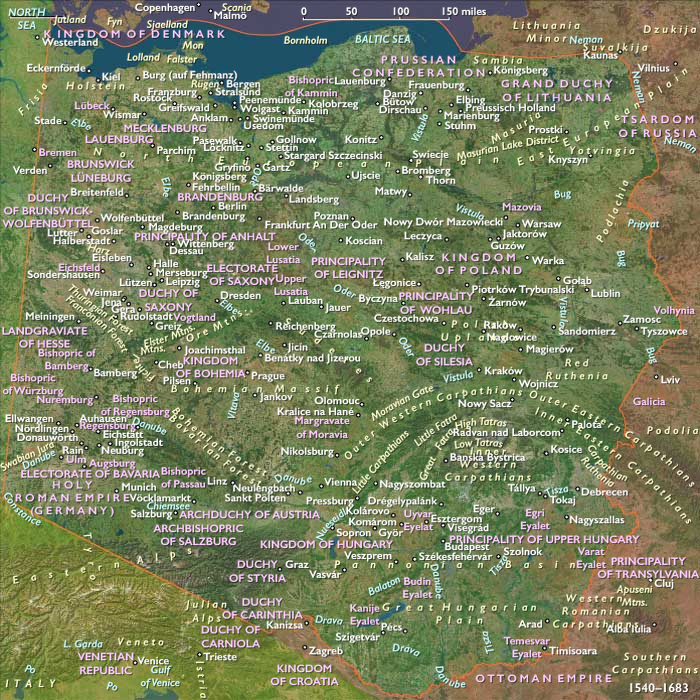
Years: 1576 - 1587
People
Groups
- Polytheism (“paganism”)
- Saxons
- Germans
- Hungarian people
- Wends, or Sorbs (West Slavs)
- Christianity, Chalcedonian
- Bavarians (West Germanic tribe)
- Thuringia, Duchy of
- Passau, Bishopric of
- Saxony, Duchy of
- Holy Roman Empire
- Germany, Kingdom of (within the Holy Roman Empire)
- Slovaks (West Slavs)
- Carinthia, Duchy of
- Czechs [formerly Bohemians] (West Slavs)
- Austria, Margravate of
- Hanseatic league (informally organized)
- Hungary, Kingdom of
- Bamberg, Prince-Bishopric of
- Mazovia, Duchy of
- Poland, Greater
- Austria, Archduchy of
- Brandenburg (Ascanian) Margravate of
- Bohemia, Kingdom of
- Styria, Duchy of
- Lübeck, Free City of
- Brunswick-Lüneburg, Duchy of
- Regensburg (Ratisbon), Imperial Free City of
- Cammin, Prince-Bishopric of
- Anhalt-Zerbst, Principality of
- Regensburg, Prince-Bishopric of
- Anhalt-Bernburg, Principality of
- Holy Roman Empire
- Galicia–Volhynia, Kingdom of
- Brunswick-Wolfenbüttel, Duchy of
- Salzburg, Archbishopric of
- Saxe-Mölln-Bergedorf, Duchy of
- Saxe-Ratzeburg-Lauenburg, Duchy of
- Poland of the later Piasts, Kingdom of
- Lithuania, Grand Duchy of
- Mecklenburg, Duchy of
- Bavaria-Straubing, Wittelsbach Duchy of
- Ottoman Empire
- Bavaria-Landshut, Wittelsbach Duchy of
- Saxony, Electorate of
- Crown of the Kingdom of Poland
- Poland of the Jagiellonians, Kingdom of
- Lithuania, Grand Duchy of
- Bavaria-Munich, Wittelsbach Duchy of
- Bavaria-Ingolstadt, Wittelsbach Duchy of
- Saxe-Lauenburg, Duchy of
- Prussian Confederation
- Transylvania (Hungarian governate)
- Ottoman Empire
- Teutonic Knights of Prussia, or Monastic state of the Teutonic Knights (House of the Hospitalers of Saint Mary of the Teutons in Jerusalem)
- Prussia, Royal (autonomous subject of the Polish Crown)
- Hesse, Landgraviate of
- Lutheranism
- Hungary, Royal
- Jesuits, or Order of the Society of Jesus
- Hungary, Ottoman
- Hungary (Transylvania), Ottoman vassal Kingdom of
Topics
- Humanism, Renaissance
- Renaissance Architecture
- Protestant Reformation
- Counter-Reformation (also Catholic Reformation or Catholic Revival)
- Livonian War
Commodoties
Subjects
Regions
Subregions